
Sophie Calle’s Berlin Exhibition Makes an Empty Place Speak
At Hamburger Bahnhof, photographs and recollections invite a distinction between removing a monument and ending its place in public memory.
Inside this article
01A city after the object has gone ↓02An empty site is not an empty history ↓03Memory is testimony, with a point of view ↓Event / source date: 13 November 2026 — The exhibition opened 13 November; museum describes The Detachment and other works. · Published 14 NOVEMBER 2026
A city after the object has gone
Sophie Calle's exhibition Is It Better? opened at Hamburger Bahnhof on 13 November. The museum presents six bodies of work across photography, text, installation and video. Its point of departure is The Detachment, a series made in Berlin in 1996. The museum describes twelve photographs of places from which GDR symbols had been removed, accompanied by accounts from passers-by. The exhibition also includes a new work connected with the history of the Berlin Palace and an installation revisiting the former railway station and hotel that became the Musée d'Orsay.
The pairing of an image with a recollection changes the task of looking. A photograph can show what remains visible at a location. A person's account can describe something that the image no longer contains. Neither automatically completes the other. The gap between them gives a viewer a way to examine how a city continues to carry an object after its physical removal. This article interprets the museum's published description, without claiming an in-person review of the installation.
An empty site is not an empty history
Removing an object changes what a passer-by can encounter without explanation. Someone arriving afterward may see an ordinary surface or an unremarkable open space. Someone who remembers the object may experience the same place as a conspicuous absence. Their visual surroundings can be identical while the scene they understand is different.
That difference is valuable material for an artist because it resists a single, frictionless account. A municipal record might establish when an object was removed and who authorised the work. It would not necessarily explain what one person associated with it during a daily journey. A recollection might illuminate that association without reliably identifying every administrative detail. Putting the two kinds of account beside one another allows both to be useful without treating them as substitutes.
The absence is therefore not merely a negative space to be filled with a reconstruction. It can become the subject of attention in its own right: what was taken away, who notices, and what description now helps a stranger recognise the change?
Memory is testimony, with a point of view
A recollection does not need to be infallible to matter. It should, however, remain identifiable as a recollection. The distinction becomes especially important when a personal statement appears beside the visual authority of a photograph. The viewer may instinctively read the text as the definitive explanation of the image rather than as one person's account.
A careful reading asks who is speaking, from what position and about which period. Someone remembering a childhood landmark may offer a different account from someone who encountered it through an official ceremony. A person who disliked an object may remember its disappearance as relief. Another may associate the same removal with the loss of a familiar route through the city. These are hypothetical positions, not reported responses from Calle's participants. Their purpose is to show why disagreement need not be an error in the work.
The artist's selection also matters. A photograph has a boundary; a quotation has a beginning and an end. Those choices give the material a form. Recognising that form helps a viewer appreciate the work without imagining that it contains every possible witness.
The present-day building supplies another layer
A museum visitor encounters the work inside an institution with its own history, routes and conventions. When an exhibition addresses places that have changed use, the building around the visitor can make that question less abstract. A room designed for one activity may later support another while retaining traces that are visible, hidden or explained only in a label.
The productive question is not whether a later use makes the earlier one disappear completely. It is which traces the present institution chooses to make legible. A doorway might remain functional while its original purpose changes. A familiar name might survive while the spaces behind it are transformed. A display can invite viewers to notice these different kinds of continuity instead of treating a building as a single stable object across time.
CYPAPER's essay on the Haeinsa collection considers a different relationship between cultural material and its setting. Here, the emphasis falls on the stories that become available when a place's successive uses are allowed to remain visible together.
Resist the instant verdict
The title Is It Better? invites a judgment but does not supply a common measure for making it. Better for whom, in which respect and over what period? A replacement can improve access while changing the appearance of a place. A removal can reject an official symbol while leaving people uncertain about how to describe an ordinary part of their past. These possibilities do not settle any particular political dispute. They make the terms of judgment explicit.
This is where an artwork can do something different from a campaign slogan. It can hold incompatible experiences in view long enough for the viewer to distinguish them. There is no obligation to treat every historical claim as equally supported. There is an opportunity to recognise that factual assessment and personal attachment are different tasks.
Our analysis of the Prague Jewish Museum anniversary concerns the routes objects take into a collection. Calle's subject, as presented here, moves attention toward what remains in public experience when an object is no longer in its former place.
Look at what the picture cannot contain
A useful way to approach this exhibition is to begin with the photograph alone. Describe what is visible before allowing the accompanying words to organise the scene. Then read the account and return to the image. Which detail now looks different? Which part of the story remains outside the frame?
That small exercise makes absence active. The missing object is no longer simply something a viewer failed to see. It becomes a question about the relationship between evidence, memory and the present-day city. The strength of such a question is that it can travel beyond the gallery without pretending every place has the same history.
Gabriel Nicolaev — CyGuru
Sources & further reading
Staatliche Museen zu Berlin — Sophie Calle exhibition ↗
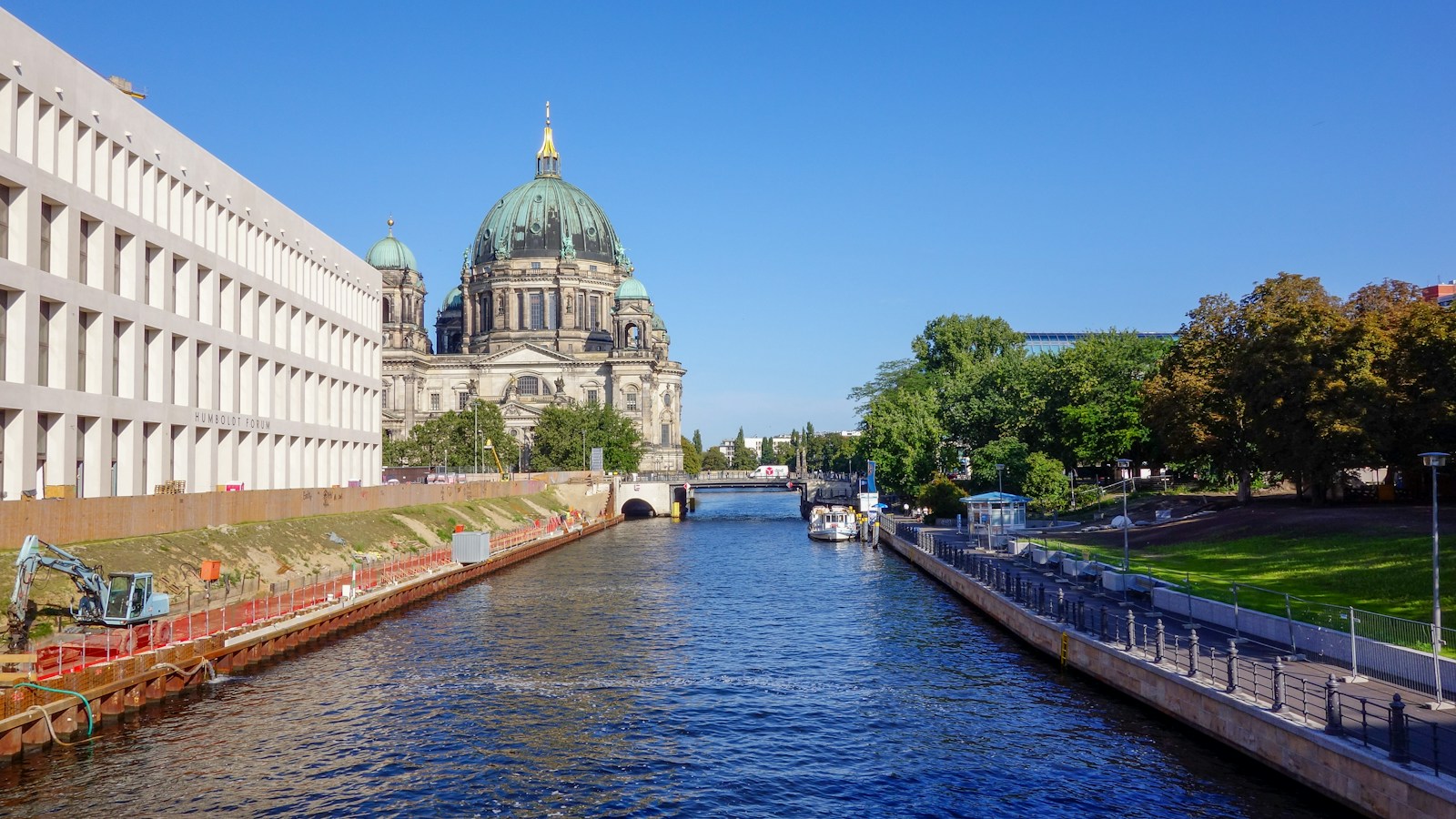
Illustrative Berlin photograph by Zion C, https://unsplash.com/photos/berlin-cathedral-and-spree-river-under-a-clear-blue-sky--YmP4Jcv5CI. Not an exhibition view.
Another angle on this subject
Continue through related ideas, decisions and consequences.
 World & Power
Climate Numbers Need Their Observation Window
WMO’s COP31 update combines observations and expectations. Public decisions need to preserve the distinction between what has been measured and what is still projected.
 Culture & Ideas
Roman Scotland Replaces a Simple Frontier Line With Questions About Daily Life
Edinburgh’s new exhibition invites visitors to distinguish an imperial presence from the varied lives and encounters within its reach.
 Culture & Ideas
The Morgan’s Ragtime Exhibition Puts the Printed Score Between Two Performances
A new exhibition and catalogue make room for a question that a silent page cannot answer alone: how does performed music travel?