
At Paris Photo, the Photobook Makes the Sequence Part of the Work
The fair’s dedicated Book Sector draws attention to an artistic decision that a single reproduced image cannot preserve: what the reader sees next.
Inside this article
01The page after the picture ↓02Sequence can create a proposition without stating it ↓03The spread is a unit of attention ↓Event / source date: 12–15 November 2026 — Paris Photo dates confirmed by the organiser and the Grand Palais; this analysis published on the final scheduled day. · Published 15 NOVEMBER 2026
The page after the picture
Paris Photo’s 2026 edition runs from 12 to 15 November at the Grand Palais. Its dedicated Book Sector brings publishers and specialist booksellers into the fair, alongside a programme of signings and Book Talks organised with Printed Matter. On the final scheduled day, the programme offers a reason to examine the photobook as a work with its own structure, rather than simply a convenient collection of pictures.
A photograph reproduced alone can retain much of its visual force. It cannot, by itself, preserve the experience of encountering that image after another one, across a particular spread or following several pages of silence. Those relationships are part of what a book gives its reader. This article analyses the organiser’s published programme and the form it foregrounds; it does not claim to review books inspected at the fair.
Sequence can create a proposition without stating it
Imagine a hypothetical book that places a deserted room immediately before a crowded street. A reader may experience the transition as movement from isolation to public life. Reverse the order, and the same images could suggest withdrawal. Neither sequence establishes what happened before the photographs were made. Each proposes a relationship through the order of looking.
This distinction is especially important when photographs carry an expectation of documentary evidence. Two adjacent images may have been made years apart or in different places. Their placement can create a productive association without claiming chronological continuity. A caption, a date or a short statement can help a reader understand which kind of relationship the artist is proposing.
The editor’s task is therefore more consequential than selecting the strongest frames. A sequence has to decide how much to disclose, where to complicate an initial impression and whether a repetition is developing an idea or merely reinforcing it. A powerful individual image can even interrupt a book whose quieter relationships need time to become legible.
The spread is a unit of attention
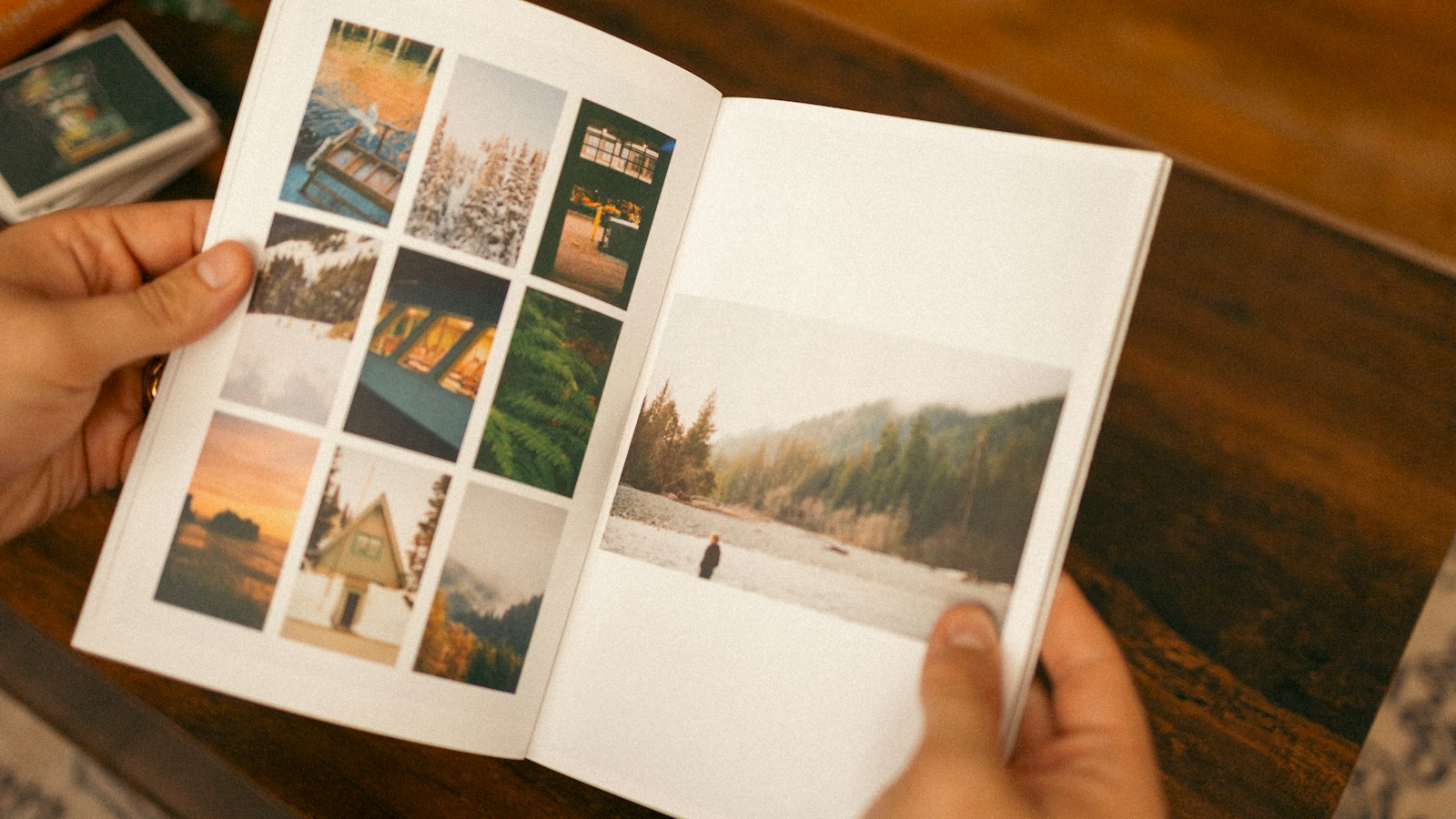
A reader usually encounters more than one page at a time. A small photograph on the left can acquire a different emphasis beside a larger image on the right. A blank page may hold an image apart from the next one. The physical divide at the binding can make two photographs appear connected while preserving a visible separation.
These observations suggest a way to look that differs from scrolling through separate previews. Ask what can be seen simultaneously and what must be remembered across a turn. A relationship held within one spread is available for direct comparison. A relationship separated by several pages asks the reader to carry an earlier image forward. The book has made a choice about the work of attention it expects.
That choice need not be explained in an introductory essay to be effective. It should nevertheless survive a thoughtful viewing. If a reader changes the pace, pauses or returns to an earlier page, does the structure reveal another connection? A sequence can accommodate different paths through it while retaining a recognisable internal argument.
The object changes the conditions of looking
A digital preview can communicate a book’s subjects and some of its arrangement. It cannot guarantee the experience of its scale, binding or paper in the reader’s hands. This is a limitation of a particular representation, not a reason to dismiss digital access. Each format makes some aspects easier to encounter and leaves others less available.
A small book, for example, might invite close handling; an oversized volume may require a table. These are hypothetical design choices, not descriptions of specific publications at Paris Photo. They show why format belongs in a critical account of a photobook rather than appearing only as a shopping detail. The reader’s posture and distance can be relevant to the work’s visual relationships.
Our analysis of the Morgan’s ragtime exhibition considers a score in relation to musical performance. A photobook presents another material problem: its arrangement is already one way of performing the images for a reader. Reproducing every photograph separately can preserve the contents while losing the timing designed into their encounter.
An encounter with the maker is an opportunity, not a verdict
The organiser’s Book Sector page describes a substantial signing programme and talks about the relationship between photography and the artist’s book. Such encounters can give readers an opportunity to ask about editorial decisions that are difficult to reconstruct from a finished volume.
A useful question is which image moved latest in the editing process, or what was lost when a page was removed. The answer can reveal a problem the maker had to solve. It should not become the only permissible interpretation. A reader may notice a convincing relationship that was not the artist’s stated intention; an artist’s explanation may also expose a misunderstanding of the project’s basic context.
CYPAPER’s essay on photographic credit asks how attribution can remain attached to circulating images. Here the concern extends to the relations among images. Sharing an attractive spread with a proper credit is valuable, but it still samples a larger work. Describing it as a sample preserves the distinction between an invitation to read and an account of the complete book.
Judge the book through more than its best photograph
For a reader encountering a new photobook, begin with an uninterrupted pass at a comfortable pace. Then return to a transition that changed the interpretation of an image. Was the effect created by sequence, scale, a caption, a gap or the memory of an earlier page? That question gives a concrete basis for discussing the work without reducing the experience to liking its subject.
Paris Photo’s inclusion of a dedicated publishing sector makes the book visible as an artistic form within a photographic fair. Its lasting interest will be found in individual works that reward the reader’s return. The photograph matters; so does the decision about what follows it, and the space the reader receives to make that connection.
Gabriel Nicolaev — CyGuru
Sources & further reading
Paris Photo — Book Sector 2026 ↗
Grand Palais — Paris Photo 2026 ↗
Illustrative photograph of a photographic zine by Hans, https://unsplash.com/photos/a-person-holding-a-book-open-to-a-photo-album-j75EeK0k8UI. Not a Paris Photo exhibit.
Another angle on this subject
Continue through related ideas, decisions and consequences.
 Technology & AI
DeepL’s Aure Makes Tone Part of the Translation Decision
DeepL says Aure carries features of a speaker’s delivery into real-time translation. Recipients also need a way to know what the system produced.
 World & Power
A Conflict Disclosure Needs a Decision Attached to It
Disclosure makes an interest visible. This original opinion asks what must happen next when that interest intersects with a public decision.
 Culture & Ideas
After Living Hands Opens in Bethlehem, What Makes a Craft Commission Last?
A showcase of Palestinian craft can bring makers and buyers together. Repeat work depends on what they agree to once a design leaves the gallery.