
The Sharjah Prize Call Asks What Cultural Impact Can Actually Show
The new nomination call invites a closer look at the work between reaching an audience and changing how a culture is understood.
Inside this article
01An invitation to account for the work ↓02Describe the barrier before claiming the benefit ↓03A participant is more than an attendance number ↓Event / source date: 13 November 2026 — UNESCO issued the nomination call, deadline and eligibility/selection criteria. · Published 14 NOVEMBER 2026
An invitation to account for the work
UNESCO opened the call for the 22nd UNESCO–Sharjah Prize for Arab Culture on 13 November, with nominations due by 30 November 2026. Its announcement invites individuals, groups and institutions whose work advances Arab culture and intercultural understanding. Applications must be submitted or endorsed by an eligible nominator; a self-nomination requires an endorsement letter. The stated criteria include originality, cultural dissemination, heritage, dialogue, diversity and social impact.
That last requirement presents an interesting problem for a cultural organisation. It may know exactly how many people attended a programme while finding it harder to explain what the encounter made possible. A large audience is one kind of achievement. A small translation project that allows a work to be taught somewhere new is another. Both can matter, but the evidence appropriate to each is different. This is an analysis of how applicants might make their contribution intelligible, not a prediction of the jury's choices.
Describe the barrier before claiming the benefit
Imagine a hypothetical project translating contemporary Arabic theatre for a new audience. Its first achievement is producing a text that can be read and performed. Its next challenge is getting that text into the hands of directors, teachers or readers who can use it. A nomination that says the translation promoted dialogue leaves the connection between these stages unexplained. An account showing how the work entered a rehearsal, a course or a continuing reading group makes the contribution more concrete.
The starting barrier matters. Was the work unavailable in the audience's language? Was it published but difficult to obtain? Did people have access to the text but little context for interpreting it? Each problem suggests a different intervention. Stating the barrier prevents a project from presenting every positive development around it as evidence of its own influence. It also makes modest achievements easier to recognise. Making one previously inaccessible work usable can be a substantial contribution without a claim to have transformed an entire cultural relationship.
A participant is more than an attendance number
An attendance total answers a useful operational question: how many encounters were recorded? It does not tell the reader whether the same person came several times, whether visitors could understand the material or whether an event mainly reached people already familiar with its subject. None of these possibilities invalidates the event. They change the description of its achievement.
An applicant could distinguish first encounters, repeated participation and later use. The evidence might be a documented school partnership, a new publication, a participant-led activity or a programme continued by another institution. These examples should be treated as possible evidence, not universal requirements. A quiet archive project should not have to invent a spectacular audience to justify careful conservation. Conversely, a popular festival should be able to explain why its scale is culturally meaningful rather than merely impressive.
The strongest account lets the work define the measure. A project intended to deepen knowledge should show something about the depth of the encounter. A project intended to widen access should identify who could participate afterward who could not participate before.
Dialogue can include disagreement
Intercultural understanding is sometimes described as if a successful encounter must end in consensus. That would be a narrow standard for cultural work. A reader may understand an unfamiliar argument more precisely and still reject it. A visitor may discover that a familiar image has several meanings rather than adopt a single authorised interpretation. In both cases, the encounter can become more informed without becoming more comfortable.
A useful nomination would preserve those differences. Rather than claim that every participant changed their mind, it could explain what new material became available, which questions entered discussion and whether people gained a way to continue examining them. Such an account respects the audience as interpreters. It also protects artists from having their work reduced to a predetermined message about harmony.
CYPAPER's discussion of cultural sponsorship examines the authority retained by an institution when it accepts support. Recognition raises a related issue: the application should describe the work's value without rewriting its purpose solely to fit the language of an award.
Give collaborators their share of the explanation
Cultural projects often connect several kinds of labour: creating, translating, editing, teaching, organising and maintaining access. A concise application can easily collapse this chain into the name of its most visible participant. A better account distinguishes who did what and which contribution the nomination recognises. That is especially useful when an institution presents work made possible by independent artists or community knowledge.
The record should also distinguish completed activity from intention. A planned partnership can show a promising direction. It cannot yet establish a result. An invitation from another institution can indicate interest; a completed programme and its materials show a different stage. This is not a demand for bureaucratic excess. It is a way of allowing the reader to see where the claim begins and ends. Our essay on the credit that travels with a photograph makes the same practical distinction between visibility and a traceable contribution.
Recognition should make the work easier to find
For a cultural prize, the public value of an application extends beyond the eventual winner. A clear account can direct readers to a body of work, explain its methods and identify the people who sustain it. Applicants should therefore think about the reader who encounters their project for the first time, not only the jury assessing it against criteria.
The question is simple but demanding: what can another person now read, hear, study, preserve or create because this work exists? An answer supported by examples carries more force than a collection of expansive adjectives. The Sharjah call creates a timely occasion to write that answer carefully, while leaving the final comparative judgment to the prize's formal process.
Gabriel Nicolaev — CyGuru
Sources & further reading
UNESCO — 2026 UNESCO–Sharjah Prize call ↗
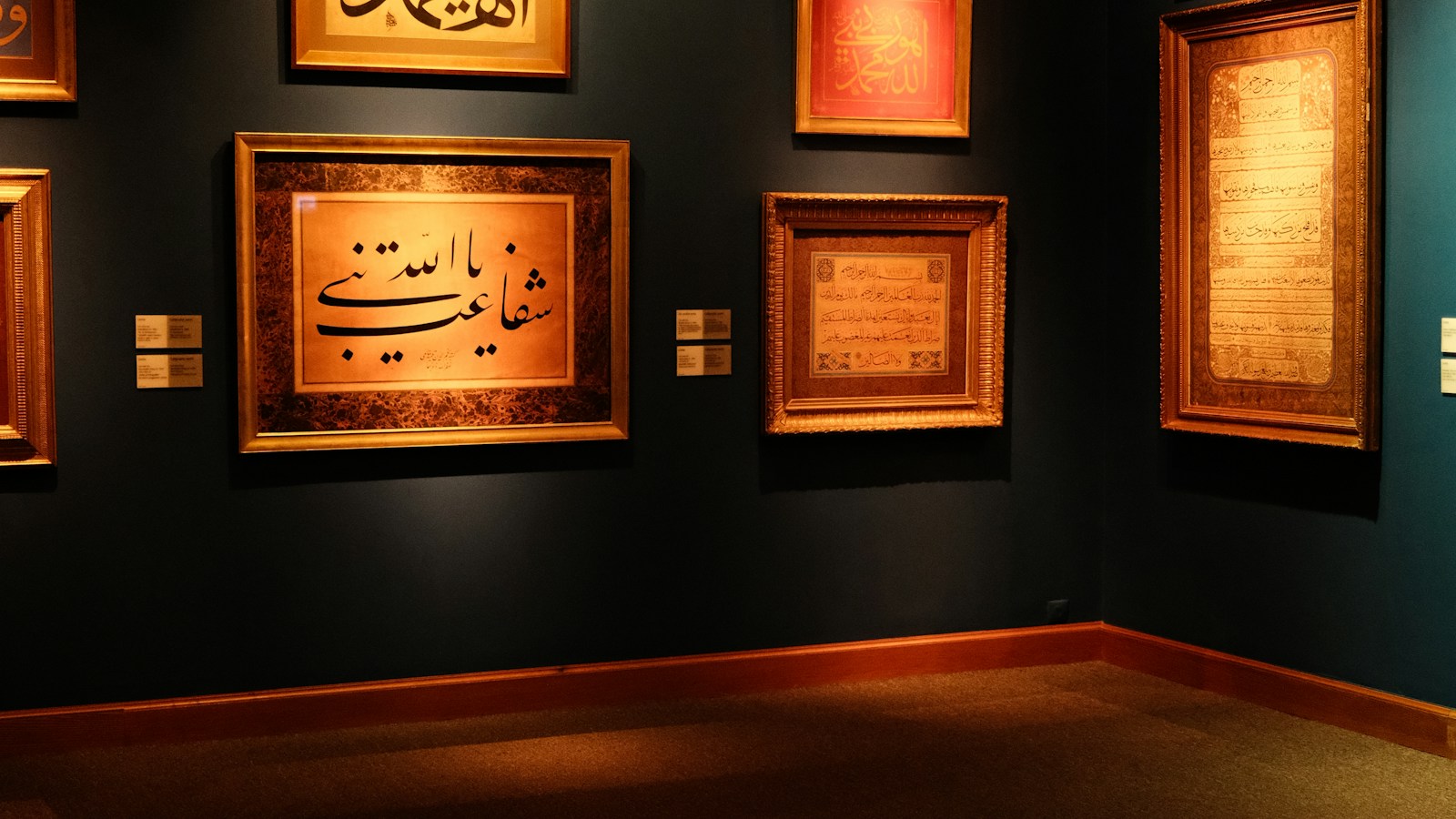
Illustrative gallery photograph by Emre (@reo), https://unsplash.com/photos/framed-arabic-calligraphy-gallery-wall-av55U93HEtY. Not a photograph of the prize or nominees.
Another angle on this subject
Continue through related ideas, decisions and consequences.
 Culture & Ideas
Cultural Funding Should Follow Who Can Commission the Work
A new UNESCO account of support for women creators invites a harder question than visibility: who gains a continuing role in choosing and commissioning culture?
 Culture & Ideas
Climate Education Needs a Task the Learner Can Examine
An account of teacher workshops in Sri Lanka and the Maldives invites a closer look at the difference between a worthy classroom theme and a useful learning task.
 Culture & Ideas
A Proposed Geopark Is Not Yet a Designation
UNESCO’s November recommendations invite a closer look at the difference between recognition, endorsement and the continuing work of caring for a landscape.