
Roman Scotland Replaces a Simple Frontier Line With Questions About Daily Life
Edinburgh’s new exhibition invites visitors to distinguish an imperial presence from the varied lives and encounters within its reach.
Inside this article
01The frontier was occupied by people ↓02A collective name can hide different biographies ↓03A surviving pot is evidence with a particular advantage ↓Event / source date: 14 November 2026 — opening date listed by National Museums Scotland; scheduled through 18 April 2027. · Published 15 NOVEMBER 2026
The frontier was occupied by people
Roman Scotland: Life on the Edge of Empire opened at the National Museum of Scotland on 14 November. The museum presents a programme combining archaeological discoveries, loans and new research, including finds from the second-century fort at Inveresk and two altars from its Mithraeum. It frames the encounters between the occupying army and local groups through conflict as well as diplomacy.
Those choices point toward a richer question than how far an empire’s territory extended. What kinds of lives became possible, constrained or dangerous in the places touched by its military presence? An imperial frontier can be represented by a line. Understanding a frontier community requires evidence of activity on both sides of that abstraction. This article considers the institution’s published account and supporting collection material; it is not an eyewitness review of the exhibition.
A collective name can hide different biographies
National Museums Scotland’s account of the army distinguishes legionaries from auxiliary units. It explains that the auxiliaries formed the principal garrison in Roman Scotland and that units serving there had origins across the empire, including areas now called France, Spain, Belgium, Bulgaria and Syria. The label Roman therefore describes an institutional relationship without giving every soldier the same birthplace or personal history.
That distinction matters when a visitor encounters an unfamiliar religious object or a personal possession. The question is not simply whether an object looks Roman. One can ask who might have used it, which community the evidence identifies and which parts of an individual’s life remain unknown. An institution can recruit, organise and deploy people without erasing every difference among them.
It would be equally misleading to treat diversity of origin as proof of equality in experience. A list of places does not explain rank, freedom of choice, treatment or attachment. Each of those claims would require evidence. Keeping the questions separate makes the human story more exact, rather than reducing it to a reassuring modern slogan.
A surviving pot is evidence with a particular advantage
The museum’s supporting account explains how distinctive pottery forms and clays help trace supply routes. It notes that food was a major requirement, while pottery survives especially well. It also describes movement toward local food provision and craft production alongside continued imports, including wine and olive oil.
The analytical problem is the difference between what mattered greatly to people and what remains available to an archaeologist. A fragment can survive because of its material properties, rather than because the original owner considered it the most important possession. An interpretation that begins with durable evidence must still ask which less durable activities made the settlement work.
Consider a hypothetical display containing many vessel fragments and only a small trace of food. Counting those objects would not establish that containers mattered more than eating. The fragments might be the evidence through which a vanished food supply becomes intelligible. This is an example of reasoning from different survival rates, not a report about the proportion of finds in the new exhibition.
Exchange does not settle the terms of an encounter
A transaction and a relationship are different units of explanation. The presence of goods can establish that materials moved. It does not, by itself, settle whether every person involved acted willingly, benefited equally or accepted the authority under which the movement occurred.
The museum’s army account suggests that some local meat could have been requisitioned or taken as tax in kind. Its conditional wording matters. Turning that possibility into a claim that a specific displayed object proves a particular coercive act would require another evidential step. Conversely, describing all supply as peaceful trade would erase a distinction the source explicitly preserves.
A careful gallery reading can therefore hold several possibilities open while recognising evidence that rules some of them out. A record of payment, a production site and the context of a find can answer different parts of the question. The purpose is to explain a relationship at the scale the evidence allows, rather than making every object testify to a single verdict on empire.
Religion introduces another kind of presence
The announced Inveresk altars offer a way to think about a fort through more than its defensive function. An army installation can be approached as a place where people carried out practices whose meaning exceeded a military order. The challenge is to avoid assuming that one surviving religious setting represents everyone living nearby.
An altar may invite questions about dedication, participation and the setting in which it was encountered. The answers depend on the object and its archaeological record. A visitor can appreciate the survival of a work while distinguishing what its inscription or context demonstrates from what an imaginative reconstruction merely makes plausible.
Our analysis of the Prague Jewish Museum anniversary follows changes in an object’s custody. The Edinburgh exhibition raises a different problem: how surviving objects support an account of the community that used them before they became museum material. Both approaches benefit from keeping the route from evidence to interpretation visible, but they reconstruct different episodes of an object’s life.
Carry the questions beyond the exhibition
A useful visit can begin with three questions about a single exhibit. What has survived? What does its context allow someone to infer? Which human experience remains outside that inference? This approach does not require withholding every conclusion until every gap is filled. It asks the reader to match the scope of a conclusion to the evidence supporting it.
CYPAPER’s essay on boundaries in maps concerns the claims contained in a drawn line. Roman Scotland offers a complementary invitation to move from the line to a place: its different inhabitants, its supplies, its practices and its encounters. The strongest frontier story allows those particulars to complicate the outline. It can show the reach of an institution while preserving the uneven experiences of the people within and around it.
Gabriel Nicolaev — CyGuru
Sources & further reading
National Museums Scotland — Roman Scotland exhibition ↗
National Museums Scotland — The Roman army in Scotland ↗
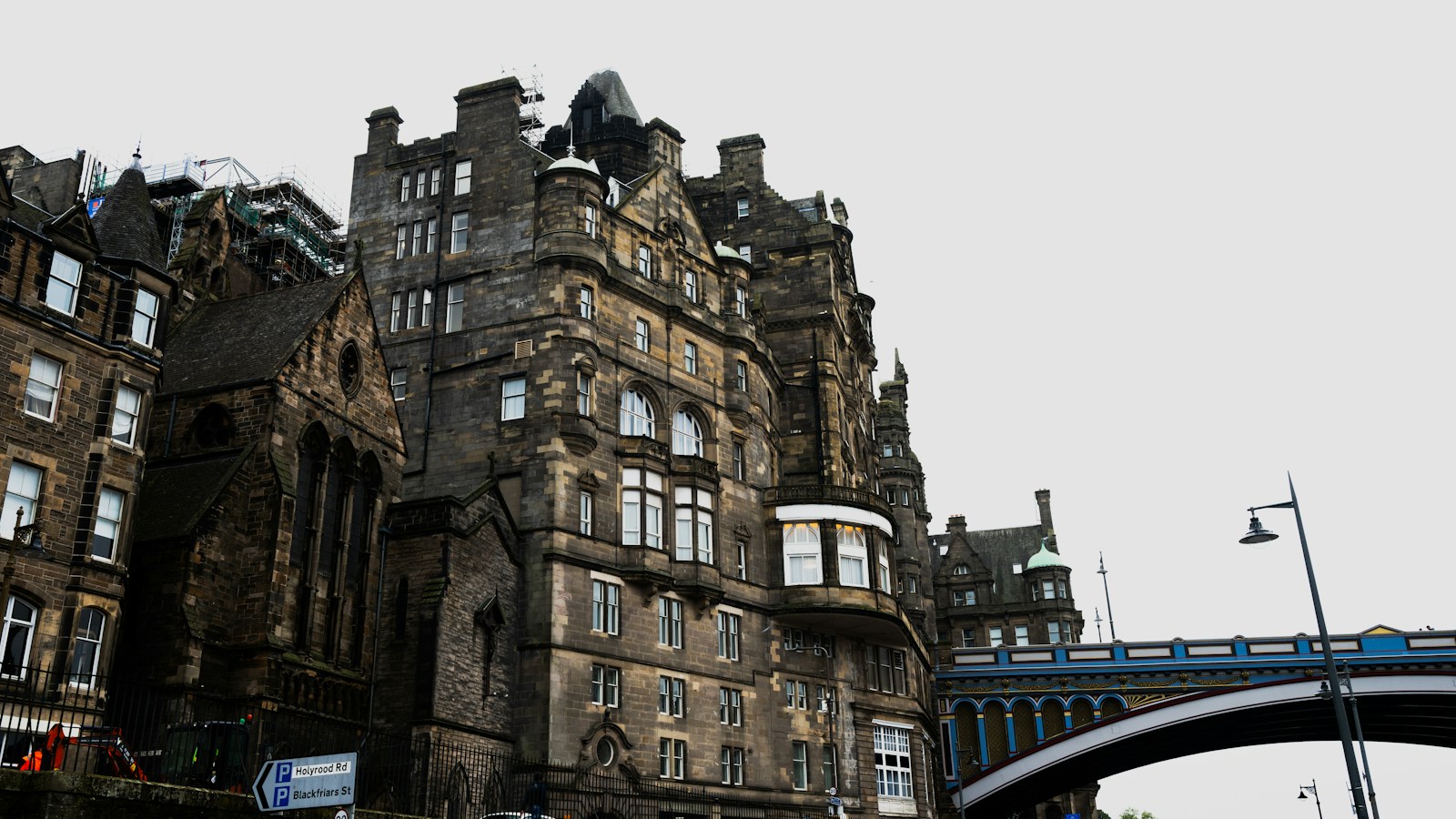
Illustrative Edinburgh city photograph by SOHAM BANERJEE, https://unsplash.com/photos/historic-stone-buildings-in-edinburgh-jTjNnsk87dE. Not a photograph of Roman remains or the exhibition.
Another angle on this subject
Continue through related ideas, decisions and consequences.
 Culture & Ideas
Venice’s Flood Anniversary Reveals the Long Life of Cultural Cooperation
A new UNESCO–Fondazione Giorgio Cini project revisits the response to the 1966 flood, raising a deeper question about who sustains heritage after an emergency.
 Culture & Ideas
Fucina degli Angeli Brings the Glassmaker Into the Question of Authorship
The new Venice exhibition offers a way to see an artwork as a sequence of material decisions shared by artist, coordinator and glass master.
 Culture & Ideas
The Sharjah Prize Call Asks What Cultural Impact Can Actually Show
The new nomination call invites a closer look at the work between reaching an audience and changing how a culture is understood.