
At Prague’s Jewish Museum Anniversary, an Object’s Custody Is Part of Its Story
The Prague anniversary exhibition is scheduled to open on 13 November. A manuscript, synagogue furnishings and museum records illuminate distinct histories of use, displacement and care.
Inside this article
01Two dates belong on the label ↓02A collection formed across different periods ↓03A catalogue card is a trace of one transaction ↓Event / source date: 12 November 2026 — National Museum announcement. The exhibition is scheduled to open on 13 November. · Published 13 NOVEMBER 2026
Two dates belong on the label
The National Museum in Prague says its exhibition with the Jewish Museum in Prague is scheduled to open on 13 November and run through 31 May 2027. The announcement, published on 12 November, describes the first exhibition of the original Třebíč Mahzor, a Hebrew manuscript the museum dates to more than seven centuries ago. The original is scheduled to appear only during the first few weeks. Other announced objects include textiles, synagogue silver, furnishings from demolished Prague synagogues and personal objects from Jewish families.
Visitors can ask two separate questions about each object. When and for whom was it made? When, by what process and from whose hands did it enter museum custody? The date on a manuscript and the date on an acquisition card address different episodes. Keeping both visible allows the exhibition to tell the history of its collection alongside the history of the people who made, owned and used its contents. The organisers have announced the objects and broad argument of the exhibition. The examples of labelling here are suggestions for reading that material, drawn before the galleries could be assessed in person.
A collection formed across different periods
The Jewish Museum dates its founding to 1906. Its institutional history says that material from Prague synagogues demolished during the clearance of the Jewish quarter formed the core of the early collection. A furnishing associated with that process can document a place of worship and a later episode of urban redevelopment. The presence of an object in a present-day museum may be the last step a visitor can see. The route to that endpoint depends on the object and the period.
The museum’s historical account separates that early phase from the events after Nazi occupation. The original association was abolished in 1939. The Prague Jewish community took over the collection and initiated the Central Jewish Museum in 1942. The Nazi authorities approved the project, whose founders sought to preserve objects from communities being destroyed. The Jewish Museum’s provenance account separately describes the confiscation of personal property from Jews deported from the Prague area and the arrival of some of that property in the wartime collection. These are different processes within a history shaped by coercion. A label that gives only the word “acquired” can hide the difference.
A catalogue card is a trace of one transaction
The museum explains that its present provenance work uses cards created by staff at the wartime Central Jewish Museum, checked against other archival information. A card may help identify the object and the channel through which it entered the collection. The provenance account distinguishes objects that came from institutions, including synagogues, from confiscated private belongings. That distinction supplies the starting point for different investigations. A congregational object and a personally owned book can share a storage room and a receiving year while carrying different histories of use and loss.
Imagine a visitor looking at a hypothetical book whose card shows that it arrived in 1943. A handwritten owner’s name might be a promising lead. A separate shipment list could establish that an item was moved under a confiscation order. A match requires a reason to conclude that the two records refer to the same copy. The book’s presence in the collection makes research possible, but the name and date alone leave open who owned it at the moment it was taken and which records connect the events. This imagined example describes a method, with no claim about the provenance of the Třebíč Mahzor or any other announced exhibit.
Make the institutional changes visible
The wartime receipt of an object is one chapter in a longer history of custody. The Jewish Museum records that it was nationalised in 1950. Its institutional history then dates its renewed independence to 1994, when buildings were returned to the Prague Jewish community and the bulk of the collections was returned by the state to the Federation of Jewish Communities in the Czech Republic. A timeline could place the major institutional changes alongside individual histories, so visitors can see which events affect a specific work and which describe the organisation as a whole.
In our earlier analysis of museum returns and interpretive authority, we asked how a return can change who is able to explain an object. The anniversary brings a different practical question into view. Which records show that custody changed, and which source can explain the conditions of that change? A cross-reference from a gallery label to a catalogue entry can make that question answerable even if an exhibition has room only for a short text. The visitor can follow the account beyond a single anniversary narrative.
Follow the people the evidence allows you to name
Rarity is an understandable reason to visit an exhibition. The limited display period for the original manuscript gives that interest a concrete date. An object biography can then deepen the encounter by naming the people and communities associated with a work, identifying the evidence for a move into custody, and marking any gap that still matters to the story. Each of those details adds something the age of the object alone cannot supply.
In Prague, the distance between a ceremonial object’s use and its arrival in a display case can encompass ordinary religious life, deliberate preservation, displacement and a succession of institutions. A visitor who can explain which of those episodes belongs to a given object has learned how the collection came to exist. The surviving objects are the starting point for recovering individual histories that merit attention in their own right.
Gabriel Nicolaev — CyGuru
Sources & further reading
National Museum — 12 November announcement of Jewish Museum: 120 Years ↗
Jewish Museum in Prague — History of the Museum ↗
Jewish Museum in Prague — Provenance records and voluntary transfers ↗
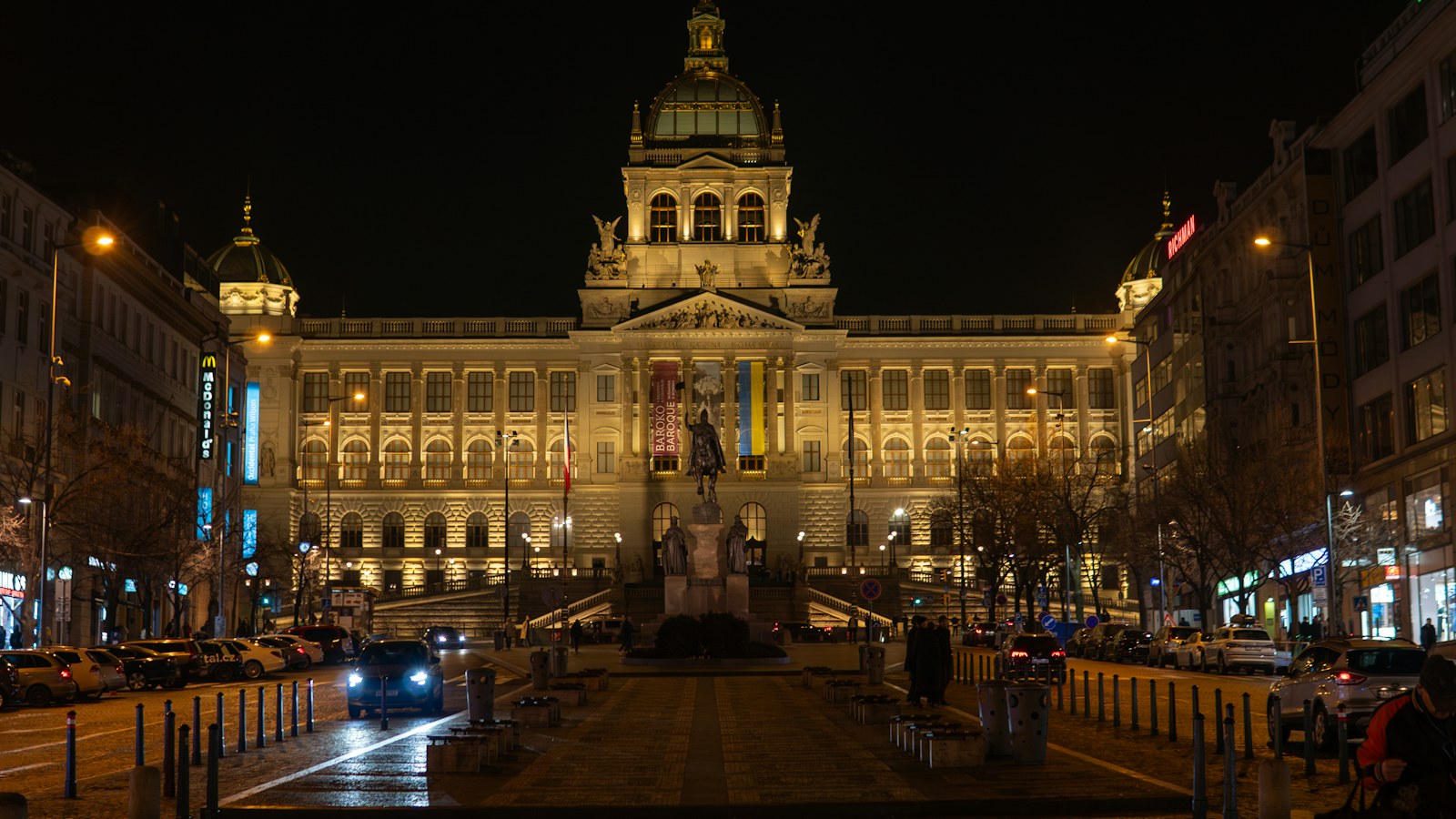
The National Museum in Prague, photographed by Hamza Şamil Yavuz via Unsplash. Archival venue photograph.
Another angle on this subject
Continue through related ideas, decisions and consequences.
 Culture & Ideas
A Museum Return Should Change Who Can Tell the Object’s Story
An ethical essay on restitution, interpretive authority and the continuing responsibilities that follow the return of a cultural object.
 Human Behaviour
A Borrowed Object Needs a Clear Return Conversation
Borrowing creates a temporary responsibility. Discuss use, care, return and changes of plan before an ordinary object becomes a test of an entire relationship.
 Culture & Ideas
Roman Scotland Replaces a Simple Frontier Line With Questions About Daily Life
Edinburgh’s new exhibition invites visitors to distinguish an imperial presence from the varied lives and encounters within its reach.