
The Morgan’s Ragtime Exhibition Puts the Printed Score Between Two Performances
A new exhibition and catalogue make room for a question that a silent page cannot answer alone: how does performed music travel?
Inside this article
01Music on the page, music in the room ↓02The score is an invitation to make sound ↓03A printed object also has a route to its audience ↓Event / source date: 13 November 2026 — Official shop lists 13 November opening and describes catalogue contributors, print and performance themes. · Published 14 NOVEMBER 2026
Music on the page, music in the room
The Morgan Library & Museum's official shop lists Ragtime: Cakewalk in Pianoland as opening on 13 November. Its catalogue description draws attention to early printed music, archival material and technologies ranging from manuscript to piano roll. The publication brings together Jesse R. Erickson, Robinson McClellan and John Davis. Among its stated concerns is the movement from performed music into written notation, alongside the recovery of Black entertainers' contributions and the perspective of a collector and performer.
That gives the exhibition a compelling question beyond the pleasure of recognising a melody. When music reaches a new person through a score, what has travelled successfully, and what must be supplied again? A printed page can preserve instructions and make them repeatable across distance. It can also leave aspects of an earlier encounter unavailable. This analysis takes the museum's published catalogue description as its starting point, rather than claiming to have heard or inspected the exhibition in person.
The score is an invitation to make sound
A page of music asks for a particular kind of reader. It offers marks that can be interpreted into duration, pitch, emphasis and sequence. A person who cannot read those marks may see an elegant arrangement of symbols without access to the action they propose. A performer can turn the same object into an event, but that event depends on choices and abilities that the paper does not itself possess.
The resulting sound is neither detached from the page nor contained in it like an object inside a box. Think of two people reading the same passage aloud. The words can remain unchanged while pace, emphasis and phrasing alter the encounter. Music has its own conventions, but the comparison helps identify the question: which aspects are specified, which are left open, and which rely on a practice shared between writer and reader?
An exhibition can make this relationship visible without pretending that one recording exhausts the work. A recording is one realised performance, with its own conditions. The score remains a different kind of evidence.
A printed object also has a route to its audience
Music on paper has a material form. Someone chooses a title, a layout and a way of identifying contributors. Someone produces copies and puts them within reach of a reader. Those choices can affect how a work is encountered before a note is played. A cover may suggest a particular audience; a name may be prominent, small or missing; an arrangement may make the piece usable by someone with different skills.
These observations do not establish the history of any individual object in the Morgan exhibition. They describe questions a visitor can bring to printed material. Who is named? What role does the wording assign them? Is the object a manuscript, a published edition or a later arrangement? What information would be needed to connect this copy to a particular performance?
Our discussion of credit travelling with a photograph addresses a related problem in another medium. Reproduction can extend a work's reach while weakening the visibility of the people responsible for it. A music display can help a viewer separate the survival of a composition from the survival of an accurate account of its makers.
Recovery should leave room for complexity
The catalogue's stated interest in the contributions of Black entertainers invites attention to authorship, but recognition should do more than replace one simplified story with another. A useful account can identify different kinds of contribution: composing, performing, adapting, teaching, collecting or preserving. It can also show where the evidence is uneven.
Imagine a hypothetical score that survives in several editions while the performances through which people first knew the piece are poorly documented. The abundance of printed copies would not, by itself, make the printed history the whole history. Conversely, an evocative account of performance would not establish the details of a publication unless other evidence supported them. The visitor gains a clearer picture when these limits remain visible.
This kind of reading can be both appreciative and exacting. It allows the ingenuity of a work to be discussed without making popularity the only measure of significance. It also makes room for people whose role becomes visible through a specific document rather than a familiar place in a broad narrative.
Listen for what a medium makes easy to miss
A display of musical documents faces a practical tension. Looking closely at a page takes time. Listening to a performance unfolds in time. If one activity is merely background to the other, some of the comparison may disappear. A visitor could benefit from choosing a short passage, observing its written form, then listening and returning to the page with a more specific question.
Where does the performance draw attention? What does the notation make easy to locate? What remains difficult for an inexperienced reader to connect? The point is not to require technical expertise before enjoying the music. It is to offer several ways into the same material. A visitor might begin with the physical object, a recognisable musical phrase or curiosity about the person named on the cover.
CYPAPER's analysis of the Cleveland concert programme examined what a sequence of works can bring into conversation. Here the comparison is between forms of transmission: an instruction, an object, a performance and a later encounter with all three.
A surviving page is a beginning
The appeal of an exhibition about printed music lies partly in its incompleteness. A page can be preserved, described and placed in a case, yet it continues to point toward an activity beyond the case. The visitor is invited to imagine and investigate sound, movement, skill and an audience that the object alone cannot restore.
That does not make the document inadequate. It makes its contribution more precise. It preserves a route through which another person can begin. The Morgan's new presentation offers an occasion to follow that route carefully: acknowledge the makers, examine the medium and listen without confusing the surviving record with everything that once happened around it.
Gabriel Nicolaev — CyGuru
Sources & further reading
The Morgan Shop — Ragtime exhibition and catalogue description ↗
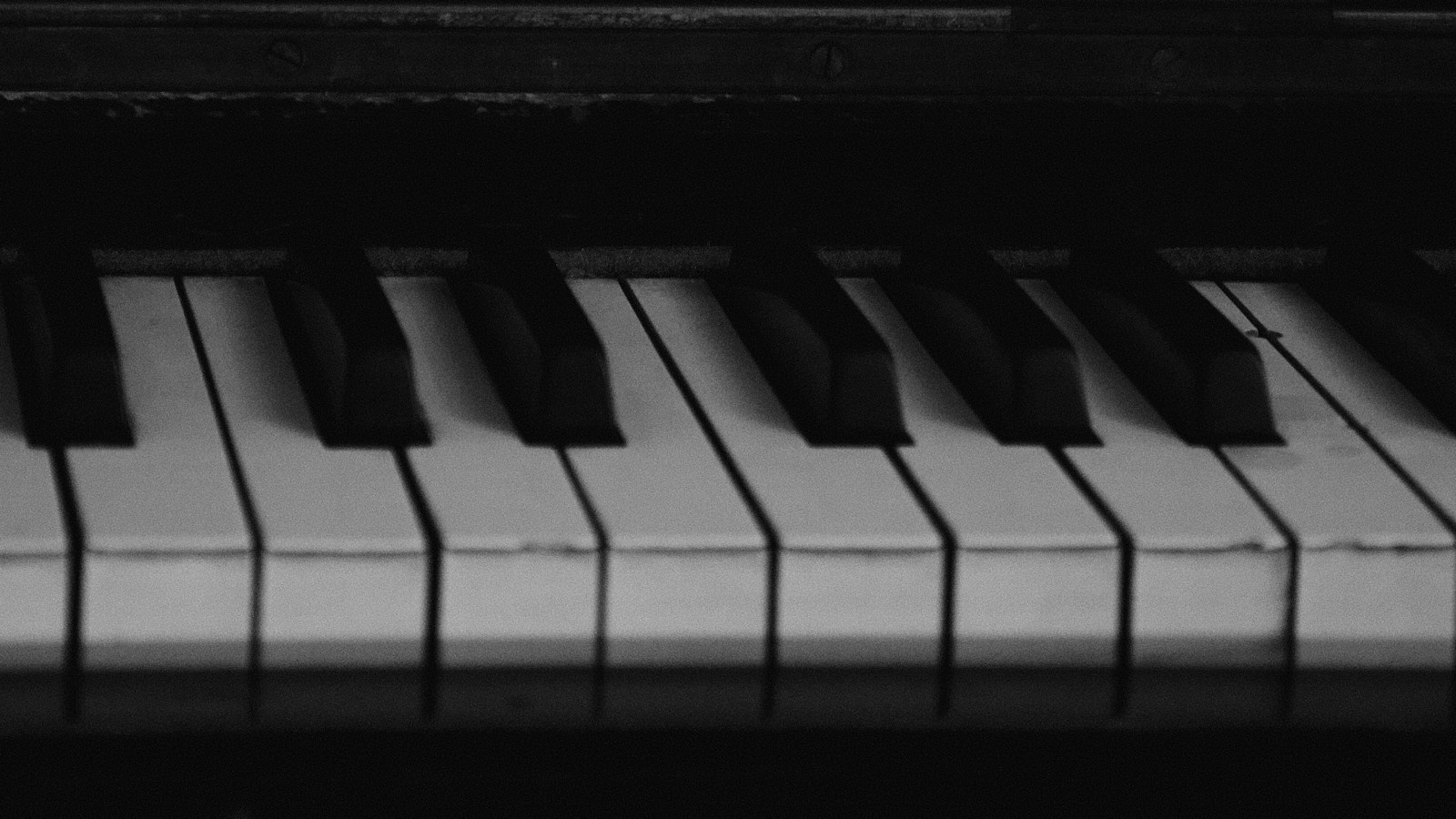
Illustrative piano photograph by Miguel Alcântara, https://unsplash.com/photos/a-piano-with-sheet-music-on-it-15LaU3EMBRY. Not an object from the Morgan exhibition.
Another angle on this subject
Continue through related ideas, decisions and consequences.
 Culture & Ideas
What Two Works From 1709 Can Say Together in Cleveland
Apollo’s Fire has scheduled Handel and a Caribbean funeral oration in the same programme. The order creates a question about history that the shared date alone cannot answer.
 Culture & Ideas
Fucina degli Angeli Brings the Glassmaker Into the Question of Authorship
The new Venice exhibition offers a way to see an artwork as a sequence of material decisions shared by artist, coordinator and glass master.
 Culture & Ideas
A Documentary Exhibition Is an Invitation, Not a Complete National Record
A new Havana exhibition prompts a curatorial question: how can selected documents invite inquiry without pretending to contain the whole history?