
What Two Works From 1709 Can Say Together in Cleveland
Apollo’s Fire has scheduled Handel and a Caribbean funeral oration in the same programme. The order creates a question about history that the shared date alone cannot answer.
Inside this article
01The date is a starting point ↓02Give the spoken text room of its own ↓03Keep the programme wider than one pairing ↓Event / source date: 12 November 2026 — scheduled Cleveland performance at 7:30 p.m. local time. · Published 12 NOVEMBER 2026
The date is a starting point
One of the most consequential decisions in a concert can happen between two pieces. Apollo’s Fire has scheduled a suite from George Frideric Handel’s opera Agrippina immediately before a dramatic recitation from a Caribbean funeral oration in Echoes Across the Atlantic. The ensemble dates both works to 1709. Its event page describes the oration as mourning the murder of an enslaved man by a plantation owner. The Cleveland Museum of Art lists the programme at Gartner Auditorium for Thursday evening, 12 November, with soprano Jeanine De Bique. Jeannette Sorrell conceived the programme. The published order is the evidence available before the Cleveland performance.
The pairing puts two very different surviving works inside one evening. A listener could have met Handel in a theatre season and the funeral oration in a history seminar, each on a shelf of its own. The sequence makes those separate routes into the year harder to take for granted. It places the opera and the oration close enough to ask what institutions made each kind of expression possible, who could hear it and how we know about it now.
The shared year is a date, and the adjacency is a present-day curatorial choice. The listings establish no encounter between the original makers or audiences. A concert can use that boundary to good effect. The explicit date opens a question. Documentation has to carry any narrower claim about who knew whom or how a text or musical idea travelled.
Give the spoken text room of its own
A suite announces the hand of someone who has selected music from a larger work. The word excerpt can do the same for the oration. Each label helps an audience identify a choice made for this evening. It matters where the music stops, where the speech begins and how the listener learns what has been selected. An extract from an address has its own internal structure even when the recitation includes only part of it.
There is a practical way to see the stakes. A concert note might name an oration, its surviving record, the person who prepared the selection and, where needed, the source of the translated wording. If an attribution or date carries uncertainty, the note can identify which part remains uncertain. A listener then has enough information to look for the larger text or ask about a phrase. Those details are particularly valuable when the listener has a route to Handel’s work through recordings and scores but less familiarity with the document read onstage.
The sequence could also change the way people hear the instrumental music that precedes the recitation. A polished phrase can momentarily feel self-contained, with all the answers carried by the phrase that follows. A spoken account can break that expectation. It brings words with a particular history to the room. How that transition feels at the Cleveland performance depends on choices about silence, pace and delivery that a schedule cannot establish.
Keep the programme wider than one pairing
The museum describes a programme that draws on European composers and Caribbean poets. Alongside Handel it names Purcell, Rameau and Vivaldi. Apollo’s Fire mentions La Folia and Rameau’s Air de la Folie among its examples. Those details matter because the pairing from 1709 is one section of an evening. A critic attending the event could ask how later material changes the opening impression and whether spoken passages retain their own identities as the programme moves.
Words and music may also have reached the audience through several layers of editing and interpretation. Consider what a translation asks us to notice when a spoken passage is presented in a new language. A line may sound immediate in performance while depending on decisions about how to carry tone or how much background a listener needs. In the concert hall, people have one hearing to make sense of that phrasing. A programme note can carry the documentary material that the performer has no time to insert into the line itself.
A historic suite has a comparable problem of disclosure. The tune may be familiar and the extraction unfamiliar. A note that gives the opera, identifies the pieces played and explains the larger dramatic setting can let someone understand the new order while still finding the older one. Both forms benefit when the audience can hear the arrangement and reconstruct the source if curiosity survives the evening.
What the evening can fairly be judged on
A listener at a concert can assess timing, whether the words are intelligible and how the different performers share the room. A historian evaluating an account of the same works would need documentary support for transmission or influence. A programme can invite a listener to approach both kinds of question if it signals which claims it can substantiate.
The most telling measure for this particular sequence may be whether a person can describe the two works individually after encountering them together. Can they name what they heard, identify why the date matters and understand where to look for the text or score? Can they say what the juxtaposition invited them to consider while leaving open questions about the original settings? Those are realistic goals for an evening that passes quickly.
As published, Apollo’s Fire has made its order available for scrutiny before anyone in Cleveland hears it. Two works of the same year have been placed next to each other, with the second asking for a kind of attention different from the first. The audience can judge what that order makes audible once the performance occurs. A reader can already distinguish the history described in the listings from the interpretation the programme invites.
Gabriel Nicolaev — CyGuru
Sources & further reading
Cleveland Museum of Art — Apollo’s Fire presents Echoes Across the Atlantic ↗
Apollo’s Fire — Echoes Across the Atlantic ↗
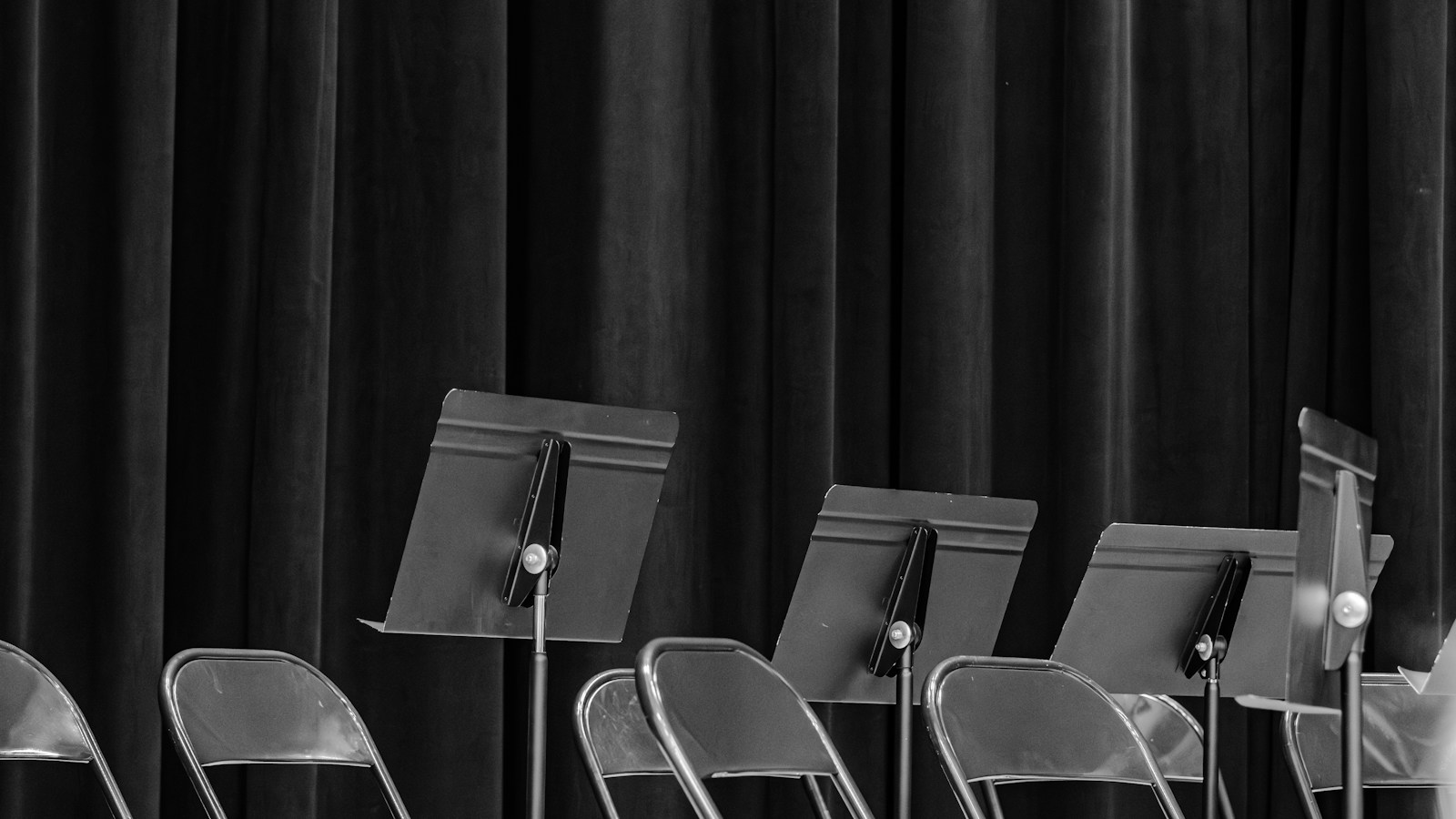
A stage set for musicians. Illustrative photograph by Sebastian Schuster / Unsplash.
Another angle on this subject
Continue through related ideas, decisions and consequences.
 Culture & Ideas
The Morgan’s Ragtime Exhibition Puts the Printed Score Between Two Performances
A new exhibition and catalogue make room for a question that a silent page cannot answer alone: how does performed music travel?
 Culture & Ideas
Along Animal Trails Asks How Museums Can Show a Shared History
UNESCO has announced the digital launch of an exhibition made by ten museums. A vessel recovered off Brunei illustrates how curators can explain what travelled and what remains uncertain.
 Culture & Ideas
Philadelphia’s Sunday Best Raises a Question About What Clothes Can Tell Us
The Philadelphia Museum of Art has announced a 2027 show about Black diasporic style. The setting around each garment can change what visitors understand about it.