
Philadelphia’s Sunday Best Raises a Question About What Clothes Can Tell Us
The Philadelphia Museum of Art has announced a 2027 show about Black diasporic style. The setting around each garment can change what visitors understand about it.
Inside this article
01What the museum has announced ↓02The wearer and the occasion are evidence ↓03Movement can answer a question the case leaves open ↓Event / source date: 11 November 2026 — programme announcement. The exhibition is scheduled for 1 May–22 August 2027. · Published 12 NOVEMBER 2026
What the museum has announced
A hat on a museum stand can show the structure that a photograph taken at street level would hide. A photograph can show a different kind of evidence about where someone wore the hat, how they carried it and whether everyone else was dressed for the same occasion. Philadelphia’s planned Sunday Best exhibition has the scope to put both kinds of evidence before a visitor. The challenge is to let each one tell the part of the story it can support.
In its 11 November 2026 exhibition announcement, the Philadelphia Museum of Art scheduled Sunday Best: The Power and the Glory of Black Style for 1 May through 22 August 2027 in the Dorrance Galleries. The museum says it is organising the exhibition with the Art Gallery of Ontario, tracing Black diasporic style from the 1880s to the present through clothing, photographs, paintings and time-based media. The gallery display and visitor experience remain ahead. The announcement gives an opportunity to consider what each of those media can establish.
One image accompanying the announcement shows a 1993 braided-straw hat, the Snail Fantasy Hat from Carlos New York Hats, credited as a gift from Carlos Lewis. The label’s maker, date, material and gift credit make the object searchable and locate it in the collection. They leave questions about the occasion for which it was made, whether this example was worn and whose life it may document. A reader needs additional evidence before making those claims. Stating exactly what is known can give the object more definition than filling the gap with a broad statement about how people dressed.
The wearer and the occasion are evidence
Imagine a display pairing a formal suit with a photograph of a group outside a community hall. The pairing could describe one person on one documented occasion if a record links the suit to the photograph. It could also show two examples of a related dress convention, with different makers and circumstances. Either display could work. The label has to distinguish a documented relationship from a visual comparison made by the curators.
The distinction becomes sharper once we look at the scene. A carefully composed portrait may show how the photographer and sitter wanted to be remembered. A group shot may show differences of age or choices people made when dressing for the same occasion. A photograph made for commercial fashion can present a deliberate proposal about what someone should want to wear. Each kind of image has a particular relation to ordinary use. A date, place, photographer and description of the occasion give the viewer a way to understand that relation.
Even within one family, photographs can leave gaps. A person who kept a jacket may have kept it because of its fabric, because they wore it every week or because it was associated with a single event. If a relative later supplies one of those accounts, the label can attribute it. A visitor gains the account and its basis at the same time. That is why a photograph’s credit matters beyond acknowledgement. It can show how an image arrived and who was in a position to explain it.
Movement can answer a question the case leaves open
Painting and moving image give an exhibition other ways to talk about dress. A film can show a garment changing shape when someone turns or walks. It can show the relation between several outfits in a room. A painting can make an outfit central to how its sitter is presented, with material and posture used for emphasis. That emphasis is worth recognising even where a painting gives little help with a construction detail.
There is a useful distinction between showing a particular garment in motion and demonstrating how a general type moves. Footage of someone wearing the garment can be identified as such when documented. A film showing a recreated movement or a contemporary wearer can answer a different question. A clear date and a few words about the relationship between the film and the object allow either piece of material to work on its own terms.
Context also includes the economy of making and keeping clothes. A surviving piece may show alteration, repair or a change made for a second use. A label can draw attention to the evidence and identify which changes have been documented. A jacket recorded in an atelier and a family photograph that happens to show a similar cut may leave different trails. The difference is a reason to treat both trails seriously, with room for the uncertain parts to remain visible.
Read the setting along with the clothes
An exhibition spanning more than a century has to choose. Organisers can communicate those choices through several levels of detail. A short object label can give the essential facts. A group caption can say why two pieces have been put together. Longer notes or a catalogue can record the ownership history or explain where an identification is uncertain. Giving those functions different places keeps a label readable while allowing interested visitors to follow its evidence.
The museum’s announced title puts Sunday best at the centre of a much wider account of Black style. The phrase invites a question about the occasion for dressing well and the people whose gaze mattered. Some examples may carry a documented setting of work, worship or celebration. Others may survive chiefly through the construction of an object or the record of a gift. The strength of the eventual display will depend in part on whether visitors can tell which kind of claim they are reading.
Before the exhibition opens, the announcement already makes one object available to consider. Its intricate shape is visible in a photograph. Its reported provenance supplies a few fixed points. A visitor who wants to understand the role of that hat in someone’s life needs to know what additional record has survived. The gallery has an opportunity to make that act of asking part of looking at the clothes.
Gabriel Nicolaev — CyGuru
Sources & further reading
Philadelphia Museum of Art — 2027 exhibition announcement ↗
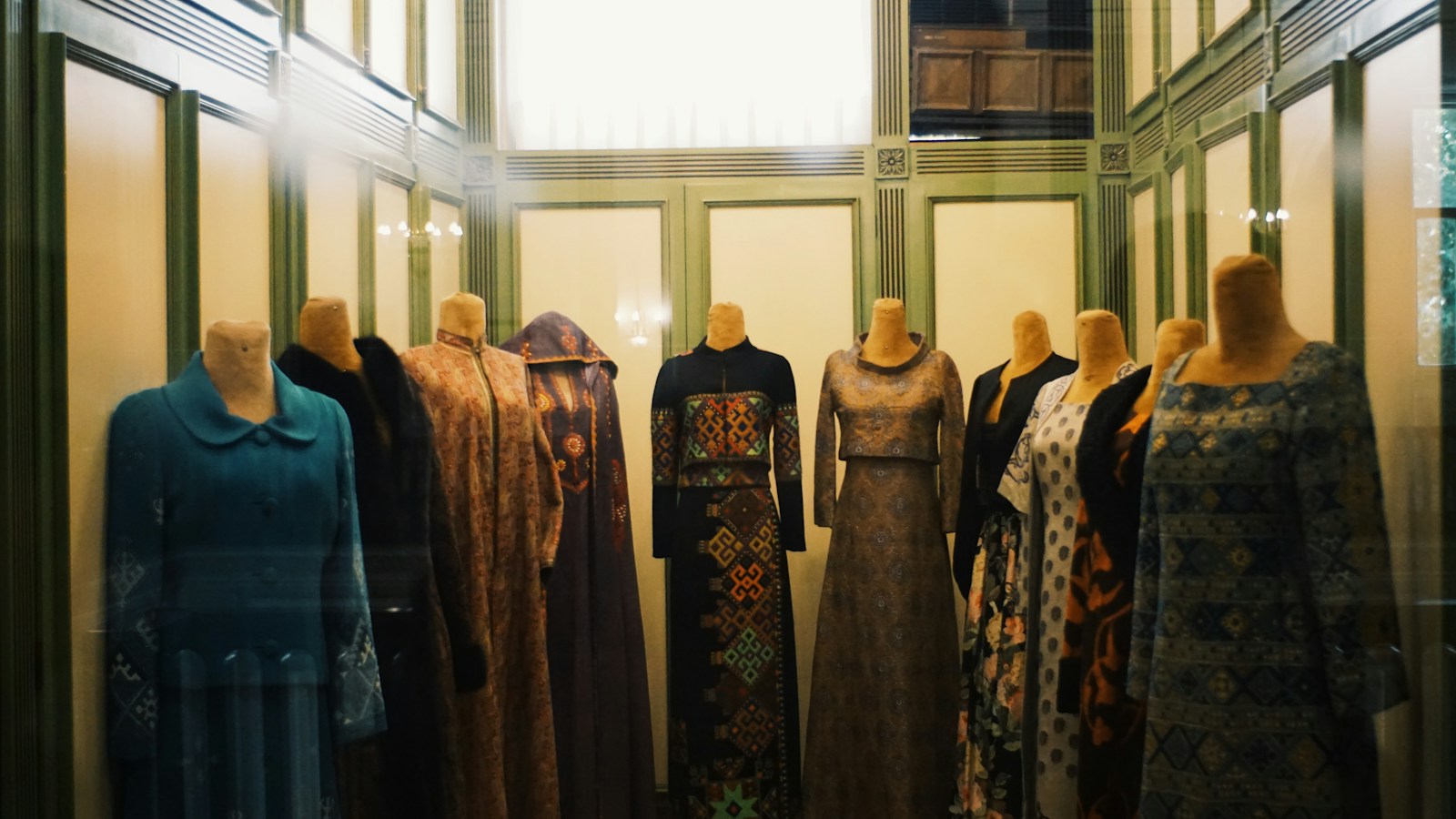
A clothing display in Tehran. Illustrative photograph by mdreza jalali / Unsplash.
Another angle on this subject
Continue through related ideas, decisions and consequences.
 Culture & Ideas
Along Animal Trails Asks How Museums Can Show a Shared History
UNESCO has announced the digital launch of an exhibition made by ten museums. A vessel recovered off Brunei illustrates how curators can explain what travelled and what remains uncertain.
 Culture & Ideas
What Two Works From 1709 Can Say Together in Cleveland
Apollo’s Fire has scheduled Handel and a Caribbean funeral oration in the same programme. The order creates a question about history that the shared date alone cannot answer.
 Culture & Ideas
What a Master Canoe Builder Teaches Beyond the Finished Boat
UNESCO’s tribute to Sione Tu’i’one Pulotu raises a practical question for craft programmes. What can an apprentice judge after the master has stepped away?