
Along Animal Trails Asks How Museums Can Show a Shared History
UNESCO has announced the digital launch of an exhibition made by ten museums. A vessel recovered off Brunei illustrates how curators can explain what travelled and what remains uncertain.
Inside this article
01A trail begins with the object that travelled ↓02Different kinds of evidence deserve different captions ↓03Put two local accounts beside each other ↓Event / source date: 12 November 2026 — UNESCO launch announcement. The public online event is scheduled for 26 November. · Published 13 NOVEMBER 2026
A trail begins with the object that travelled
A brown glazed pouring vessel in the form of an elephant appears in a UNESCO account of Along Animal Trails, a forthcoming digital exhibition. The project’s consultant, Anaïs Mattez, describes the object as having been made in upper central Thailand around five or six centuries ago and recovered from a shipwreck off Brunei in 1998. UNESCO’s announcement on 12 November set the public online launch for 26 November. Ten museums from Brunei Darussalam, Indonesia, Malaysia, Singapore and Thailand collaborated on the exhibition. The organisers have described four ways into the material, taking in creatures of the sky, land, sea and myth.
The vessel offers a strong opening because the place where it was found differs from the place where researchers attribute its production. A visitor can start with that difference and ask which evidence connects the two. The distance on a map is useful, but the shape of the object introduces a second question. What could people make of a familiar animal when it appeared on an unfamiliar vessel, made by somebody whose language they did not speak? That question can be raised with care even when the individual maker and buyer remain unidentified.
Different kinds of evidence deserve different captions
Finding an object in a wreck establishes one point in its movement, provided the find and its context are documented. An attribution based on the object’s fabric, glaze or form can connect it with a production area. A comparison between two decorations can suggest a shared design vocabulary. Each observation has a different reach. A single caption that jumps from a recognisable animal to a complete account of cultural exchange can conceal which steps are documented and which remain proposals.
The exhibition offers a chance to let the visitor follow these steps. For the elephant vessel, a short opening card could name its form, present location and reported recovery. A second layer could explain the basis for assigning it to a production area and identify an open question, such as its intended destination. That is an example of a useful presentation rather than a description of the unreleased interface. The uncertainty matters because a route inferred from surviving cargo can look far more complete on a map than the evidence makes it.
Put two local accounts beside each other
Mattez describes a discovery made during curatorial discussions. The Baba and Nyonya Heritage Museum in Malaysia and the Asian Civilisations Museum in Singapore hold similar Kam Cheng porcelain jars. Their designs gave the curators a visual basis for comparison. One curator could also explain a family memory attached to the jar held in the Malaysian museum, which occupies her ancestral home. The institutions can therefore tell more than one kind of story about similar objects. There is a story about design, and another about the way a vessel sat within the rhythms of a household.
Imagine a digital panel that gives each jar its own image and label before presenting the comparison. Visitors could see the motifs the institutions have identified as similar. They could then distinguish a shared design feature from a documented family use known for one object. A searchable caption could retain Kam Cheng as the object name and give a plain-language description alongside it. The local term then remains findable when the exhibition uses a broader category such as porcelain jar. The strongest result would be a viewer who can explain one connection and one local difference. Treating resemblance as the beginning of an inquiry helps preserve the details that made each institution’s account worth contributing.
How the comparison travels beyond the exhibition
UNESCO’s launch programme promises educational resources and a look at digital materials intended for creators. Their value depends partly on how much context remains attached when an object appears in a lesson, a short video or an article. A teacher may need a simple comparison ready for a classroom. A creator may have only a few seconds to name the source. A stable link back to the originating museum and a short statement of what the comparison establishes would make both tasks easier.
A classroom exercise could ask students to sort three pieces of information about a fictional object: a family account of its use, a museum record of where it was found and a specialist’s attribution of its maker. Students could then explain which statement they would use to support a claim about travel and which they would use to support a claim about meaning. The exercise carries forward a distinction raised in our analysis of underwater heritage. What has survived gives people something to investigate, and the conditions of its recovery shape what that investigation can reasonably conclude.
What to look for when the digital doors open
The announcement and the consultant’s account describe the project and its examples. The scheduled launch will provide an opportunity to see how the interface handles them. A visitor can ask whether every object has a named holding institution, whether a suggested connection comes with an explanation, and whether the digital path allows a return to a locally specific account. Those three features would make the project useful to anyone trying to compare material across borders.
A shared history deserves a method that keeps different lives visible. The elephant vessel supplies evidence of movement across water. The jars show how similar designs can lead to accounts of different homes and collections. An exhibition that gives both comparisons room makes the region easier to explore in detail.
Gabriel Nicolaev — CyGuru
Sources & further reading
UNESCO — Along Animal Trails digital launch announcement ↗
UNESCO — Woven by the sea and objects in the exhibition ↗
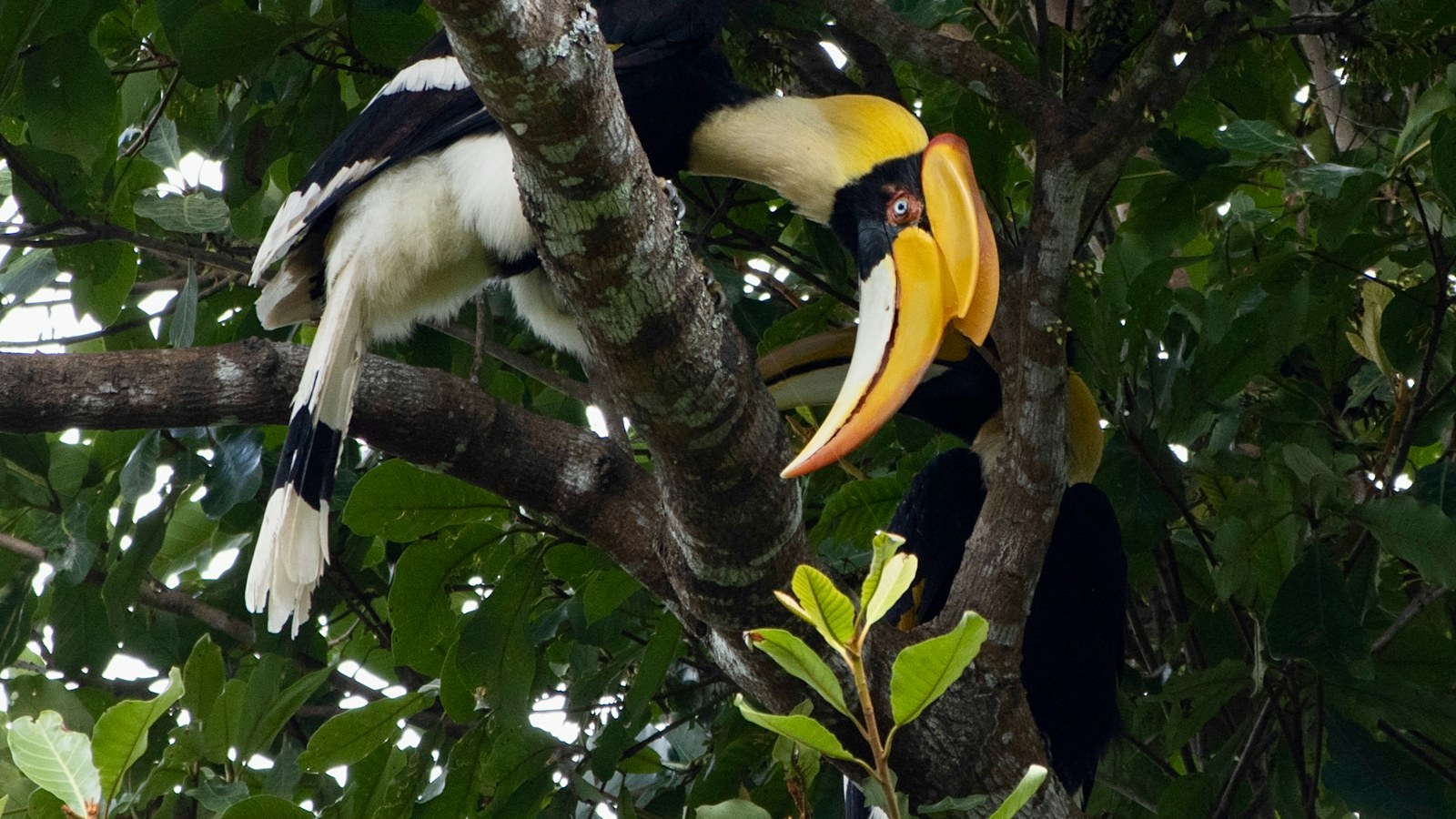
A great hornbill in Thailand, photographed by Hongbin via Unsplash. Illustrates one of the animal themes.
Another angle on this subject
Continue through related ideas, decisions and consequences.
 Culture & Ideas
What Two Works From 1709 Can Say Together in Cleveland
Apollo’s Fire has scheduled Handel and a Caribbean funeral oration in the same programme. The order creates a question about history that the shared date alone cannot answer.
 Culture & Ideas
Philadelphia’s Sunday Best Raises a Question About What Clothes Can Tell Us
The Philadelphia Museum of Art has announced a 2027 show about Black diasporic style. The setting around each garment can change what visitors understand about it.
 Culture & Ideas
The Building Is Part of the Haeinsa Collection
A UNESCO series has brought Korea’s Tripitaka woodblocks back into view. Their purpose-built depositories show what changes when conservation treats a building as part of the collection.