
After Living Hands Opens in Bethlehem, What Makes a Craft Commission Last?
A showcase of Palestinian craft can bring makers and buyers together. Repeat work depends on what they agree to once a design leaves the gallery.
Inside this article
01What a visitor can actually order ↓02Agree on the variation before pricing the piece ↓03Make the second order easier to place ↓Event / source date: 10 November 2026 — Bethlehem opening. UNESCO reported on the exhibition on 11 November. · Published 12 NOVEMBER 2026
What a visitor can actually order
The Living Hands exhibition opened at the Bethlehem Peace Center on 10 November with an unusually practical question hanging over its display. If a visitor sees a piece of Palestinian olivewood carving and wants to commission more work, can that request reach the maker in a form they can actually price and accept? A short exchange at a market can begin the conversation. Getting from there to a second order takes decisions that are rarely visible in the gallery.
UNESCO’s 11 November account says a craft market preceded the Bethlehem opening and gave visitors a chance to meet makers and purchase pieces. The exhibition, which follows a stop in Al-Bireh, is scheduled through 25 November. Its 27 projects emerged from two years of collaboration across six craft traditions, among them pottery, glassblowing, olivewood carving and mother-of-pearl inlay. UNESCO describes finished products, prototypes and concepts. That distinction tells a prospective buyer where a conversation can start. An object displayed as a concept may still require trials before anyone can promise an agreed quantity, finish or delivery date.
The programme gives makers a place to meet people who might buy a piece or commission new work. UNESCO’s account establishes that encounter and documents the design collaboration. Longer-term sales, workshop earnings and buyer behaviour remain open questions. The case for the exhibition becomes stronger if its organisers can trace what happens to a request after it reaches a maker.
Agree on the variation before pricing the piece
Take a hypothetical commission for twelve hand-carved olivewood trays for a guesthouse. A buyer might send a photograph of a prototype with a request to make twelve more. The photograph shows a silhouette and a particular piece of wood. It leaves room for different assumptions about usable size, weight, oil treatment and the shape of the handles. The maker needs to know whether staff will carry food on the trays or whether the trays will hold keys and stationery. Each use points to different requirements.
A prototype can support a short production brief. The parties could agree on a minimum interior dimension, approximate outer dimensions, what degree of variation is welcome and which finish suits the intended use. They could approve one sample from the materials the maker expects to use. If wood grain varies, that variation can be part of the brief rather than a cause of rejection. A small demonstration batch lets the maker check how repeat work fits alongside other orders and lets the buyer see which features are consistent across pieces.
The price belongs beside that specification. A full quote can distinguish sampling, production, packing and any delivery responsibilities. The buyer can then see which request changed the price. The maker has a clearer basis for declining quantities beyond the workshop’s available time. Giving the decision to someone with a real budget and defined purpose also raises the question of who gets to commission the work once the exhibition closes.
Make the second order easier to place
The exhibit label may identify an artisan and designer, while the email requesting a replacement might travel through a venue, a programme office or a buyer’s procurement account. If the person who handled the first sale leaves, the buyer may only have an invoice from an intermediary. A reorder needs its own route back to whoever can make and quote the work. The maker should be able to choose a sustainable contact channel. A workshop number or an association address can be more durable than a personal message thread.
That same handover can preserve credit. A guesthouse using pieces from a collaborative design needs a name and description it can put in a room guide. The workshop and designer may also need to agree on whether the buyer can reproduce the design elsewhere, circulate the drawings or use their names in advertising. Those are choices to discuss during the commission. The presence of an object in a gallery tells a visitor who exhibited it. Permission for commercial reproduction requires a separate agreement.
A reorder also tests the promise of repair. If a handle cracks, the guesthouse needs enough information to decide whether the original workshop can repair it and what shipping a replacement entails. If a set is useful enough to justify another order, the previous specification can save time while leaving room to quote against new costs. That creates a more realistic prospect of continuing work than a request to match an image found months later.
Follow the inquiries once the doors close
A gallery can count its visitors while the programme runs. A more useful account of the commission process would also record how many inquiries reached a named workshop, how many became paid samples, how many led to an order and whether anyone came back. The reason an inquiry stopped can help the next organiser. Perhaps the quantity was too large, the delivery date unrealistic or the buyer had approval to spend less than the work cost. These are different problems and they call for different changes.
UNESCO says the project brought together 24 artisans and 43 designers with participating associations and an academic institution. That breadth makes the exhibition a place to see several ways of collaborating. It also means that a report on results would benefit from distinguishing the projects. A piece that works as a demonstration can carry real educational value. A workshop relying on a continuing order has a different reason for assessing a design.
The nearest opportunity is for a visitor to leave with a useful contact, permission to ask about a commission and enough information to have that first exchange. A durable result would be a later buyer able to ask for work the maker has a reason to accept, with a price, a feasible delivery and the credit intact. The opening made such conversations possible. Their terms will tell us what the showcase helped create.
Gabriel Nicolaev — CyGuru
Sources & further reading
UNESCO — Living Hands arrives in Bethlehem ↗
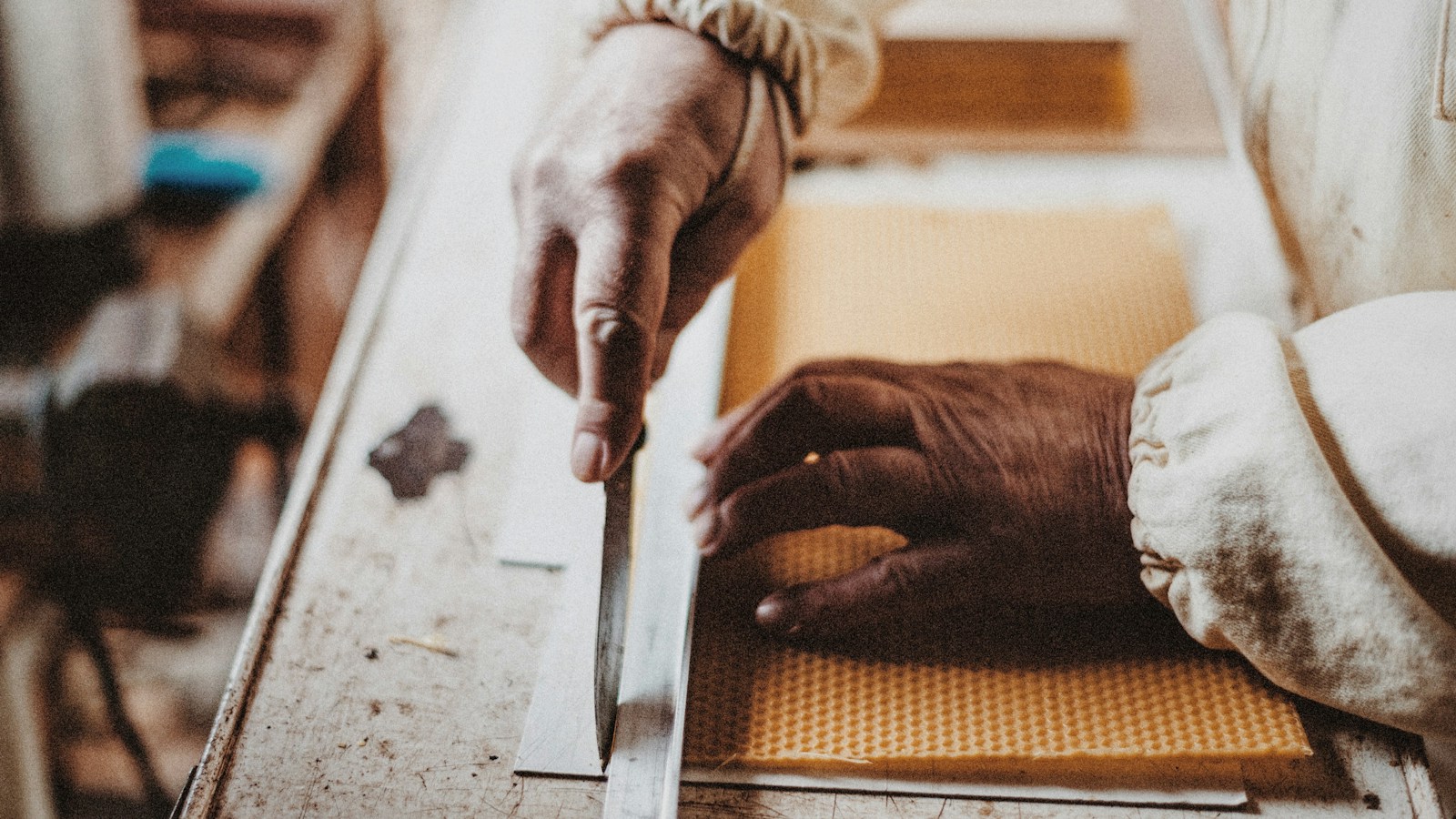
Handwork at a workbench. Illustrative photograph by Roman Kraft / Unsplash.
Another angle on this subject
Continue through related ideas, decisions and consequences.
 Culture & Ideas
Gitega’s Museum Project Should Be Judged Through the Visit It Makes Possible
A UNESCO–ALIPH rehabilitation project in Burundi invites a practical test of museum renewal: conservation, access and education must work together.
 Technology & AI
Aion Instruct’s Larger Context Window Makes the Laptop a Resource Budget
Microsoft’s local AI plan expands the material an application can submit. The useful question is how much work a shared device should accept at once.
 The CyGuru Column
Correct the Biography People Are Using
An old biography can keep circulating after the job it describes has ended. Keep the record of the work and give editors a reliable sentence they can use today.