
CyKidWorld Launches in Dubai With Children’s Stories in Six Languages
Gabriel Nicolaev introduces CyKidWorld, an illustrated story library for families, with an Arabic edition and five other reading languages.
Inside this article
01An invitation from Dubai ↓02Start with the language your family wants to hear ↓03Let the child choose the first adventure ↓An invitation from Dubai
I launched CyKidWorld in Dubai to give families a place to discover illustrated stories together. The idea begins with a familiar evening choice. A parent wants something to read with a child, the child wants an adventure, and the language that feels right for the story might differ from the language they used at school that day.
CyKidWorld gives families a choice of six reading languages: Arabic, English, Romanian, Russian, Spanish and Simplified Chinese. The invitation is simple. Open the collection, let your child choose a world and begin with one chapter. You can read aloud, take turns or sit beside them while they explore the illustrations. The collection is there for the evening when you have ten quiet minutes as much as for the weekend when you can stay with a story longer.
Start with the language your family wants to hear
Arabic has its own edition, with right-to-left navigation and Arabic typography. Families can choose any of the six editions from the language selector on the main site. That matters when several people share a device or when the adult reading tonight prefers a different language from the person who read yesterday.
Imagine a child who wants to hear a story in Arabic with a grandparent and then revisit a favourite scene in English with a sibling. The picture gives both conversations a common starting point. One reader might notice a detail in the landscape while another wants to know what a character will do next. A family can follow those interests without arranging the evening around a translation exercise.
Some children will want the same version every time. Others may be curious to hear how a familiar title sounds in another language. Both are good reasons to return. Choose the language that makes it easiest to enjoy the moment together.
Let the child choose the first adventure
The collection offers several starting points. The Lost Little Star is an invitation for a child drawn to the night sky. The Forest of Questions gives a family a title to open when the child has questions of their own. The Kindness Code can begin a conversation about what a character does when another person needs help. Readers who prefer distant worlds can browse The Secret of Vega or The Skykeepers of Venus.
One way to choose is to look at the covers together and ask which world they would like to visit. A child who has already picked the forest may be more interested in what is hidden among the trees than in the title you originally planned to read. Follow their choice for that evening. If they ask to revisit the same story tomorrow, there is room to notice something different on a second visit.
I wanted the worlds to give children things to wonder about: a path disappearing into the distance, a sky that seems to hold a secret, or a small figure facing a choice that feels larger than they are. An illustration can give a child a chance to tell you what they see before the next paragraph explains what happens.
Give the story room to become a conversation
The site pairs chapters with discovery activities. A family can try one when it fits the evening, or pause over a question of its own. Ask what the child thinks is about to happen. If a character makes a difficult choice, ask what the child would do in that scene. When they notice something you missed, ask them to show you where they saw it.
There is no need to finish a book in one sitting. You can stop after a scene and ask which part the child wants to remember for the next evening. They may give you the name of a place, an object in the picture or a question nobody in the story has answered yet. That detail gives you a place to pick up together.
A parent reading with two children can give them different ways to join in. One might read a short passage while the other describes the illustration. A younger listener can point to a favourite detail. Older children can carry the story forward by telling the family what they think the characters are trying to achieve.
CYPAPER has explored why a children’s library should give the story time to arrive before the lesson. The same principle can guide how you use the activities here. If your child is absorbed in what happens next, follow the chapter. If a question sends you back to an earlier picture, turn back together. A discovery activity can wait until the story has raised a question the child actually wants to answer.
Open the library and choose a story tonight
Visit CyKidWorld and choose a cover with your child. Use the language selector to start reading in any of the six available languages. Read a chapter together and see which question, image or character your child brings into the conversation.
I would be glad for CyKidWorld to become one of the places your family returns to when it wants a story. Begin wherever your child’s curiosity takes you.
Gabriel Nicolaev — CyGuru
Sources & further reading
CyKidWorld official collection and language editions ↗
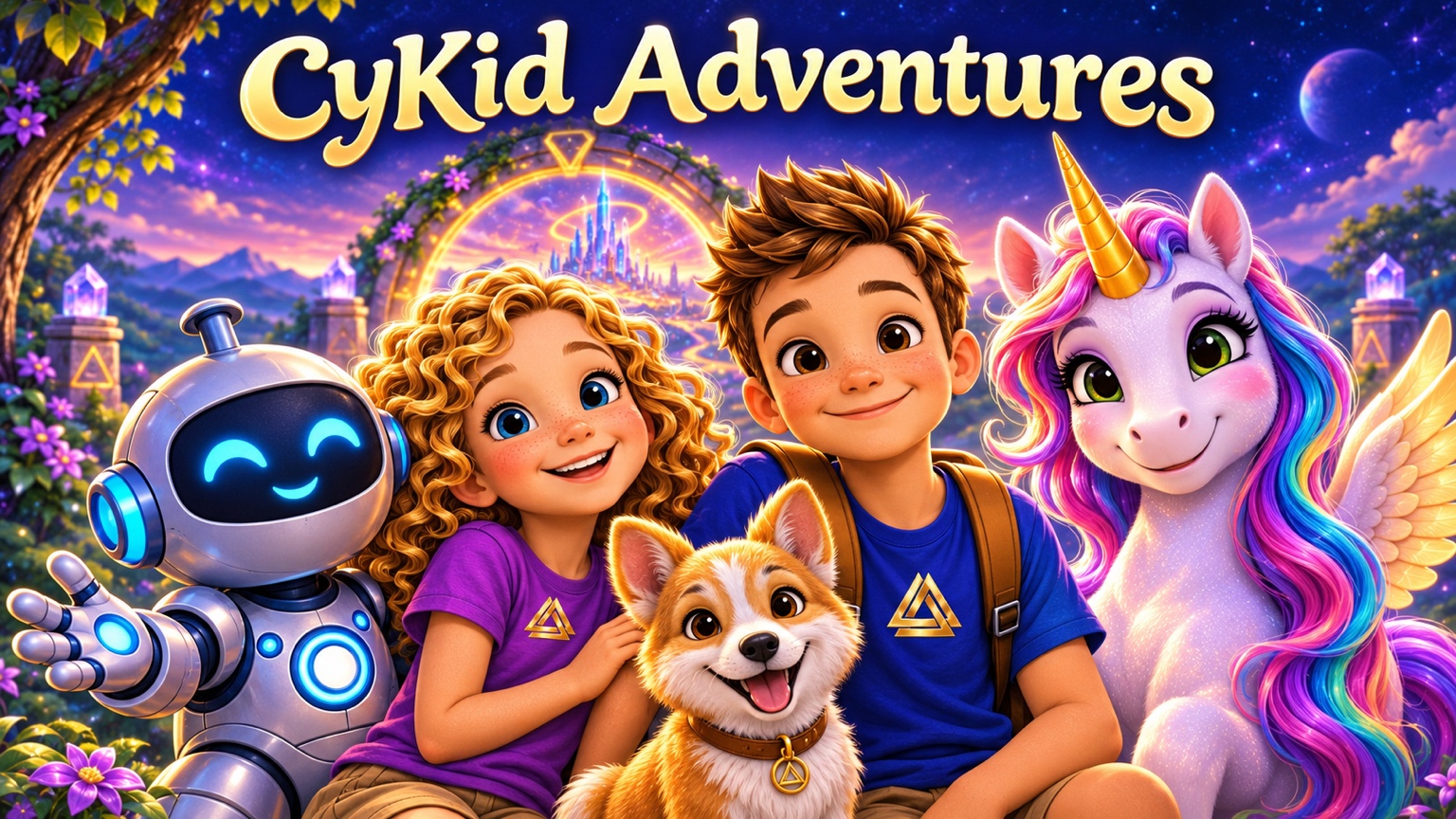
CyKid Adventures. Banner supplied by the project owner.
Another angle on this subject
Continue through related ideas, decisions and consequences.
 The CyGuru Column
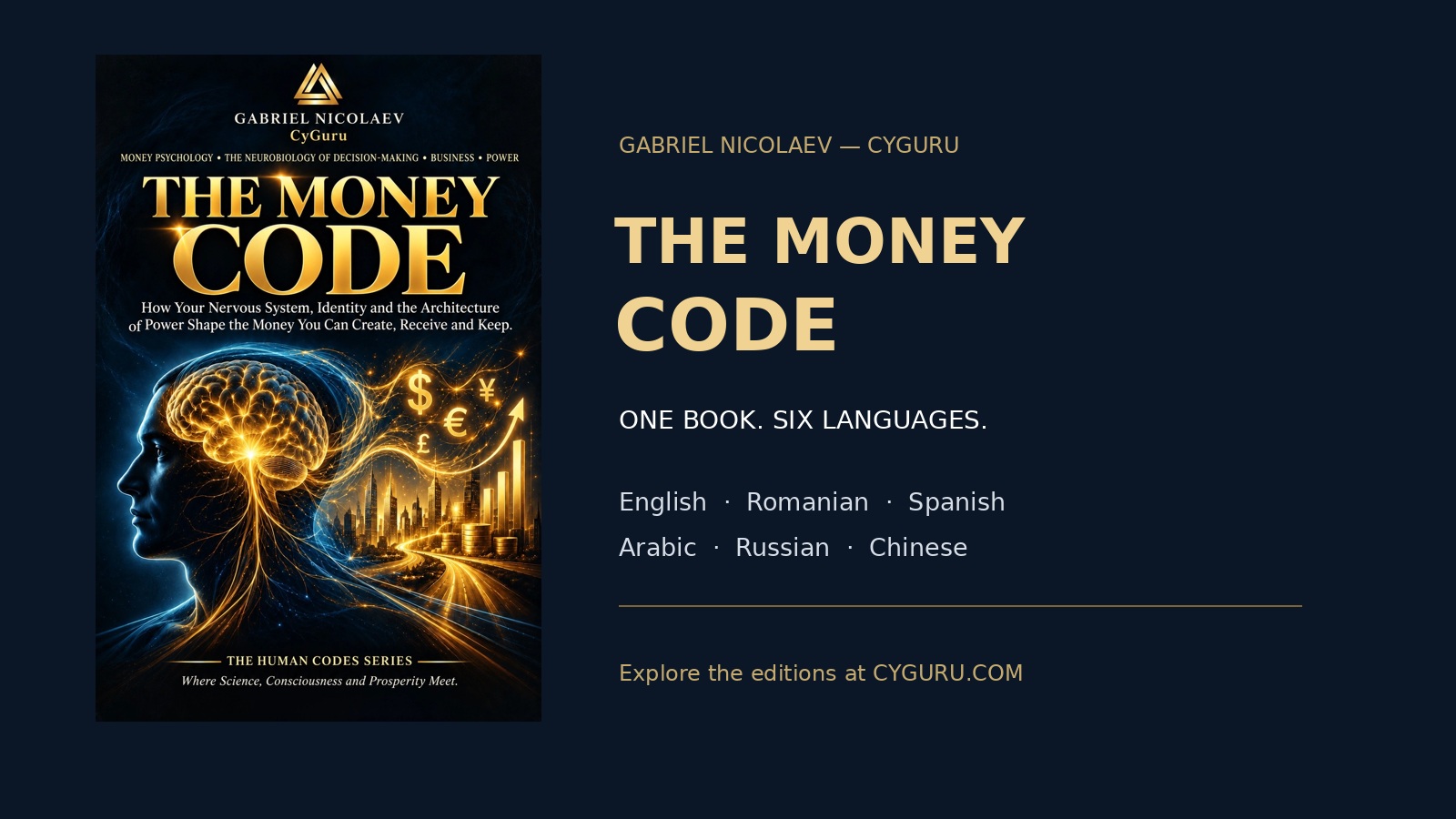
The Money Code: Six Languages, One Question About Financial Freedom
Gabriel Nicolaev — CyGuru introduces The Money Code across six language editions, asking what earning, ownership and obligations actually make possible.
 Culture & Ideas
A Children’s Library Should Let the Story Arrive Before the Lesson
A new Mexico City reading space prompts a question about children’s literature: how can a public purpose guide a collection without deciding every reader’s response?
 Money & Business
CyPredict: Gold Terminal, Market Research and a Clearer Decision Process — Also in Arabic
Gabriel Nicolaev introduces CyPredict: Gold Terminal, market context, decision planning and a private journal, with an Arabic experience for gold-market readers.