
A Children’s Library Should Let the Story Arrive Before the Lesson
A new Mexico City reading space prompts a question about children’s literature: how can a public purpose guide a collection without deciding every reader’s response?
Inside this article
01A new account of an October opening ↓02Choose a story for what it can hold ↓03The first question can be about the experience ↓Event / source date: Library inaugurated 17 October 2026; UNESCO account published 6 November 2026. · Published 8 NOVEMBER 2026
A new account of an October opening
UNESCO’s 6 November account describes a children’s library at the Audiorama in Mexico City’s Chapultepec Forest, inaugurated on 17 October. The space offers 92 children’s and young adult books for free reading. It belongs to the SDG Book Club’s Mexico chapter, which connects literature with the Sustainable Development Goals. The account describes the programme’s aims; it does not establish how individual children have interpreted the collection.
This analysis examines the relationship between a chosen public purpose and an open reading experience. It does not present the October opening as an event of this week. The question is how an institution can invite reflection on a subject while leaving the story room to become more than an illustration of a preselected answer.
Choose a story for what it can hold
A collection organised around a theme should still contain books worth reading as books. A character needs more than the task of representing a desirable behaviour. A difficult situation needs enough detail for a reader to encounter its tensions, rather than merely recognise which response an adult has already marked as correct.
Consider a hypothetical story about neighbours sharing a limited resource. Its educational value need not depend on making every character agreeable. It can let children notice competing needs, an unfair arrangement or an unresolved question. The librarian’s role could be to help the conversation stay connected to the text, not to remove every complication that makes the story interesting.
The first question can be about the experience
An adult introducing a book can begin by asking what the reader noticed. Which character held their attention? Where did the story become confusing? What image stayed with them? These questions allow an encounter with the work before asking the reader to demonstrate a lesson.
A question such as “What should we learn?” has a place, but it can also imply that the encounter has one authorised destination. My recommendation is to leave room for a response the adult did not anticipate. A child may care about a minor character or a detail that appears unrelated to the programme’s theme. That interest can be a legitimate beginning rather than a distraction to correct.
A facilitator can ask a second question before interpreting a surprising answer: what in the book led you there? That keeps the discussion with the reader long enough to distinguish an unexpected reading from a misunderstanding, instead of correcting both in the same way.
Do not make every disagreement a failed lesson
Two readers can disagree about a character’s choice while both attending carefully. A useful conversation asks them to explain what in the story supports their interpretation. It need not rush towards agreement merely because the collection has a shared public purpose.
Imagine a fictional group discussing whether a character should have shared an object. One reader notices generosity; another notices that the character was never asked. The discussion can examine both observations. This is a proposed approach to facilitation, not a finding from the Chapultepec programme. It respects the difference between encouraging consideration and requiring the same conclusion from everyone who enters the reading space.
Let the collection contain different kinds of entry
A reader might begin with pictures, a familiar language, a humorous character or a subject already loved. A programme should not assume that serious engagement must look the same across every book. An illustrated encounter can be valuable without becoming a preliminary test that must be passed before the real reading starts.
The practical curation question is whether the collection offers several ways to begin and somewhere to go next. A facilitator could connect a reader’s interest with another book without turning that suggestion into an assignment. The connection should remain intelligible: this story asks a related question, shows another perspective or uses a different form. Variety becomes meaningful when a reader can experience the difference.
A public purpose should be explained to adults too
Families deserve to understand why a collection was assembled and what participation involves. An institution can state its themes openly while avoiding promises that a particular book will produce a particular attitude. The collection is an invitation to reading and discussion, not evidence that a desired transformation has already occurred.
This distinction also improves reporting. Attendance, books available and activities delivered describe provision. Reader responses describe another part of the experience and need appropriate interpretation. Neither should be inflated into a claim that every participant acquired a predetermined value. A public account can celebrate the creation of a space while remaining precise about what the available evidence demonstrates.
Keep the book larger than the programme
The strongest thematic reading space should allow a book to exceed the category that brought it into the collection. A story chosen for its relation to nature may also concern friendship, fear, humour or a place a reader recognises. Those connections are part of the work’s life, not failures of focus.
The Chapultepec account offers a timely reason to examine this balance. A clear institutional purpose can guide selection and support a welcoming setting. It should not close the interpretive space that makes literature distinctive. Let the story arrive, let the reader respond and let the discussion earn its conclusions through attention. A reading programme becomes more credible when it can tolerate the fact that a real encounter may produce a better question than the one planned.
Gabriel Nicolaev — CyGuru
Sources & further reading
UNESCO: SDG Book Club library in Chapultepec ↗
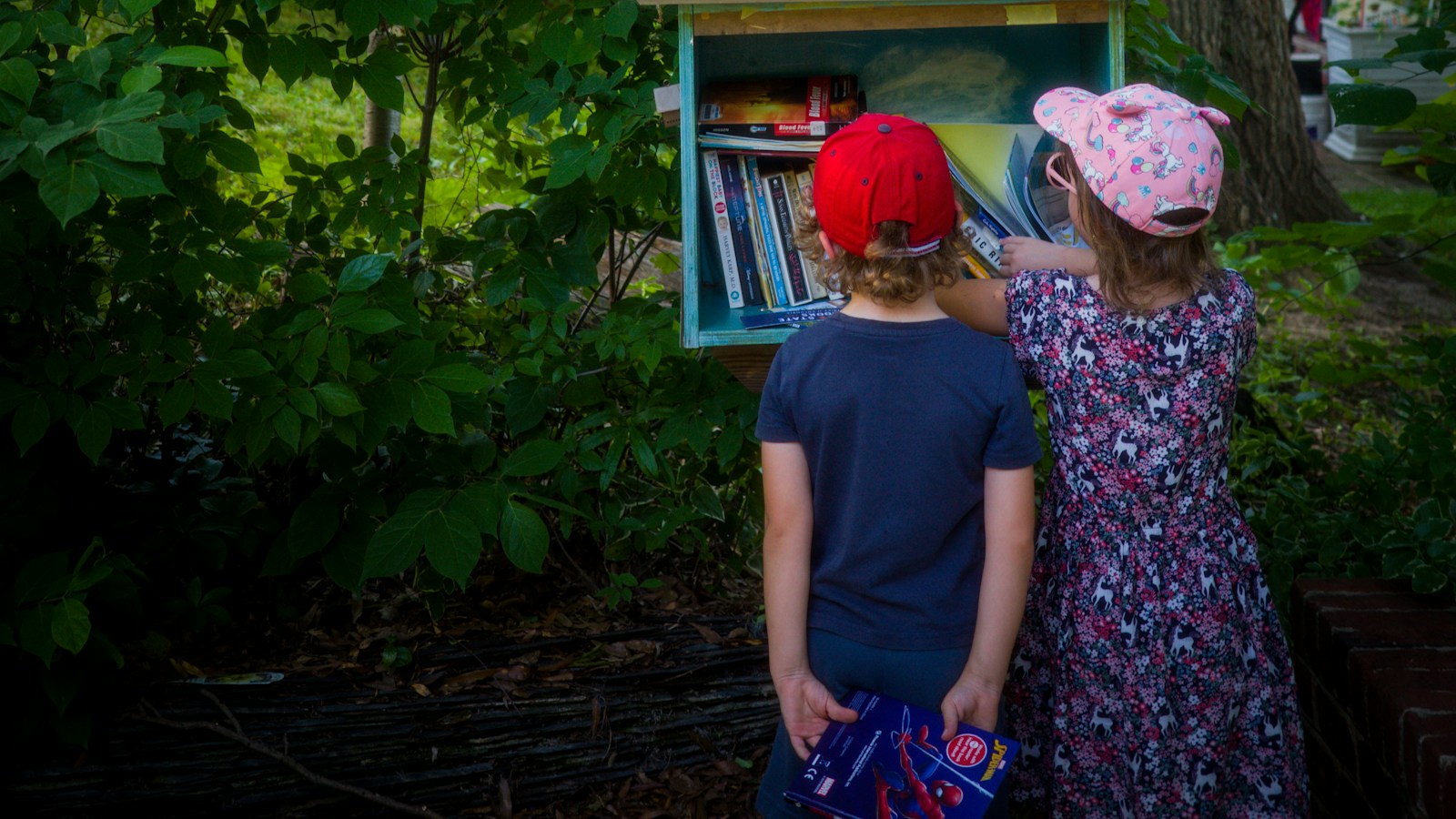
Editorial photograph for illustration.
Another angle on this subject
Continue through related ideas, decisions and consequences.
 Culture & Ideas
A Public Library Should Not Require a Purchase to Justify Your Presence
An opinion essay on libraries as places to read, ask, learn and remain without turning every visit into a commercial transaction.
 Culture & Ideas
Ethical Content Creation Begins Before the Camera Turns On
A Nepal creator workshop raises a practical editorial question: what must be settled before a compelling scene becomes somebody else’s public story?
 Culture & Ideas
Venice’s Flood Anniversary Reveals the Long Life of Cultural Cooperation
A new UNESCO–Fondazione Giorgio Cini project revisits the response to the 1966 flood, raising a deeper question about who sustains heritage after an emergency.