
A Heritage Visitor Limit Needs a Rule for the Bottleneck
UNESCO’s Samaipata workshop puts visitor carrying capacity on the agenda. The useful number is the one that protects the actual point of pressure.
Inside this article
01A workshop opens a management question ↓02Find the point at which the visit changes ↓03Separate physical space from conservation judgment ↓Event / source date: UNESCO account published 9 November 2026; the underlying activity is not assigned that publication date. · Published 10 NOVEMBER 2026
A workshop opens a management question
UNESCO reported on 9 November that it organised training on tourism carrying capacity at Bolivia’s Fuerte de Samaipata World Heritage property. Its account describes fieldwork, observation of visitor behaviour and measurement of routes and areas, involving park rangers, technical staff and local tourism stakeholders. It presents stronger management as the purpose of the activity, rather than publishing an independently demonstrated improvement in conservation.
That distinction leaves a useful question for analysis: what should a visitor limit actually limit? A daily admissions number can look precise while leaving the busiest platform, narrowest passage or most vulnerable surface exposed to a concentration the number was never designed to describe. The important unit may be a place during an interval, rather than an entrance during a day.
Find the point at which the visit changes
Consider a hypothetical archaeological park with an open arrival area and one narrow viewing ledge. A comfortable total attendance could still produce an unacceptable crowd at that ledge if every guided group arrives together. Conversely, a large open area does not automatically justify increasing admissions when every visitor must pass through the same constrained place.
Management should therefore describe the visitor journey before selecting its headline number. Where do people stop, wait, turn around or move off the intended route? Which actions need intervention, and which merely reflect an enjoyable visit? These are questions for actual observation, not assumptions about how an ideal visitor ought to behave. The hypothetical example is not a description of a problem UNESCO established at Samaipata.
Separate physical space from conservation judgment
A route can have enough room for people without making every kind of use appropriate. The available walking area and the condition of a heritage feature ask different questions. A capacity assessment should explain which constraint it is addressing and what evidence would require a change.
That explanation matters when a limit is communicated publicly. Calling a number scientific should not conceal the judgment involved in deciding what degree of wear or disturbance is acceptable. Technical measurement can inform that choice; it cannot make the institution’s responsibility disappear. The public account should identify what was measured, what remains uncertain and who decided how the evidence should influence access.
Manage the interval, not only the ticket
A hypothetical response might allocate arrival windows, change the order of a tour or allow a group to enter a constrained section only after another has left. Each response distributes the same potential attendance differently. None should be presented as the answer before examining the actual route and the obligations associated with the site.
A timed ticket also needs an operating arrangement. What happens to a late group? Can a guide see that the next section is occupied? Where can visitors wait without creating a new obstruction? A rule that works only when every arrival is punctual may transfer pressure rather than resolve it. Designing the exception is part of designing the ordinary visit.
Ask what the limit makes possible
Access is not simply a quantity to maximise or minimise. A useful visit may need time to look closely, understand a feature and ask a question. A schedule that moves everyone rapidly through a place could meet a numerical target while undermining the encounter the institution exists to provide.
The assessment should therefore connect conservation and interpretation. If a guide needs a stopping place to explain a feature, that requirement belongs in the route design. If visitors need a safe alternative to approaching a vulnerable surface, the alternative should provide something worth seeing. Restriction is more intelligible when people can understand the experience it protects, rather than encountering a sequence of unexplained refusals.
Let workers test whether the rule can be carried out
Staff who operate the route should be able to describe where the proposed arrangement depends on information or authority they do not have. A hypothetical ranger instructed to prevent crowding needs a way to communicate with the entrance, not merely a target displayed in an office. A guide needs to understand which change can be made independently and which requires coordination.
This is an argument for operational review, not a claim that a workshop attendance list proves readiness. UNESCO’s report establishes that training and practical activities occurred. It does not supply a public compliance audit for every future visit. The next useful evidence would concern the management arrangement adopted, its reasons and what subsequent observation reveals about its performance.
Revisit the decision when its basis changes
A limit should retain a record of the conditions under which it was set. A route closure, altered tour pattern or new interpretive stop can change where pressure occurs. Repeating an old number without its assumptions can make continuity look like evidence. Revision should be possible without treating every adjustment as an institutional embarrassment.
CYPAPER’s analysis of Uganda’s shared visitor journey considers coordination across destinations. Here the issue is smaller and more physical: whether the rule follows the visitor all the way to the bottleneck. A carrying-capacity exercise earns practical value when its measurements can change that encounter, while preserving a clear account of what has and has not been demonstrated.
Gabriel Nicolaev — CyGuru
Sources & further reading
UNESCO: sustainable tourism management at Fuerte de Samaipata ↗
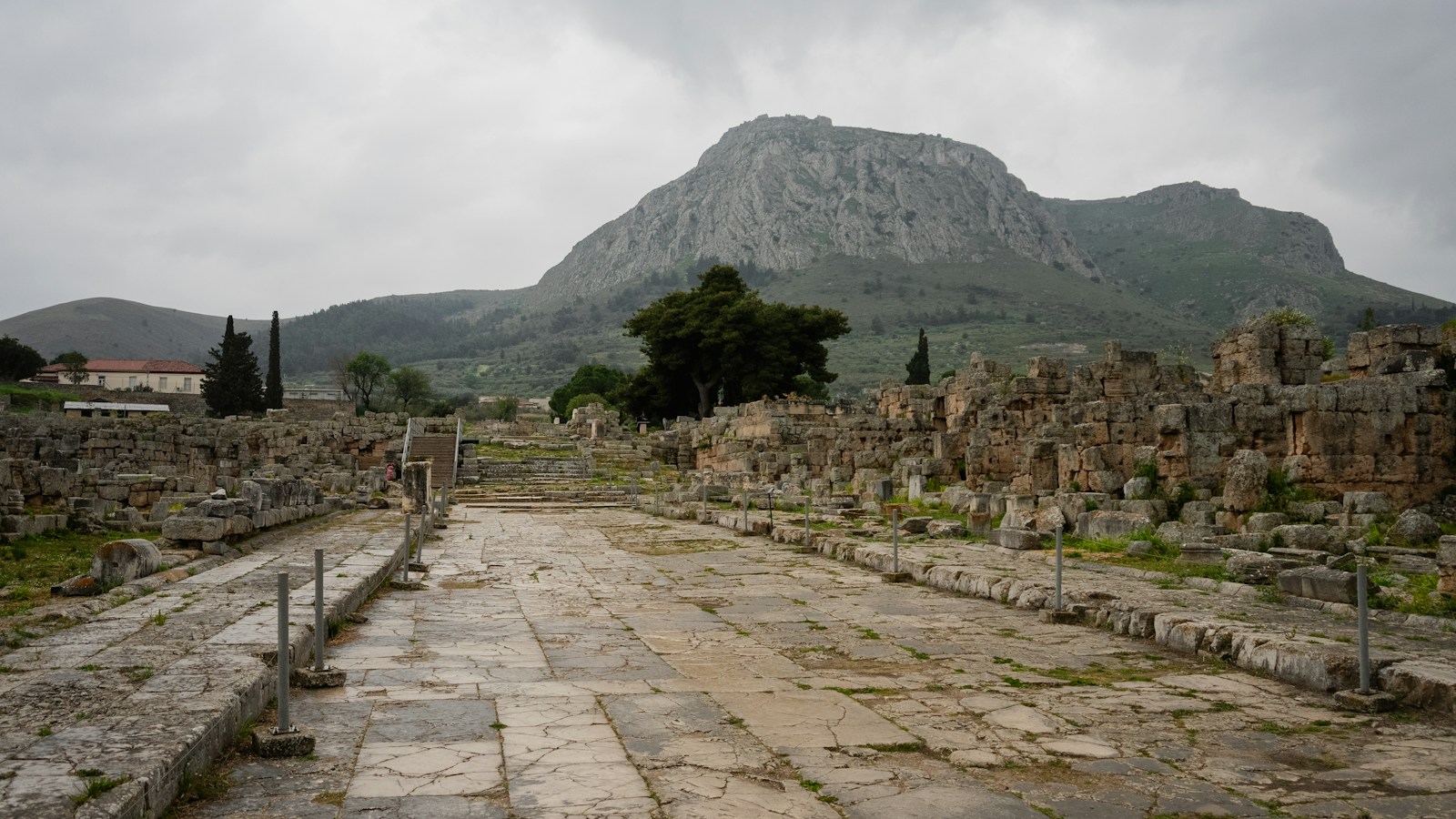
Ancient stone roadway and ruins at Ancient Corinth in Greece, with a mountain behind; illustrative photograph, not El Fuerte de Samaipata in Bolivia.
Another angle on this subject
Continue through related ideas, decisions and consequences.
 Culture & Ideas
A Documentary Heritage Listing Needs a Clear Unit of Record
Twenty-one Asia-Pacific register additions show how differently a single inscription can be constituted. A reader needs to know what the entry covers before citing it.
 Culture & Ideas
Heritage Readiness Needs a Rehearsal Before the Weather Turns
UNESCO’s culture preparedness work raises an operational question: can an institution act on its readiness assessment when access, communication and time become constrained?
 Technology & AI
A Browser Video Editor Needs a Release Rule for Every Frame
The latest WebCodecs working draft is a useful prompt to examine frame ownership, bounded queues and cancellation in a browser media pipeline.