
A Browser Video Editor Needs a Release Rule for Every Frame
The latest WebCodecs working draft is a useful prompt to examine frame ownership, bounded queues and cancellation in a browser media pipeline.
Inside this article
01A fresh draft makes an existing responsibility visible ↓02A frame should arrive with a destination and an ending ↓03A second use should be an explicit design choice ↓Event / source date: W3C published this WebCodecs Working Draft on 8 November 2026. The article examines its resource-lifetime provisions, without claiming they originated in that revision. · Published 10 NOVEMBER 2026
A fresh draft makes an existing responsibility visible
W3C published a WebCodecs Working Draft on 8 November. It defines interfaces for encoding and decoding audio, video and images; it neither requires a particular codec nor establishes universal implementation support. The document remains work in progress, and publication does not imply W3C endorsement.
Its memory model describes frame references, cloning and closing, and encourages authors to close frames when no longer needed. The analysis here concerns the engineering responsibility that follows: a media pipeline should identify who owns each frame and when that ownership ends. It does not claim that these mechanisms were first introduced in the latest draft or that a particular browser product has a newly discovered defect.
A frame should arrive with a destination and an ending
Consider a hypothetical browser editor that decodes a clip, displays a preview and prepares an export. The design should specify what each stage receives and what it is allowed to retain. A frame waiting for the next consumer needs a different account from a frame deliberately kept as the current preview.
A useful engineering review can follow one frame through those stages. Who accepts responsibility at the handover? What event makes the previous stage finished with it? Which path handles an error? These questions are more precise than a general request to reduce memory use. They turn resource handling into explicit parts of the pipeline that reviewers can examine alongside the feature’s visible output.
A second use should be an explicit design choice
The draft explains that a cloned frame object can refer to the same underlying media resource, and that closing clears a reference. That distinction matters when reasoning about a pipeline: creating another handle should not be casually interpreted as creating an unrelated object whose lifetime can be ignored.
For the hypothetical editor, the preview and export paths should have an explicit arrangement. Does each need its own reference? When is each finished? The answers depend on the actual design and should be reviewed by the implementation team. The purpose of the exercise is to avoid an ambiguous handover in which both consumers assume the other will deal with the lifetime, or one consumer ends its use while another still requires access.
A queue is a promise to hold unfinished work
Suppose the fictional editor accepts new frames while a filter stage is slower than the rate at which work arrives. The design should decide how much unfinished work it is prepared to retain and what happens when that limit is reached. Possible policies should be chosen for the task, rather than inherited accidentally from the absence of a limit.
A live preview and a completed export can require different choices. The preview might prioritise a current view, while an export needs an explicit account of the frames required for the selected result. This is a proposed design distinction, not an assertion that any particular policy is correct for every application. The acceptance criteria should make the intended behaviour clear enough to test under sustained input.
Cancellation should stop ownership from becoming orphaned
A user can cancel an export or select another clip before the current task finishes. The implementation should explain which work still belongs to the old task and which output, if any, may enter the new one. It should also identify how queued or retained frames associated with the abandoned task reach the end of their intended lifetime.
A hypothetical test could start a job, interrupt it at several stages and inspect the resources and messages that remain. The review should ask whether a later callback is still meaningful for the current task, rather than simply whether the interface returned to an idle appearance. A clean screen is not the full account of a completed cancellation. The internal work needs an ending consistent with the user’s new choice.
Test the long session, not only the first successful clip
A feature review should include repeated use: opening a clip, changing it, previewing, exporting and cancelling in different sequences. Reviewers would decide the expected resource behaviour before running the exercise and examine whether the implementation meets those expectations. The relevant evidence should include the supported environments the product actually promises to serve.
The team should also define what happens when a needed resource is unavailable. The draft includes resource-reclamation provisions; that is a reason to examine the error path, not to promise that a workload can always keep running. A product should explain the state of the task truthfully and offer an appropriate next action. An error should not leave the user uncertain about whether an export exists or a later retry will repeat work.
Engineering quality includes the work that has ended
CYPAPER’s examination of rollback and changed data concerns a different state problem. Here the object is a live media resource and the references that keep it in use. Both require a design that considers transitions, but the engineering tests should follow the actual object rather than reuse a generic checklist.
The latest WebCodecs draft supplies a concrete occasion to revisit that design. A browser editor should be able to explain not only how it creates an attractive output, but how every path finishes with the resources it acquired. The feature is more complete when successful delivery, cancellation and failure all have explicit endings. A frame that has done its work should not remain a responsibility that nobody remembers accepting.
Gabriel Nicolaev — CyGuru
Sources & further reading
W3C WebCodecs Working Draft, 8 November 2026 ↗
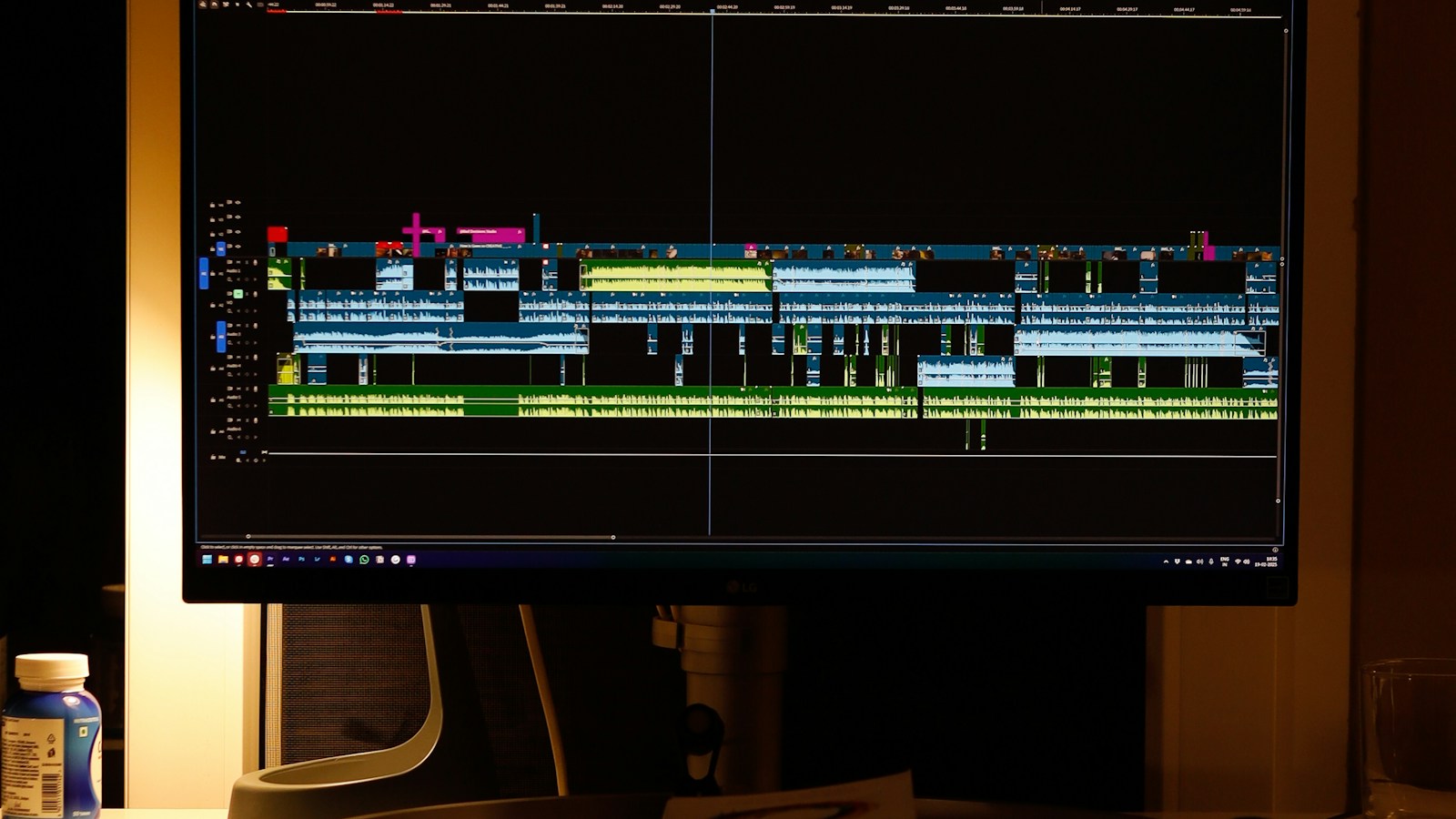
Monitor displaying a multicoloured video-editing timeline in a dim workspace; illustrative photograph.
Another angle on this subject
Continue through related ideas, decisions and consequences.
 Culture & Ideas
A Heritage Visitor Limit Needs a Rule for the Bottleneck
UNESCO’s Samaipata workshop puts visitor carrying capacity on the agenda. The useful number is the one that protects the actual point of pressure.
 World & Power
Public Waitlists Need a Rule for Moving Between Queues
An original governance essay on transfers, changing eligibility and the decisions hidden when a public service treats every waiting list as a separate world.
 Culture & Ideas
Climate Education Needs a Task the Learner Can Examine
An account of teacher workshops in Sri Lanka and the Maldives invites a closer look at the difference between a worthy classroom theme and a useful learning task.