
Heritage Readiness Needs a Rehearsal Before the Weather Turns
UNESCO’s culture preparedness work raises an operational question: can an institution act on its readiness assessment when access, communication and time become constrained?
Inside this article
01A tool is the beginning of preparation ↓02Start with the action that must happen first ↓03Care for people and collections needs an order ↓A tool is the beginning of preparation
UNESCO’s account of its Culture × El Niño initiative describes regional webinars held from 2 to 5 October 2026 and a self-assessment tool organised around four phases and ten steps. The article, originally dated 21 October, reports participation by more than 530 people from 46 countries. Those figures describe participation in the programme. They do not establish that every participating institution can carry out an effective emergency response.
This is an analysis of preparedness, not a report of a new disaster or a prediction for a particular place. Its argument is that a readiness assessment should lead to a practical rehearsal. The questions on paper become more useful when an institution can discover which decisions remain unclear before it must make them under pressure.
Start with the action that must happen first
An institution can own a detailed plan while leaving the first operational step uncertain. Who notices the warning? Who decides what it means for that site? Which person can authorise a change in normal activity? These questions should be answered at the level of an actual role, including who covers that role when the usual person is unavailable.
Imagine a hypothetical museum asked to protect vulnerable material before a period of adverse weather. A plan saying that staff will move priority objects leaves several decisions unresolved: which objects, to where, with what equipment and under whose direction? The rehearsal should expose those gaps while there is still an opportunity to change the plan without creating an additional emergency.
Care for people and collections needs an order
No object should become a reason to send someone into an unsafe situation. That principle should be reflected in how the plan defines responsibilities, conditions for stopping an activity and the point at which a specialist service takes over. A rehearsal can test whether the language is clear enough for a person who is not the plan’s original author.
The exercise should not reward a participant for improvising a dangerous rescue in order to make the scenario end successfully. It should reveal whether the institution has made a realistic choice about what can be protected within its available capacity. An honest limit identified in advance is more useful than an impressive commitment that depends on risks nobody has explicitly accepted.
The alternative location has to be usable
Relocating materials sounds straightforward until the destination is examined. A hypothetical storage room could be available in principle but inaccessible when its keyholder is absent. It could accept the objects physically while lacking the conditions or handling arrangements they require. The point of an exercise is to inspect the whole transfer rather than celebrate the instruction to transfer.
Each stage needs a practical description: preparation, identification, movement, temporary custody and the information needed to return an item later. The rehearsal need not involve moving a fragile object unnecessarily. A suitable simulation can test decisions and documentation. What matters is that the institution learns where its plan relies on an assumption that has never been checked.
Communication should work when the preferred route fails
A contact list is only part of a communication arrangement. Participants need to know which message requires acknowledgement, what to do when acknowledgement does not arrive and where a record of the decision will be kept. Otherwise everyone can believe that somebody else has already acted.
In a hypothetical exercise, the organiser might make the usual communication channel unavailable and ask participants to follow the documented alternative. This tests the plan rather than individual ingenuity. If the only successful response depends on a staff member’s private relationships or personal device, the institution has discovered a dependency worth addressing. The result should become an improvement to the shared arrangement, not praise that leaves the same vulnerability in place.
A readiness score should point to a repair
UNESCO describes its tool as a means of assessing measures, identifying gaps and locating supporting resources. A score can be useful for organising attention. It should not become a reason to avoid examining a weakness that appears inconvenient beside an encouraging overall result.
My recommendation is to link each priority gap to a responsible role, a feasible next action and a condition for checking completion. Where a repair is beyond current resources, the unresolved requirement should remain visible. An assessment loses much of its value if it creates the appearance of closure without changing what people can do. Preparedness should be judged by the capacity gained, including a more precise understanding of the institution’s limits.
Rehearse the return as well as the interruption
Protecting a collection is not the same as immediately restoring normal operations. After an interruption, an institution may need to establish what has changed, assess conditions and decide which activity can resume. A plan should avoid creating an expectation that opening again proves that every issue has been resolved.
The wider lesson from the preparedness initiative is therefore operational rather than ceremonial. Participation and a completed assessment can begin the work, but the institution must turn them into choices that people understand and can carry out. A rehearsal provides a disciplined way to find the difference between a promise of readiness and a usable arrangement, while there is still time to close that difference.
Gabriel Nicolaev — CyGuru
Sources & further reading
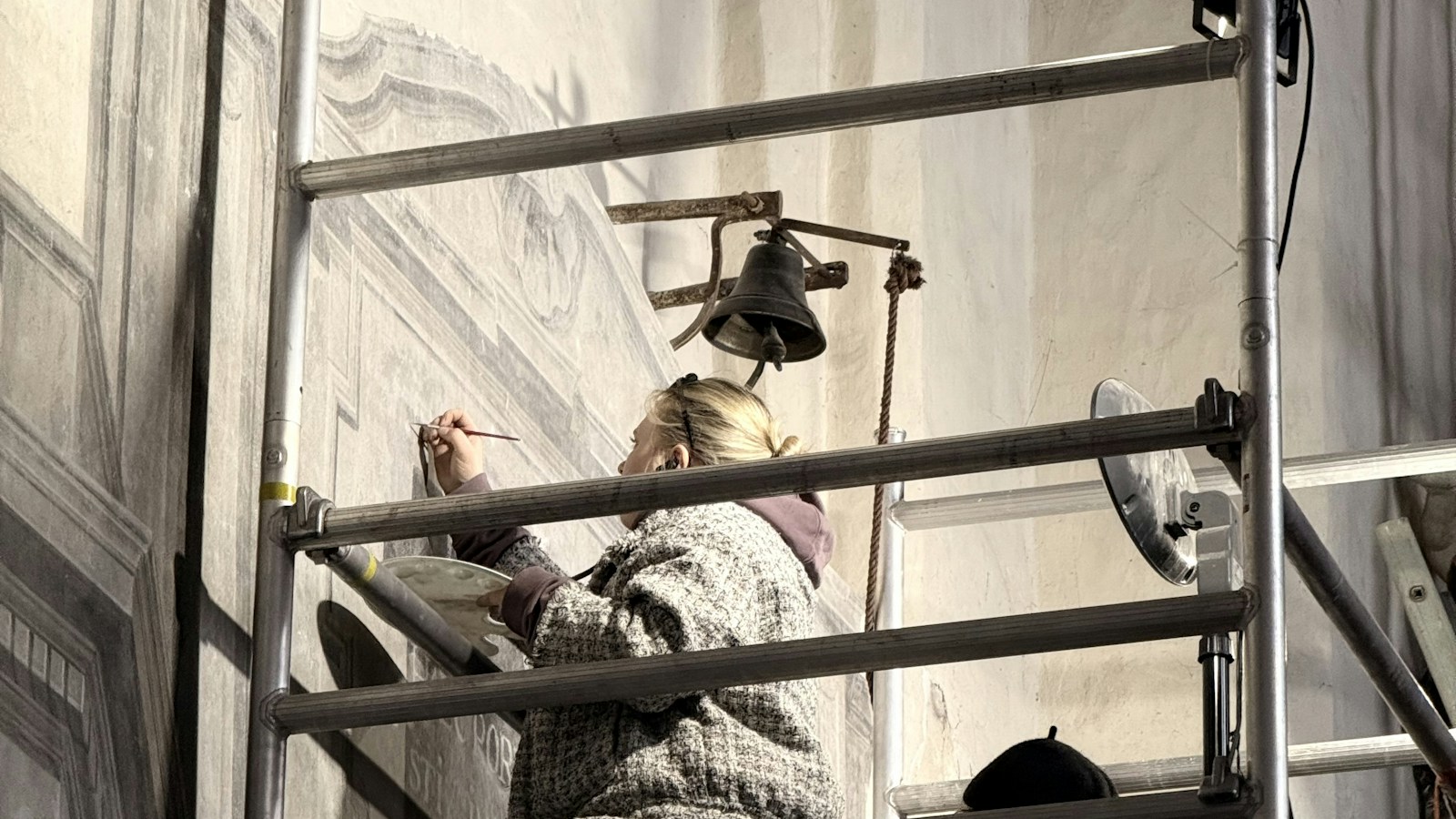
Editorial photograph for illustration.
Another angle on this subject
Continue through related ideas, decisions and consequences.
 Culture & Ideas
A Digitised Archive Can Still Lose the Story Behind Its Images
After UNESCO’s audiovisual heritage observance, the preservation question extends beyond files to context, attribution and future access.
 Culture & Ideas
Defending Journalism Requires Capacity Before the Verdict
UNESCO’s anti-SLAPP update highlights the practical gap between a right to publish and the resources needed to defend public-interest work.
 Culture & Ideas
Gitega’s Museum Project Should Be Judged Through the Visit It Makes Possible
A UNESCO–ALIPH rehabilitation project in Burundi invites a practical test of museum renewal: conservation, access and education must work together.