
Your Name Should Not Imply a Current Endorsement You No Longer Give
A CyGuru essay on clarifying current endorsement while preserving accurate authorship and the history of the work you actually contributed.
Inside this essay
01An earlier approval can become a present signal ↓02Identify which version received your approval ↓03A historical contribution need not be erased ↓An earlier approval can become a present signal
You contribute a foreword, lend your name to a project or agree that a piece of work may describe your support. Later, the work changes. Your name remains. The question is no longer only what you meant when you first agreed. It is what a reader is now being invited to believe that agreement covers.
My view is that an endorsement deserves a continuing boundary. This is an ethical opinion about personal responsibility, not a legal account of contracts, intellectual property or the rights of any named individual. The distinction is between preserving an accurate history of an earlier contribution and allowing that history to imply present support for something materially different.
Identify which version received your approval
Consider a hypothetical adviser who supports a training programme after reviewing its initial materials. A later edition introduces recommendations the adviser has not examined. If the presentation still implies that the current programme has the adviser’s approval, the original agreement may now be communicating more than the adviser intended.
The first task is to describe the difference precisely. Which material was reviewed? Which statement of support was authorised? What has changed? A vague feeling that the project no longer represents you is worth examining, but a useful conversation needs a defined object. That precision protects the other participants too, because it gives them a claim they can understand and a possible correction they can consider.
A historical contribution need not be erased
You may have done worthwhile work on an earlier version. Asking for a current endorsement to change does not necessarily require deleting that history or declaring that every previous contribution was mistaken. The public account can distinguish the two relationships where that distinction is appropriate.
For a hypothetical publication, the record might accurately name the editor of an earlier edition while making clear that another team prepared the present one. The exact arrangement requires attention to the real circumstances and obligations. The ethical aim is intelligibility: a reader should not have to infer whether your name describes a past role, a present review or a general association that carries no promise about every detail.
Do not make disagreement more comprehensive than it is
A project can contain a specific change you cannot endorse without becoming wholly worthless. You should not have to manufacture a complete condemnation to justify a narrower limit. Nor should the people involved treat your earlier support as proof that you must approve every later direction.
A responsible account identifies the point at issue and avoids claims beyond what you know. Perhaps the revised scope has not been reviewed, perhaps a particular assertion lacks a basis you can accept, or perhaps your own position has changed. These are different explanations. Keeping them separate lets you withdraw or qualify support without inventing allegations about motives merely to make the disagreement sound decisive.
Withdrawal of a current endorsement should not be confused with removal of accurate authorship credit. If you wrote a section, made a photograph or edited an earlier edition, the historical contribution remains a fact even when you dislike a later interpretation. The presentation can keep that credit while clarifying that no current recommendation is implied. A truthful boundary preserves both sides: the work you actually contributed and the approval that another person should no longer claim to receive from you.
Begin with a request that could actually correct the signal
If you want the presentation changed, state what you are asking to happen. Remove the current endorsement, identify the earlier edition, revise the description of your role or pause use of a particular statement while the issue is examined. The request should match the specific misunderstanding you believe the presentation creates.
That does not guarantee agreement, and the available options can depend on actual commitments. Appropriate professional advice may be needed where rights or obligations are disputed. The personal discipline is still useful: ask for an intelligible correction rather than assume that a dramatic statement of distance will automatically repair every place in which your name continues to appear.
Accept the cost of making the boundary visible
Qualifying an endorsement can disappoint collaborators or draw attention to a disagreement you would rather keep quiet. Those consequences deserve thought. They should not be the only measure of what the public account ought to say. A reader’s understanding also matters when your reputation is being used to support a choice.
Authority, my book, connects with the responsibility to own a position rather than leave its meaning entirely in another person’s hands. The point is not to keep your name free from every possible disagreement. It is to remain willing to explain what you have actually considered, which support remains yours and where the current use has exceeded that support.
Endorse deliberately, and allow the account to change
The same care can improve an initial agreement. Before lending your name, consider the work being endorsed, the form of the statement and what should happen when the work changes. A precise beginning makes a later conversation more manageable without pretending that every future difference can be predicted.
Your name cannot guarantee that another person will interpret you fairly. It can be attached to a clearer account of your own conduct. Preserve the contribution you really made. Correct the implication you no longer accept. State uncertainty where you have not reviewed the current work. An endorsement is strongest when its meaning can be examined, rather than maintained indefinitely because withdrawing it would make an earlier moment of enthusiasm inconvenient to explain.
Gabriel Nicolaev — CyGuru
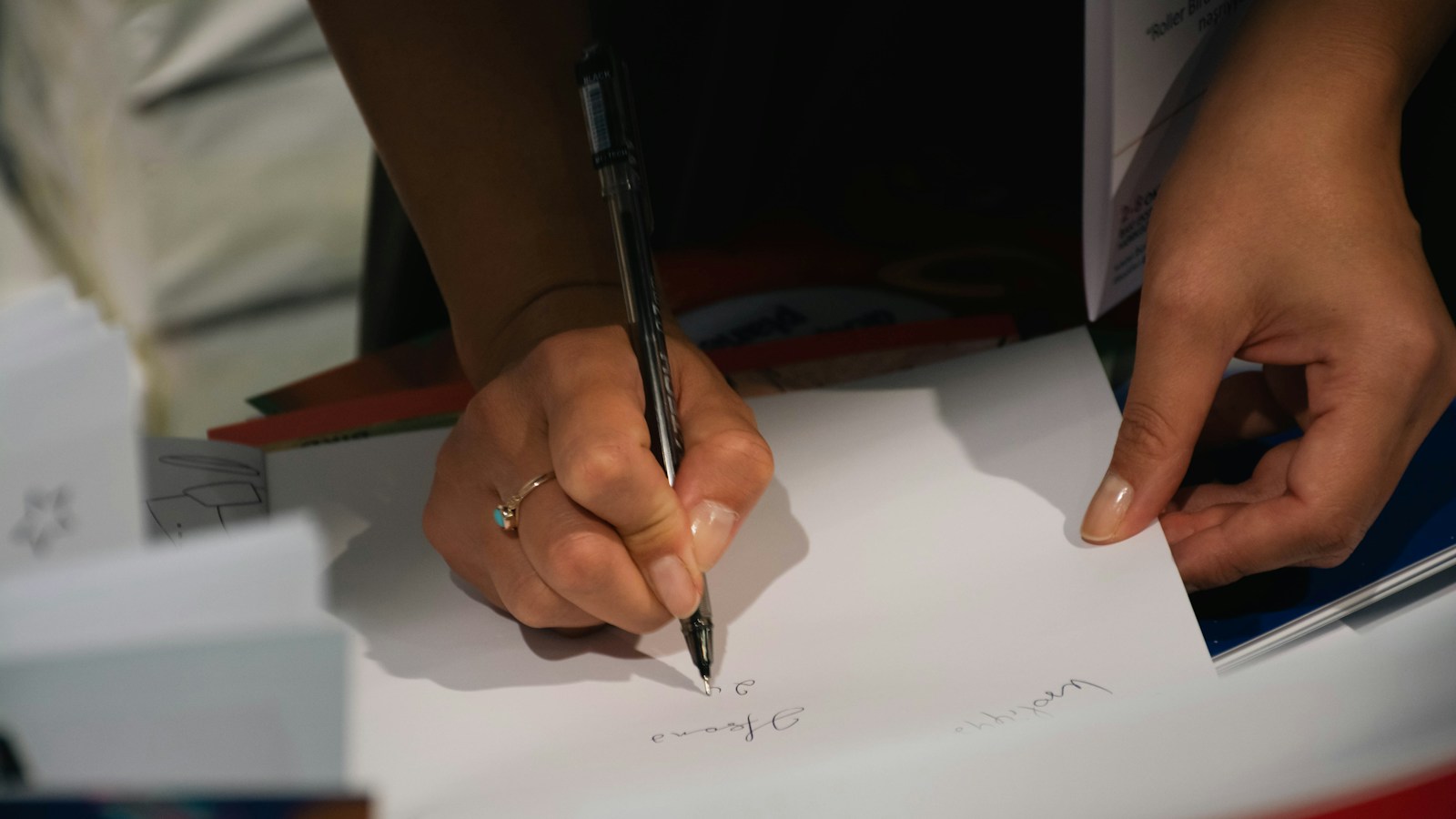
Editorial photograph for illustration.
Another angle on this subject
Continue through related ideas, decisions and consequences.
 The CyGuru Column
Loyalty Does Not Require You to Certify What You Never Saw
A CyGuru essay on supporting someone you care about while keeping a clear boundary between what they told you, what you believe and what you actually witnessed.
 The CyGuru Column
A Personal Ritual Should Serve the Day, Not Hold It Hostage
A CyGuru reflection on keeping a chosen ritual useful without making an interrupted sequence the reason the rest of the day no longer counts.
 The CyGuru Column
An Upgrade Should Solve a Problem You Actually Have
A CyGuru essay on replacing possessions deliberately: define the missing function before novelty quietly turns something adequate into something unacceptable.