
A Personal Ritual Should Serve the Day, Not Hold It Hostage
A CyGuru reflection on keeping a chosen ritual useful without making an interrupted sequence the reason the rest of the day no longer counts.

Inside this essay
01The sequence and its purpose are different things ↓02Name what the practice is meant to make possible ↓03An interruption need not become an interpretation ↓The sequence and its purpose are different things
You may like beginning a day with a particular drink, a quiet seat or a few pages of reading. The sequence can be meaningful because you chose it and because it gives the beginning a form you enjoy. It does not follow that the day becomes unusable when the sequence cannot occur.
My argument is about the authority you give a personal arrangement. It is not a clinical account of ritual or a claim that routines affect everybody in the same way. The distinction is between valuing a practice and requiring the world to reproduce its exact conditions before you permit yourself to participate in what follows.
Name what the practice is meant to make possible
A ritual might create a pause, mark a transition or give attention to something otherwise easy to overlook. These purposes deserve their own description. If you cannot explain the purpose except by repeating the sequence, you may find it difficult to judge whether an alternative still offers something valuable.
Consider a hypothetical traveller whose usual morning includes sitting alone beside a familiar window. In another place, that window is unavailable. The person can decide whether quiet, daylight, reading or simply an unhurried beginning was the important part. That question does not require pretending every substitute is identical. It makes the loss specific enough that the entire day need not be surrendered to it.
An interruption need not become an interpretation
The coffee spills, the room is noisy or the expected interval becomes shorter. An inconvenient event has occurred. Before deciding that it means the day has started wrongly, identify the actual consequence. Is there something that must be cleaned, rearranged, postponed or simply missed?
You can be disappointed without turning the disappointment into an instruction governing every later encounter. A morning does not need to prove that the world respects you. Nor must you treat each interruption as a personal test you were obliged to pass serenely. The narrower task is to respond to what happened without inventing a verdict about everything that has not happened yet.
Do not quietly make other people maintain the ceremony
A private preference can acquire shared costs. Perhaps another person must keep a room silent, change a meal or complete a task because the ritual is treated as untouchable. Those arrangements may be acceptable when they are discussed and freely agreed. They should not become invisible obligations merely because the practice feels personally important.
In a hypothetical household, one person’s quiet beginning could be accommodated while another person receives a different period of uninterrupted time. The details belong to the people involved. The ethical point is that meaning does not exempt a practice from negotiation where its conditions depend on somebody else’s work. A ritual chosen by one person should not silently become a household command.
A clear obligation can also outrank the preferred sequence without making the ritual worthless. If you agreed to collect someone at a particular time, the agreement should remain visible when a leisurely beginning runs long. You can decide to alter the ritual for that occasion rather than ask the other person to absorb its consequences. What governs the choice is the commitment actually made, not a contest over whether private meaning or punctuality is universally more important.
Keep enjoyment separate from proof of seriousness
A practice can be worth keeping because you enjoy it. It does not need to become evidence that you are disciplined, profound or different from people who begin another way. When the ritual becomes a public identity, changing it can start to feel like admitting that the identity was false.
You can preserve a less dramatic account. This is something you like doing. It may suit this period of your life. You can revise its form without claiming that the earlier practice was foolish or the new one superior. That modest explanation protects a useful freedom: a chosen form can change when the day’s real circumstances call for another form.
Let the occasion be larger than the missing detail
Imagine a hypothetical visit with someone you do not often see. Your preferred evening sequence is interrupted by the conversation. You can choose to keep the sequence, shorten it or let it go. The appropriate choice depends on what matters in that encounter, not on a universal rule that private routines must always win or always yield.
The important step is to recognise that you are choosing among values. You are not merely obeying an arrangement that has acquired authority because it existed yesterday. Authority, my book, is relevant through this question of who decides what governs your conduct. The connection is personal responsibility, not a promise that the book supplies a ritual or a technique.
Continue without requiring a ceremonial restart
Sometimes the preferred sequence will be missed altogether. You can let it remain missed rather than spend the rest of the day trying to recover an exact beginning that is no longer available. The next useful act can belong to the hour you are actually in.
This is not an argument for abandoning everything that gives life shape. It is an argument for keeping chosen forms answerable to their purpose. A ritual can enrich a day without owning it. Enjoy the familiar act when it is available, negotiate its shared conditions and acknowledge the disappointment when it is not. Then remain free to meet the next occasion. The rest of life should not have to wait until you have successfully reconstructed the opening scene.
Gabriel Nicolaev — CyGuru
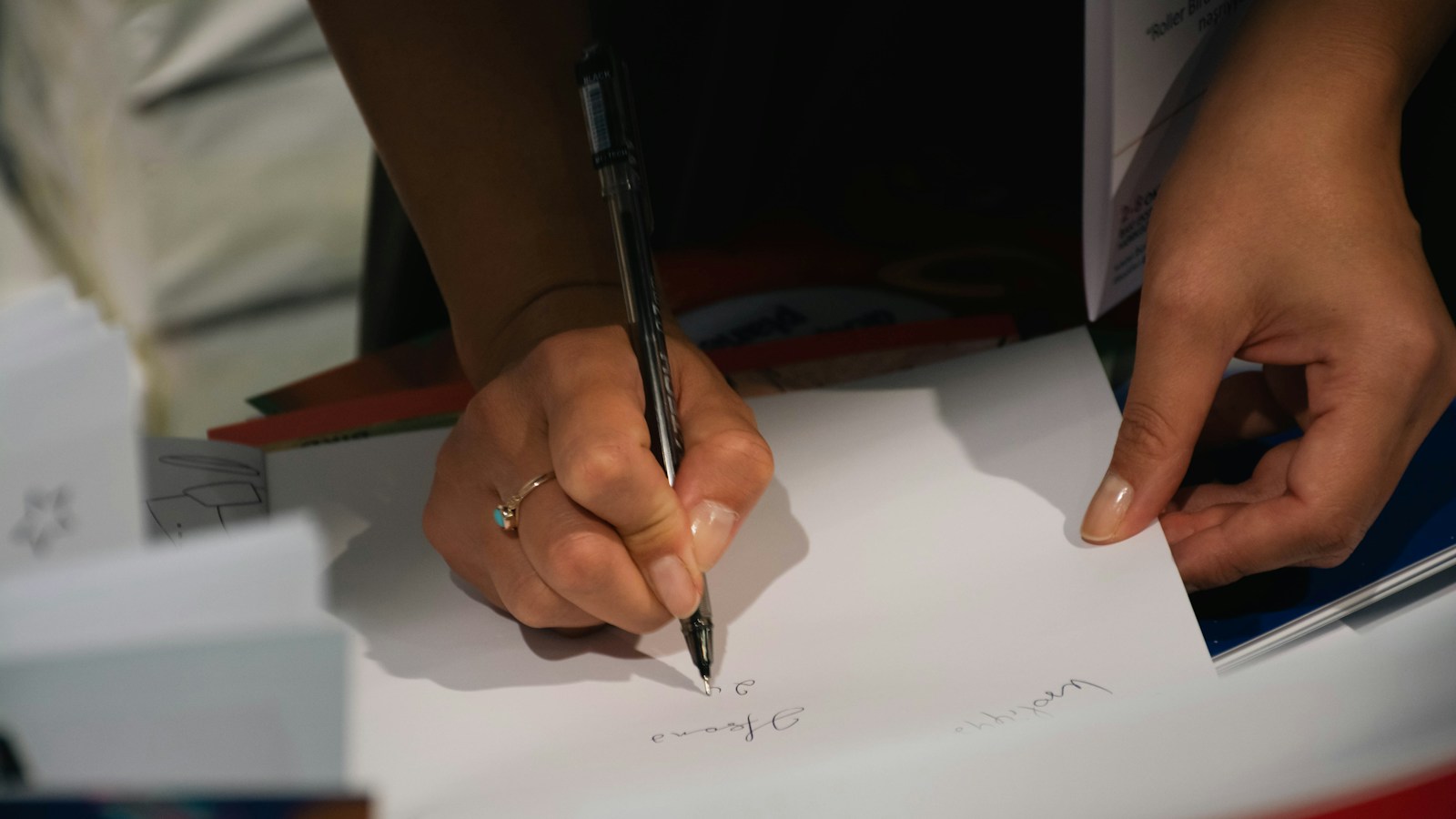
Editorial photograph for illustration.
Another angle on this subject
Continue through related ideas, decisions and consequences.
 The CyGuru Column
You Can Inherit a Family Without Inheriting Every Feud
A CyGuru reflection on family conflict across generations: belonging can carry responsibilities without making every inherited dispute a compulsory personal commitment.
 The CyGuru Column
Your Name Should Not Imply a Current Endorsement You No Longer Give
A CyGuru essay on clarifying current endorsement while preserving accurate authorship and the history of the work you actually contributed.
 The CyGuru Column
Your Preferences Do Not Need a Universal Defence
A CyGuru essay on owning a preference without disguising it as a universal rule, and making room for negotiation when the consequences are shared.