
Write Down the Ordinary Routines You Share
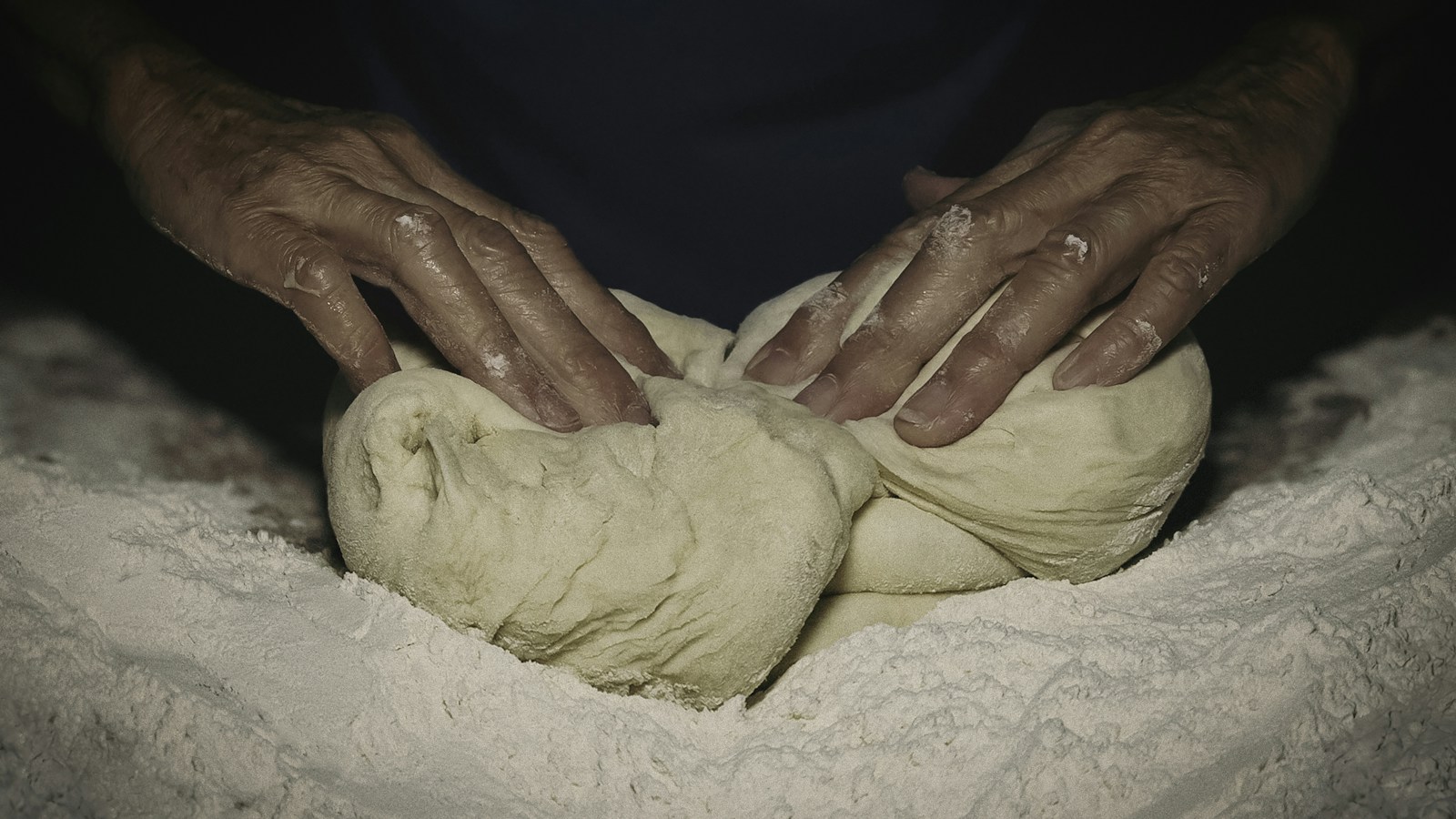
Ask an older relative to show you an everyday task while you can still do it together. The part that matters may be the detail they have never needed to explain.
Inside this essay
01Ask for a demonstration on an ordinary day ↓02Ask about the point where a choice is made ↓03Try it while someone can still correct you ↓Ask for a demonstration on an ordinary day
Suppose your aunt makes a soup you have eaten many times. You ask her for the recipe and she can give you the ingredients. You may still finish with a thinner soup than the one she serves. If she is willing to make it with you, you might notice that she lifts the spoon and waits for the liquid to run off before deciding to add more stock. That little check may never have appeared in a recipe because she has never needed a line of text to tell her to do it.
Choose a task the person enjoys doing and would be happy to teach. A familiar dish, adjusting a sticking drawer or packing a market bag for a regular Saturday trip could all work. Ask whether they would like to show you and make it easy to decline. A lesson is easier to enjoy if the person still has a say in its pace and timing. They may have a better idea of what to show, or they may want to do an entirely different task with you.
During the demonstration, help with whatever needs doing. Set the table, fetch the tool or carry the bag. It gives the person a chance to teach within the task rather than having to perform their whole routine in front of an observer. Start with one thing you could do again and let their reaction guide how much you ask. A short demonstration followed by another visit may fit better than a long afternoon organised around collecting material.
Ask about the point where a choice is made
People can describe the start and finish of a familiar job without mentioning a decision in the middle. Listen for moments when the person pauses, checks a sound, uses a different tool or changes the order. Then ask what they noticed. If your aunt says the soup needs time, ask what she sees when it is ready. If she turns down the heat, ask what made her do it then. The aim is to learn what to pay attention to when you cannot copy the precise conditions of the demonstration.
Give the other person a chance to distinguish a preference from a requirement. They may use the same heavy spoon because it is already in their hand. They may use a wide pan because they want the liquid to reduce quickly. Writing down the preferred spoon as an essential tool gives the next learner a rule with no work to do. Asking whether another spoon is fine lets the person tell you which details are worth carrying over.
You can also ask what sometimes goes wrong and how they recognise it. If a drawer catches at one corner, a person may be checking where the rubbing starts before deciding whether to tighten something. Knowing where to look could be the whole lesson. If the person says the right action depends on the object, make room for that answer. A compact note can say what to check next without pretending every drawer needs the same repair.
Try it while someone can still correct you
Once you have watched, ask to do part of the task yourself. Explain what you are looking for. A person can often correct one observation faster than they can describe everything they do. If you reach for more stock because you think the soup is too thick, they might ask you to wait a moment and lift the spoon again. You can then write down what the change looked like. The description belongs to a moment you both saw, with a better chance that it will make sense in your own kitchen.
Even after practice, one person’s way of doing the task is still one person’s way. A sibling might remember a different version of the soup from years earlier. The aunt might tell you she changed it to suit a smaller pan. A family history can contain more than one memory, and a routine can survive in several versions at once. Write down who taught you, approximately when and which conditions mattered. If you adapt it later, date your own version so that the next person can see which changes you made.
You may learn that some details are better retained through practice than prose. A sentence about the weight of the spoon may help, and lifting it yourself may help more. The writing can serve as a prompt for another visit. Bring it back and ask whether the description matches what the person thought they were showing you.
Let the person decide where the record goes
A few lines in a notebook can be enough. If you want to take a photograph or record a short video, ask first and explain who you hope will see it. A person who is happy to teach you may prefer to keep their kitchen out of a public post. They might want their name attached to a recipe shared with relatives, or they might want the lesson kept between you. Give them a straightforward way to choose.
Include the information a future learner would need. Name the task, its usual purpose and the choices that change the result. Record the cue you found hard to see the first time. If there was a disagreement or a detail nobody could remember, the record can say so. An honest gap leaves room for another person to ask.
The next time you make the soup, you may still need to call your aunt about the spoon. That is a good reason to call while she feels like talking. Put the pot on and describe what you can see. She can tell you whether it looks ready, and you can go back to the table together when there is time.
Gabriel Nicolaev — CyGuru
Sources & further reading
CyGuru — Nothing Lasts Forever ↗
Illustrative photograph by Merrilee Schultz / Unsplash.
Another angle on this subject
Continue through related ideas, decisions and consequences.
 The CyGuru Column
Loyalty Does Not Require You to Certify What You Never Saw
A CyGuru essay on supporting someone you care about while keeping a clear boundary between what they told you, what you believe and what you actually witnessed.
 Human Behaviour
What Helping and Taking Responsibility Have in Common
A study of 516 students at one Chinese university found the two tendencies travelled together. It also showed why the route between them is harder to pin down.
 Technology & AI
What Nvidia’s Robot Benchmark Leaves for the Factory to Prove
The GR00T 2 results show how quickly a robot can learn a new task. Factory trials must account for the failures that still reach the next station.