
A Family History Can Contain More Than One Memory
A reflective essay on telling family stories without making one person’s version the price of belonging.
Inside this article
01The familiar story is not the only possible account ↓02Separate a shared event from a shared experience ↓03Ask before assigning somebody a permanent role ↓The familiar story is not the only possible account
A family can repeat a story so regularly that it becomes part of how everyone introduces themselves. The difficult child, the brave parent, the perfect holiday, the year everything changed: a short account can acquire the authority of a shared name. Someone who remembers it differently may then seem to be challenging the family merely by adding another detail.
My argument is that belonging should not require identical recollection. This is an ethical reflection about conversation, not a scientific account of memory or a method for deciding a disputed allegation. It asks how a family can tell its history without requiring each person to surrender the part they actually remember in order to keep a place in the story.
Separate a shared event from a shared experience
Consider a hypothetical childhood holiday. One sibling remembers a long drive as an adventure. Another remembers feeling unwell and being embarrassed to ask for a stop. Both are speaking about the same journey, but the meaning of the day need not be identical for them. Adding the second account does not necessarily accuse the first sibling of inventing happiness.
The useful response is to ask what the person remembers, rather than immediately decide which emotional description is allowed to represent the trip. A common event can contain different positions within it. The family does not need to erase the enjoyable account to hear the difficult one, or erase the difficult one to preserve gratitude for the effort that made the holiday possible.
Ask before assigning somebody a permanent role
An old anecdote can become a label that follows a person into circumstances where it no longer fits. A childhood mistake may be retold as proof that an adult is always careless. A moment of confidence may become an obligation to remain the person who never needs help. The story then does more than describe the past; it allocates a role in the present.
If the person objects, ask which part of the retelling they want changed. They may dispute a fact, dislike the public setting or simply want the anecdote to stop being used as a definition. Hearing that request does not require a grand argument about whether the family was good or bad. It requires attention to what the story is currently doing.
A photograph shows a scene, not its entire meaning
A family photograph can give a conversation a useful point of reference. It may show who was present, an object someone had forgotten or a place that invites another story. It should not be asked to settle every question about how that day was experienced. A visible smile does not provide the speaker’s complete account of the occasion.
This is a limit on interpretation, not a claim about a particular person’s hidden feelings. The person in the picture can be invited to explain what they remember. They may have no difficult account to add. The important distinction is that the image should open a question rather than become an instruction to describe the day in the way another viewer prefers.
Children should be able to add a detail without managing the adults
A parent may have worked hard to provide something meaningful. A child can recognise that effort and still describe a disappointment associated with the experience. Those statements ask different questions: what the parent intended and what the child encountered. Treating the second as an automatic rejection of the first makes an ordinary conversation unnecessarily expensive.
In a hypothetical discussion, an adult could say that they had hoped the event would be enjoyable, then listen to the specific detail the child remembers. The child should not need to reassure every adult before being allowed to finish. This does not require parents to agree with every interpretation. It creates room to understand the claim before responding to the injury they fear it might imply.
Uncertainty can remain visible in the story
People can disagree about a date, a sequence or what someone said without immediately converting the disagreement into a verdict on character. Where records exist and the detail matters, they can be consulted carefully. Where the detail cannot be settled, a family account can acknowledge that different recollections remain.
“I remember it differently” is sometimes a more accurate sentence than a confident correction. It can be followed by the specific difference rather than used as a way to dismiss the other person. The aim is not to declare every version equally established. It is to avoid claiming more certainty than the available basis supports, especially when certainty is being used to end a conversation rather than clarify it.
The audience matters to the retelling
A story told between siblings can feel different when repeated at a large gathering or introduced to a new partner. Someone may have tolerated a familiar joke privately without consenting to its use as their public introduction. Asking whether the story is welcome is a practical courtesy, not a demand that every family exchange become formal.
If someone asks for a particular account to stay private, discuss the boundary directly. Do not turn the refusal into another anecdote about how sensitive they have become. A family history is made of people who continue to have lives beyond the scene being described. Their present ability to choose an audience deserves a place beside the storyteller’s pleasure in remembering.
Keep room for the next truthful detail
The purpose of a shared history need not be a final, flawless version that nobody can complicate. A family can preserve affection, recognise effort and allow a person to say that a familiar event meant something different to them. New understanding does not require turning the past into an enemy or pretending every disagreement can be resolved.
A stronger story is one that can receive another truthful detail without threatening the speaker’s membership. Ask what is remembered, distinguish an observation from an interpretation and notice when an anecdote has become a permanent assignment of character. The family remains connected through the willingness to hear one another, rather than through the demand that everyone remember on command.
Gabriel Nicolaev — CyGuru
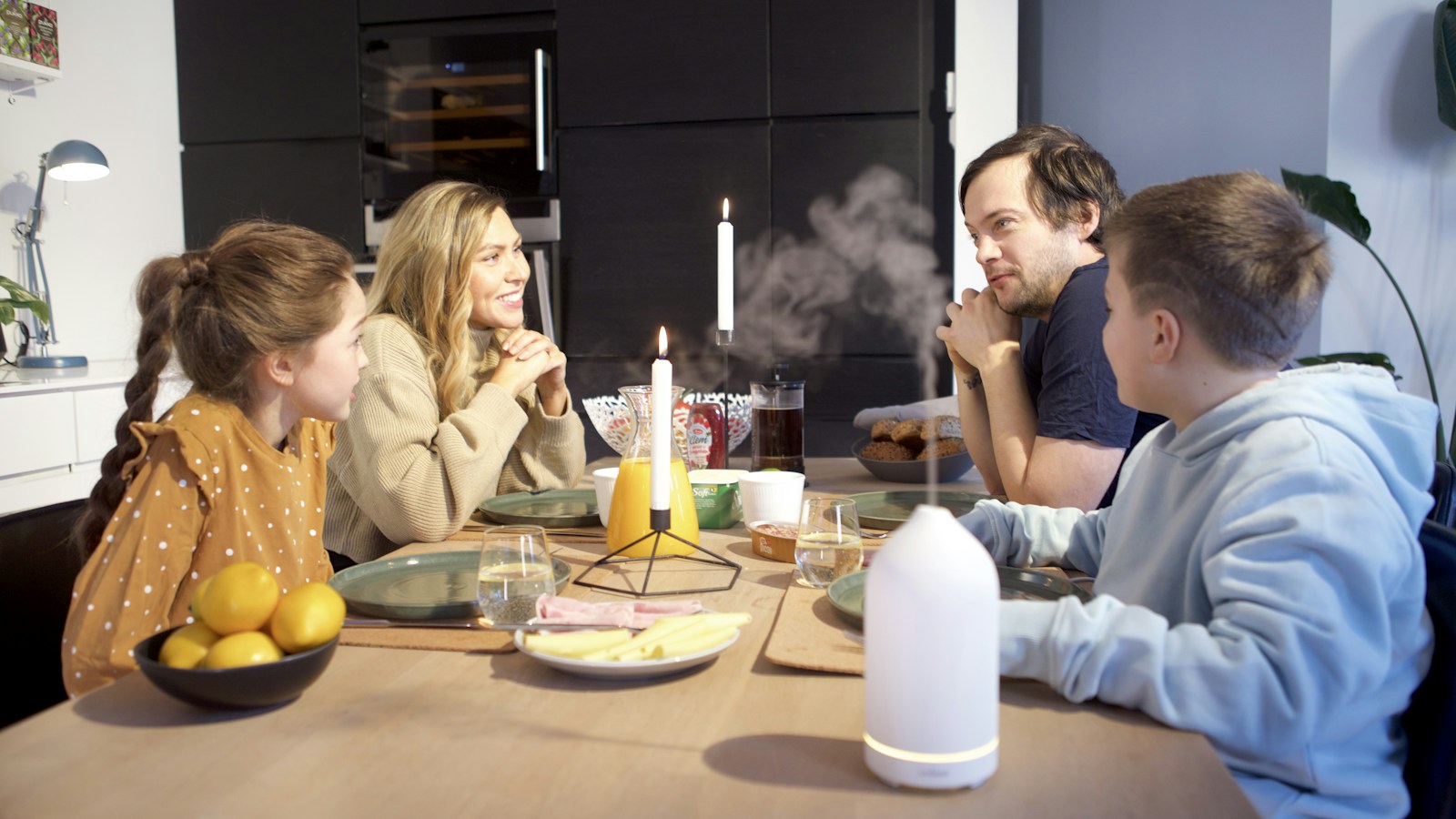
Editorial photograph for illustration.
Another angle on this subject
Continue through related ideas, decisions and consequences.
 Human Behaviour
A Friendship Can Survive Different Levels of Availability
A reflective essay on making friendship expectations explicit without treating message speed, invitations and time together as a single loyalty score.
 The CyGuru Column
You Can Inherit a Family Without Inheriting Every Feud
A CyGuru reflection on family conflict across generations: belonging can carry responsibilities without making every inherited dispute a compulsory personal commitment.
 Human Behaviour
Forgiveness Does Not Decide Who Receives Access Again
A reflective essay on separating release from renewed trust, and making a future relationship depend on the conduct it can responsibly support.