
TerraNova’s Carbon-Removal Model Still Needs the Soil Sample
Microsoft and Terradot describe an AI approach to enhanced rock weathering. Its promise is better sampling design, not replacing field evidence with a prediction.
Inside this article
01A prediction can change where measurement is spent ↓02The reported result comes from simulation ↓03The difficult question is which samples disappear ↓A prediction can change where measurement is spent
Microsoft and carbon-removal company Terradot describe TerraNova as an AI approach to estimating how crushed rock behaves in agricultural soils. Enhanced rock weathering aims to accelerate chemical processes that consume carbon dioxide. The practical challenge is determining where the treatment is promising and how much change actually occurs under local conditions.
The company's feature page carries a 12 November date, while an author index showed an earlier October date during review. This article therefore treats the work as a research analysis rather than claiming a precisely established launch this week. The important claim concerns a method: using model predictions alongside physical samples to reduce the cost of gathering evidence.
That is a more useful framing than asking whether AI can replace a laboratory. A model can help decide which observations are most informative while remaining dependent on observations that can challenge its own expectations.
The reported result comes from simulation
Microsoft says TerraNova builds on its Aurora environmental model and Terradot's field data. Inputs described in the account include soil composition, rock minerals, weather conditions and wider climate patterns. The work is intended to predict geochemical changes under different conditions, rather than assume every treated field responds alike.
The publication reports simulations in which the approach reduced the number of samples required at the largest sites by 75% while maintaining the same accuracy level. This is a research result described by the organisations involved. It should not be converted into a claim that commercial projects have already cut their verification budgets by the same proportion.
The article also says the findings are to be described in a forthcoming preprint ahead of peer review and that further validation is necessary. Those qualifications define the evidence available. A promising simulation establishes a reason to investigate a sampling strategy. It does not establish that every field, season or mineral treatment can be measured with the same reduction.
The difficult question is which samples disappear
Suppose, hypothetically, a project has a limited laboratory budget and several fields with different soils. A model might identify one group as relatively predictable and another as poorly represented in its training data. Reducing sampling equally across both groups would miss the purpose of using the model. The more useful strategy could be to retain greater measurement effort where uncertainty is greatest.
That strategy must also leave room for surprise. If the model determines both where measurements are taken and how the remaining locations are estimated, it can create a feedback problem. Locations it considers uninteresting may receive too little scrutiny to reveal that the assumption was wrong.
An evaluation should therefore include observations selected to challenge the prediction, not only observations chosen because they fit it efficiently. This is an analytical recommendation, not a description of a disclosed TerraNova sampling protocol. The public account does not provide enough detail to independently reconstruct the study's entire design.
Moving between regions is a test of representation
Microsoft reports that training on Brazilian field data enabled predictions for fields in Mississippi. That is an interesting transfer claim because the model must cope with combinations of conditions that differ across locations. The relevant question is which characteristics are represented well enough to support that transfer and which remain uncertain.
A new site can resemble a training site in one respect while differing in another. Similar rainfall does not imply identical soil chemistry. Similar rock composition does not imply identical water movement. A practical assessment needs to identify the relationships on which the prediction relies, then ask whether the new setting preserves them.
This is distinct from simply collecting a larger dataset. More observations from familiar conditions can improve precision there without resolving uncertainty elsewhere. CYPAPER's discussion of evaluation cases argues for testing what demonstrations leave out. Applied to weathering, that means examining fields and conditions that could expose a weak assumption, including cases where the model recommends a small amount of measurement.
Carbon accounting requires a chain of evidence
A prediction about rock reactions is an input to estimating carbon removal. It should not be treated as an interchangeable label for a verified quantity of atmospheric carbon removed. The chain includes the treatment applied, the chemical changes measured, the accounting method and the period over which those changes occur.
Terradot's expectations for future removal, discussed in the company account, are consequently forecasts. They are not presented here as completed outcomes. Keeping that distinction visible helps readers evaluate a technology without requiring either enthusiasm or scepticism to substitute for evidence.
Our analysis of measurement boundaries in AI energy claims raises a related question: what exactly does a reported number include? For rock weathering, the same discipline applies to sampling and carbon estimates. A lower sampling count is valuable only in relation to the quality of the estimate it supports, the uncertainty retained and the cost of discovering an error later.
What would make the approach convincing
The next useful evidence would include sufficiently detailed methods, validation on sites not used to fit the model and transparent reporting of cases where predictions failed. Publication of those details would allow researchers to examine whether the sample reduction survives changes in scale and geography. It would also clarify which portions of verification remain dependent on physical measurement.
TerraNova's potential lies in making field research more selective and informative. That is a substantial ambition even without assuming that software can certify its own conclusions. The model can direct attention toward a better set of questions; soil and laboratory observations must retain the power to answer differently.
The strongest version of this technology would make uncertainty easier to locate and investigate. If it achieves that, fewer samples could mean better use of scarce measurement resources. Until the wider evidence is available, the reported simulation should be read as a promising research step with a clear task ahead: demonstrate that efficiency has not been purchased by making important differences harder to see.
Gabriel Nicolaev — CyGuru
Sources & further reading
Microsoft TerraNova research presentation ↗
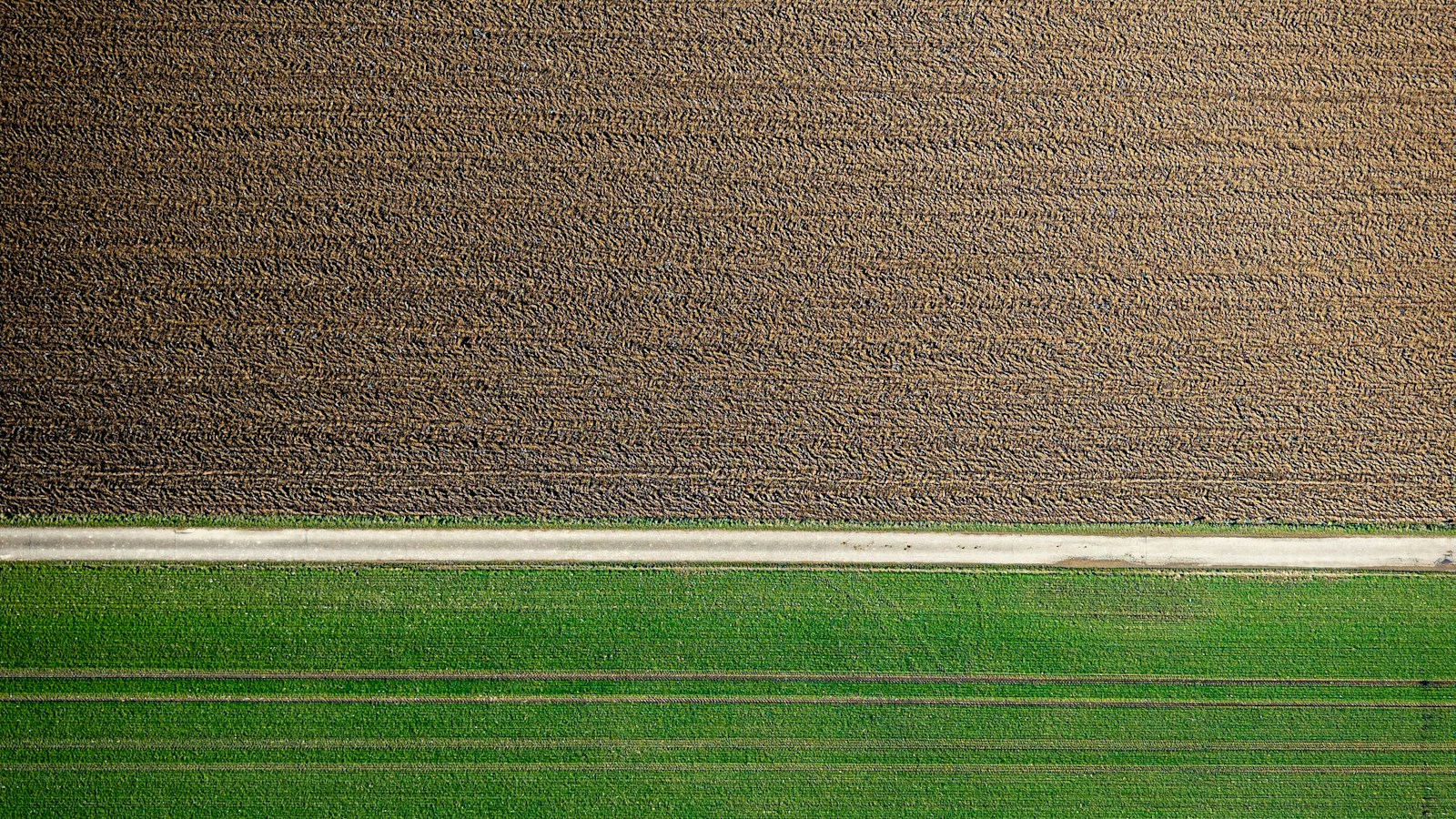
Illustrative photograph by Bernd Dittrich on Unsplash; not a photograph of Terradot field trials.
Another angle on this subject
Continue through related ideas, decisions and consequences.
 Technology & AI
AlphaGenome 2 Puts the Cell State Inside the Genetic Prediction
DeepMind’s new model asks how the same DNA change behaves across different kinds of cells. Its output is a way to choose a better experiment.
 Technology & AI
A Beautiful Interface Still Needs an Intelligible Name
W3C’s November accessible-name draft puts a practical design question in focus: can a person identify an action without relying on its appearance?
 World & Power
A Public Pilot Needs a Way to End Its Exemptions
An experimental public service can test a new approach while leaving temporary exceptions behind. Its design should explain what happens when the test ends.