
An AI Energy Claim Is Only as Clear as Its Measurement Boundary
Energy per request, total electricity demand and avoided emissions answer different questions. Comparing them requires visible assumptions and a defined useful output.
Inside this article
01Start by identifying the question ↓02A request is not necessarily a completed task ↓03Distinguish training, operation and shared infrastructure ↓Start by identifying the question
A claim that an AI system uses less energy can mean several things. It may refer to one request, one model run, one business task or a provider’s total operations. Those measures can move in different directions without contradiction. A more efficient request can coexist with higher total consumption if the service handles more requests.
The International Energy Agency’s Energy and AI report, published on 10 April 2025, examines electricity for data centres alongside potential applications of AI in the energy system. Its overview describes modelling, datasets and projections, rather than presenting a single universal footprint for every AI task. That scope supports a basic analytical discipline: define the boundary before using an energy number to compare systems or justify a decision.
A request is not necessarily a completed task
Imagine two hypothetical services helping an employee classify documents. One uses less electricity for each individual response but needs several retries and manual correction. Another uses more for a response that meets the defined requirement immediately. A comparison per request may favour the first while a comparison per completed, verified task could tell a different story.
The example does not establish that one model class is inherently more efficient. It identifies what should be measured. The task definition needs an acceptable accuracy level, relevant safeguards and a clear end point. Without these, an apparently precise energy metric can reward output that the organisation cannot actually use. Quality belongs in the denominator when the claim concerns useful work.
Distinguish training, operation and shared infrastructure
An environmental account should state whether it includes development, training, routine use and the surrounding infrastructure. It should also explain how shared resources are allocated. A single application may use a system serving many customers; assigning a portion of total consumption requires a method, not an intuition.
Different boundaries can be legitimate for different decisions. An operations team choosing between two deployed configurations may focus on incremental electricity use. A broader procurement assessment may ask about other stages. The problem is not that one boundary must govern every purpose. It is that a narrow result should not silently become a claim about the whole lifecycle, or a broad estimate be presented as an exact observation of a specific transaction.
Electricity is not identical to emissions
Electricity consumption and emissions describe related but different aspects of an activity. An emissions estimate depends on the accounting method and assumptions about energy supply. An account should make those choices visible rather than turn a kilowatt-hour measurement into an unexplained environmental conclusion.
For an organisation comparing providers, useful questions include what is measured directly, what is estimated and which period and location the figures concern. Contractual renewable-energy claims should be described according to their stated method. An editor or buyer should not infer that one reported accounting result proves an identical physical outcome at every moment. Uncertainty can be recorded without making the measurement worthless.
Avoided impacts need a counterfactual
A provider may argue that an AI application reduces another activity’s environmental cost. Such a proposition needs an intelligible comparison: what would otherwise have happened, at what scale and with which evidence? A claimed saving cannot be assessed by examining the AI system’s own consumption alone.
Consider a hypothetical tool intended to reduce unnecessary equipment inspections. Its evaluation would need to include missed problems, additional travel, false alerts and the work that still takes place. The relevant result is the change in the whole defined process. This does not deny the possibility of useful applications. It asks that an avoided-impact claim be supported by the process it says has changed, rather than by an appealing example detached from ordinary operation.
Efficiency can change the volume decision
Lower cost per task can make it attractive to run more tasks. An organisation should therefore distinguish improving a process from expanding its scope. Both may be defensible, but the environmental account should show the change in total activity as well as the change in unit efficiency.
A practical review could compare the original workload, the proposed workload and the reasons for any expansion. It might reveal that some automated work creates little value even if each operation is inexpensive. That finding calls for a product decision, not merely another optimisation pass. The question is whether the organisation needs the output and how it knows, before celebrating a lower resource cost for producing more of it.
Report a result that someone else can interpret
A credible statement identifies the unit, scope, period, quality requirement and uncertainty. It distinguishes measured results from modelled estimates and forecasts. Where methods differ, it explains why a direct ranking may be inappropriate. These qualifications improve the usefulness of a number by preventing it from answering a question it was never designed to answer.
The IEA report offers a broad setting for the energy debate; it does not remove the need to measure a particular deployment. For buyers and readers, the next step is to ask what the claim actually includes. Environmental accountability becomes stronger when a system’s benefits and costs can be examined within the same defined process, rather than assembled from favourable figures with incompatible boundaries.
Gabriel Nicolaev — CyGuru
Sources & further reading
IEA: Energy and AI, 10 April 2025 ↗
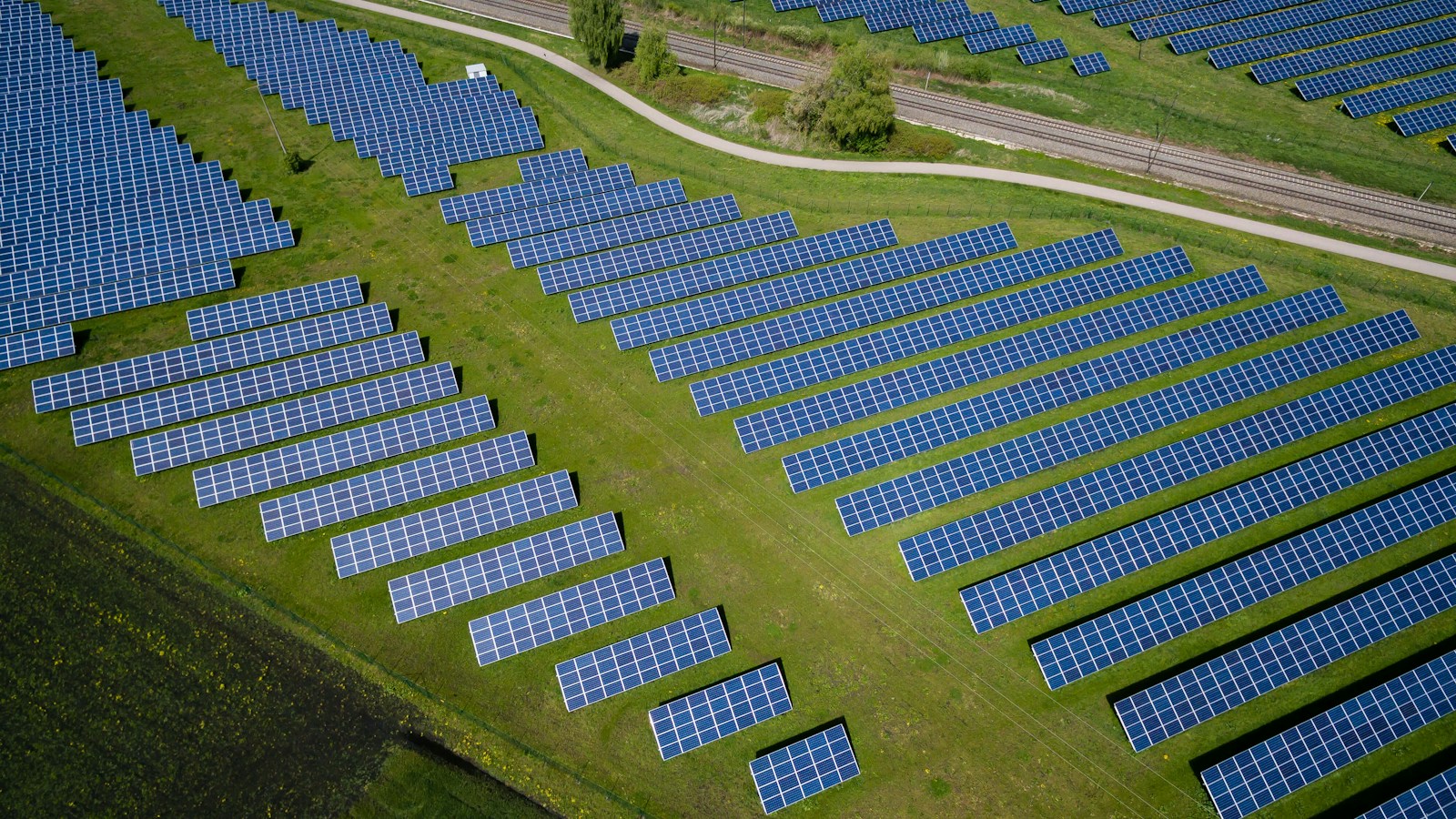
Editorial photograph for illustration.
Another angle on this subject
Continue through related ideas, decisions and consequences.
 Human Behaviour
A Good Question Makes Learning Less Expensive
An opinion essay on asking precise questions, showing what you have tried and distinguishing a request for understanding from a demand for reassurance.
 Technology & AI
An AI Agent Should Not Inherit Every Permission Its User Holds
The next operating question for AI agents is how much authority each task actually requires, and how a mistaken action can be contained.
 Technology & AI
When intelligence becomes cheap, judgment becomes expensive
As AI makes competent-looking output easier to produce, the scarce business capability shifts toward defining the problem, checking the answer and owning the consequence.