
What a School VR Study Can Tell Us About the Headset
Two executive-function test scores favoured the VR group in a Peruvian school pilot. The comparison tells us more about the programme than the equipment.
Inside this article
01A difference between groups has a specific meaning ↓02What the pupils were assigned to do ↓03Two results came from a family of six tests ↓Event / source date: 11 November 2026 — Publication of the Peruvian school virtual-reality pilot · Published 13 NOVEMBER 2026
A difference between groups has a specific meaning
Imagine a school receives a proposal for a virtual reality lab. The supplier shows results from a small study in which children who used a headset improved on two executive-function tests compared with other pupils. The headteacher needs to know what that comparison actually tested. Was it the headset, the design of the games, the quiet room, or the individual attention given to each child during the sessions?
A paper published on 11 November in Frontiers in Psychology gives that question a concrete setting. Joel Figueroa-Quiñones and colleagues worked with 51 pupils at a public school in southern Peru. The researchers randomly allocated them within grade and classroom groups to an immersive game programme or to usual school activity. Two of the six outcomes favoured the programme group at conventional, unadjusted thresholds. That is evidence about a particular comparison. It leaves several plausible explanations for why the groups differed.
What the pupils were assigned to do
The intervention lasted four weeks and scheduled eight sessions. The pupils played five games in a consistent order, with up to seven and a half minutes of active headset exposure during a session. The time also included escorting, instructions and adjusting the equipment. A trained research assistant conducted sessions and watched the child’s view on a laptop. Pupils in the comparison group continued their normal school activity and had no equivalent individual session with the research team.
The usual-activity group helps answer what happened when the school added the programme to what it was doing already. It leaves the ingredients of the programme bundled together. Random allocation helps balance initial differences between groups, in expectation. It cannot pull apart features that always arrived together after allocation. Individual attention, novelty, game content and immersion all varied along with the assigned programme. The authors also say they did not measure motivation, expectations, enjoyment or previous VR experience.
The report describes the assessor as unaware of the children’s assignments. That is relevant protection for the measurement process. It does not change what the participants received or equalise contact with the research team. A design can have a strong safeguard at one point and still leave a specific causal question open.
Two results came from a family of six tests
The study assessed six scores before and after the programme. Fifty children had longitudinal data. The two differences that met the nominal threshold were for Rings, a structured problem-solving task, and Interference, which requires a child to handle competing information. Four other outcomes did not reach that threshold. The study gave no single score priority and made no adjustment for testing multiple outcomes.
Each additional test supplies another opportunity for chance variation to look persuasive. When several outcomes are examined together, a reader should see all of them and know whether the analysis set any priorities beforehand. The two findings here can inform which measures a future study should examine first. Presenting only the favourable tests as a general improvement in executive function would discard information about the rest of the assessment.
Even within the favourable outcomes, the size and stability of the estimates remain uncertain in a small pilot. Exact replication can test the finding. A different experiment can test why it appeared. Those are distinct projects, and it is possible for a result to replicate before its mechanism is understood.
How a follow-up could separate content and equipment
One follow-up could give a comparison group similar games on a desktop screen. The game sequence, exposure time, instructions, staffing and feedback could be matched as closely as possible. If the immersive and desktop versions still produced different results, a researcher could ask whether the added equipment and experience accounted for a difference beyond the game content and attention. A third group could continue usual school activity to estimate what either programme adds in that setting.
The assessment plan would also need to identify the skill a school is trying to improve. If the aim is planning, choose a primary planning outcome before collecting results and explain why a change on it matters. Follow it with a task outside the games and measure again after sessions end. CYPAPER’s analysis of motor practice and transfer treats retention as a measurement in its own right. This school pilot raises an earlier problem of identifying the part of an intervention a later transfer study would be evaluating.
That distinction would change what a school asks a supplier. Request the comparison and testing plan, not just a video of an engaged child. Establish the additional time and equipment needed to run equivalent sessions and decide whether a pilot is possible without committing a whole school to the product.
Use a pilot to improve the next question
A school can value the feasibility of short supervised sessions while asking for stronger evidence of an educational benefit. The paper demonstrates what the researchers were able to implement in one school and identifies two task-specific findings for further study. It also makes the limitations public, giving another school or research team a concrete basis for a better comparison.
A sensible question for a second study is what an equivalent non-immersive session would have achieved. Answering it would make the headset a separately testable part of the proposal. Until then, the strongest conclusion concerns the whole programme, compared with the ordinary school activity those pupils would otherwise have received.
Gabriel Nicolaev — CyGuru
Sources & further reading
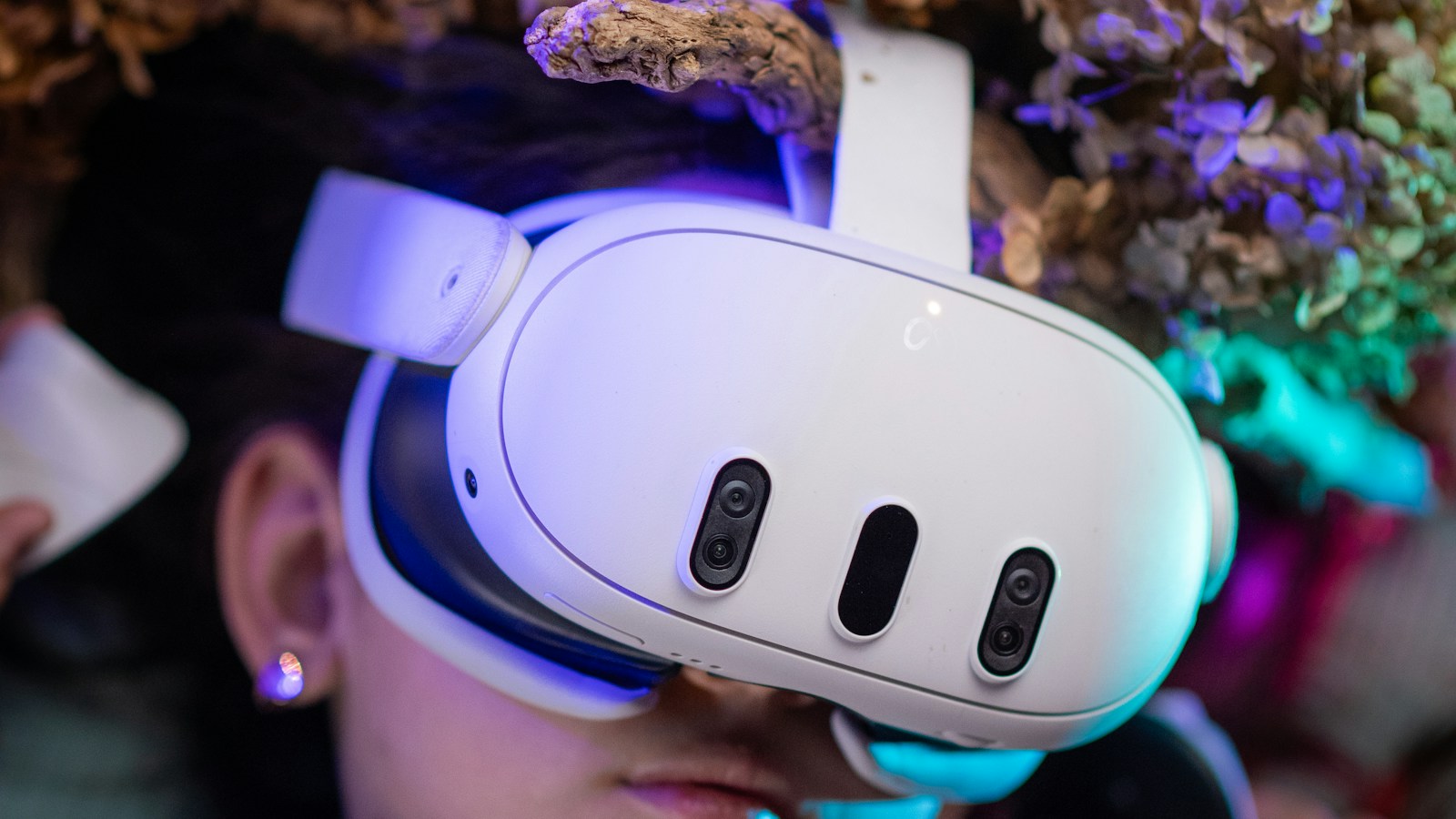
Illustrative photograph by Sofia Lasheva on Unsplash.
Another angle on this subject
Continue through related ideas, decisions and consequences.
 Human Behaviour
An Indirect Test Changes the Question About Older Adults’ Memory
Two experiments suggest that detailed associations can survive even when a direct memory task makes them harder to demonstrate.
 Human Behaviour
When a Classroom Turns an Answer Into a Membership Test
In three experiments, preschoolers had more reason to keep a disproven answer when agreeing was the price of joining a group.
 Money & Business
Komatsu’s Roadtec Deal Faces a Test at the Parts Counter
Komatsu has agreed to acquire two paving equipment brands from Astec. For an operator with a working fleet, the value of the handover will show up in parts, repairs and the people who know the machines.