
An Indirect Test Changes the Question About Older Adults’ Memory
Two experiments suggest that detailed associations can survive even when a direct memory task makes them harder to demonstrate.
Inside this article
01What the abstract reports ↓02Remembering and demonstrating are separate demands ↓03Time to study is part of the situation ↓What the abstract reports
Anna K. Lawrance and Tarek Amer report two experiments in a paper dated 3 November 2026 in Memory & Cognition. Participants studied scene–object pairs. An indirect task then measured response times when judging intact and recombined pairs. The abstract reports evidence of detailed associations in both younger and older groups, with older participants showing the relevant effect at longer study durations in the first experiment. A second experiment replicated response-time effects in older adults while also finding poorer performance for recombined pairs on a direct recognition task relative to younger adults.
These are findings from the primary abstract, which was available for review. The full methods and results were not inspected here. The abstract supports a narrow conclusion: the way a task asks for evidence can affect what it reveals about retained associations. It does not establish that age-related memory difficulties are imaginary or that one laboratory task diagnoses an individual's condition.
Remembering and demonstrating are separate demands
Suppose a hypothetical older visitor recognizes that something about a familiar room has changed but cannot immediately name the object that moved. One question asks whether the visitor can produce the correct verbal description. Another asks whether the familiar arrangement affects their response. Those questions do not require identical performances.
This example is an illustration, not a recreation of the reported experiments. Its purpose is to make the distinction concrete. A task can require a person to retain information and also to retrieve, compare, explain or respond quickly. When the final answer is wrong, it is worth asking which demand contributed to that result before turning the answer into a judgment about the person's entire capacity.
The reverse caution matters too. A subtle response-time effect is not proof that somebody can independently complete a complex everyday task. Laboratory evidence should not be expanded into practical competence without checking the demands of that task.
Time to study is part of the situation
The reported role of study duration makes it useful to examine the conditions under which information was originally presented. In an everyday encounter, someone may be expected to absorb a name, address and instruction while other people are talking. If they cannot repeat the information later, the encounter itself deserves scrutiny.
A practical response is to clarify one piece of information at a time and provide a record the person can consult. This is a communication proposal, not a clinical intervention established by the paper. It does not require assuming that every difficulty is caused by poor presentation. It simply avoids treating the speaker's preferred pace as the only legitimate pace.
Consider a hypothetical family arranging a visit. Naming the destination, the meeting time and who is driving in separate sentences is easier to check than asking whether everybody understood a long conversation. The person receiving the information can verify each commitment without being placed in the position of performing memory for an audience.
The measurement should match the decision
A researcher may want to know whether a detailed association exists under carefully controlled conditions. A family may want to know whether a relative has the correct appointment details. A clinician may have a different assessment question again. These purposes should not be collapsed into one informal test.
If the practical task is making sure an appointment is kept, the relevant outcome is a reliable arrangement: a clear time, a location, transport if needed and a way to check the details. Asking somebody repeatedly to recall the date can become a substitute for making that arrangement. It may reveal a difficulty, but it does not itself solve the coordination problem.
CYPAPER's examination of what a school VR study can establish makes a related point about the relationship between a measured task and a broader claim. A result has meaning within the task used to produce it. Moving from that result to everyday capability requires additional reasoning and evidence.
Preserve dignity without dismissing concerns
There are two unhelpful extremes. One is to interpret every lapse as proof of a general decline. The other is to use an interesting laboratory finding to dismiss repeated concerns. Neither follows from the abstract reviewed here. A person can retain some information under one set of conditions and still have difficulties that deserve attention in another.
In ordinary conversation, a useful starting point is to ask what support would make the present task clear. That might mean writing down the details, reducing simultaneous instructions or returning to a question after an interruption. It also means allowing the person to say that they do not remember without treating the admission as a failure of character.
Our article on listening without taking over another person's story speaks to the interpersonal side of this issue. The person whose memory is being discussed should remain a participant in the conversation, not merely its subject.
The study's abstract invites precision about the question being asked. Evidence that an association can influence a response is valuable. So is evidence that direct recognition remains difficult. Holding both findings together gives a more careful picture than choosing whichever one supports a reassuring or alarming narrative.
Gabriel Nicolaev — CyGuru
Sources & further reading
Older adults retain detail-specific associations: Evidence from an indirect memory test ↗
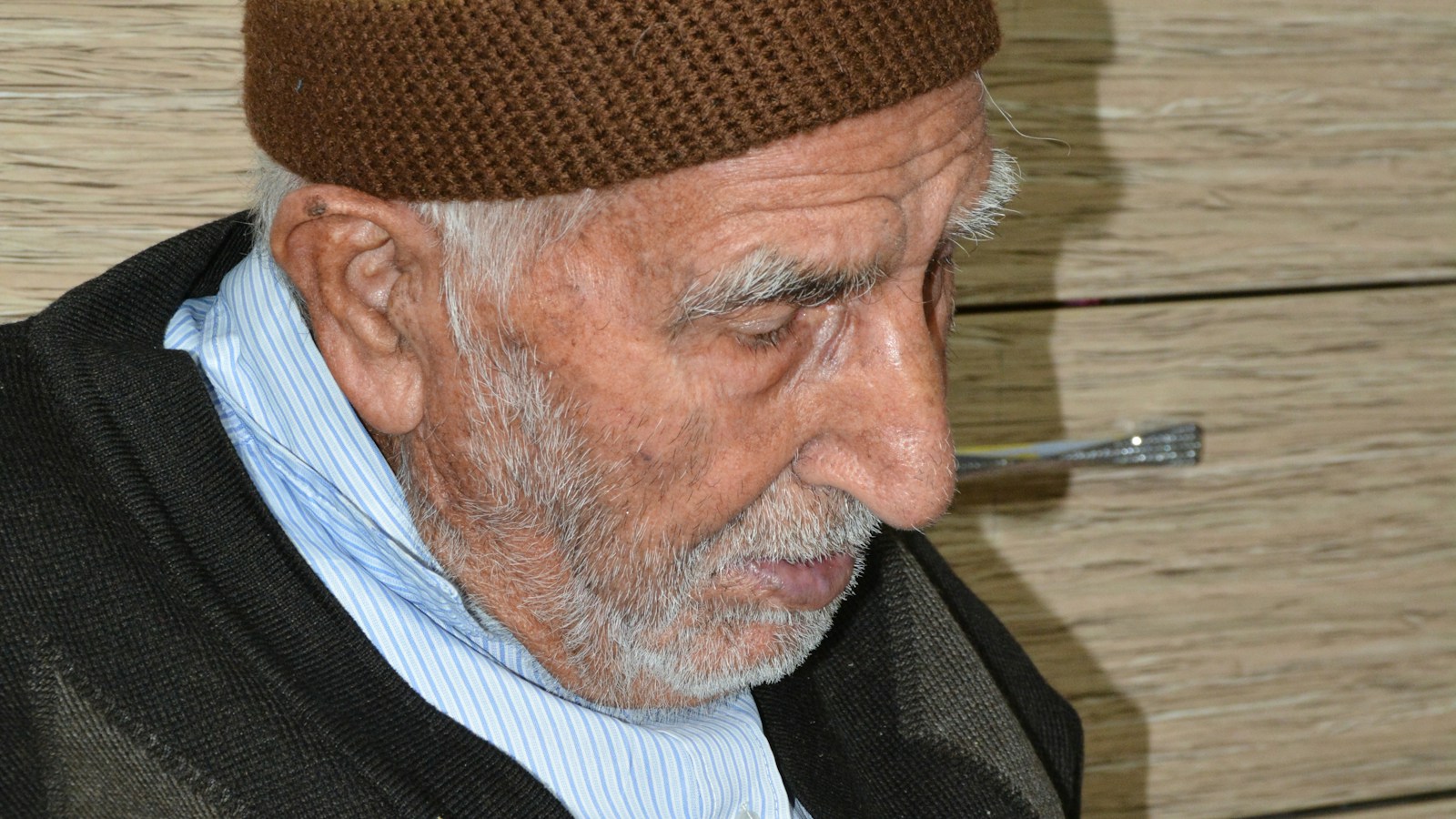
Illustrative photograph; the person pictured is not identified as a study participant.
Another angle on this subject
Continue through related ideas, decisions and consequences.
 Human Behaviour
A Summary Preserves a Choice About Importance
Research comparing human summaries and memory recall raises a practical question: which details survive when we shorten an account?
 Human Behaviour
What Helping and Taking Responsibility Have in Common
A study of 516 students at one Chinese university found the two tendencies travelled together. It also showed why the route between them is harder to pin down.
 Human Behaviour
What a School VR Study Can Tell Us About the Headset
Two executive-function test scores favoured the VR group in a Peruvian school pilot. The comparison tells us more about the programme than the equipment.