
After the Music Stops, What Counts as Cooperation?
A classroom synchrony study reports stronger perceived cooperation. The next practical test is what students can accomplish together when their tasks diverge.
Inside this article
01A shared rhythm is only the beginning of a shared task ↓02Ask what cooperation would produce ↓03Give disagreement a legitimate role ↓Event / source date: 11 November 2026 — publication of the classroom synchrony study · Published 15 NOVEMBER 2026
A shared rhythm is only the beginning of a shared task
A group can move together and still need to decide how to work together. The first activity has a visible common rhythm. The second may require different contributions: one person gathers evidence, another challenges an interpretation, and another turns the result into something a stranger can understand. These activities belong in the same classroom, but they should not be evaluated as though they were interchangeable.
Research published in Frontiers in Psychology on 11 November brings the distinction into focus. Ximei Xia and colleagues studied 253 students at one Qingdao secondary school. Classes were assigned to a five-minute synchronised gesture dance or free group activity. Subsequent questionnaires favoured synchrony for perceived cooperation. The study used self-reports, not independent behavioural observations. Similarity and group identification were measured within the same waves, so the proposed mediation sequence does not establish their causal order. These limits matter when translating a promising activity into an educational claim.
Ask what cooperation would produce
Imagine a teacher preparing a class to build a small exhibition about local water use. Some pupils will interview relatives, others will draw diagrams, and others will check whether the captions make sense. The teacher starts with an optional movement exercise to help the group begin. Afterward, pupils report that the session felt friendly. That is useful information about the experience. It does not yet answer whether information travelled accurately between the interviewers and the diagram makers.
For this hypothetical project, cooperation could be defined through a few observable events. Does each handover include the source of a claim? Can a pupil ask for missing information without the request being treated as an insult? When an error is found, can the group revise the shared display before presenting it? These criteria are tied to the actual assignment. They do not require a teacher to infer an invisible personality trait from a smile or a quiet manner.
There is also a difference between equal visibility and a useful division of work. An excellent interviewer may contribute more through preparation than through speaking during the final presentation. A fair record should recognise the contribution where it happened. Otherwise, the loudest stage of the project can become the measure of the entire collaboration.
Give disagreement a legitimate role
The goal of a shared activity should not be to make all later responses sound alike. In the exhibition example, a pupil who notices that a dramatic caption overstates the evidence is helping the group. That contribution may interrupt an enthusiastic moment. The teacher can protect its legitimacy by assigning the group a checking task before the draft is finished, with time to act on what the checker finds.
One possible routine is to ask every group to include an unresolved question beside its strongest conclusion. Another is to let one pupil explain which source changed the group's original plan. These proposals make revision part of the product, so the group does not have to choose between correcting its work and presenting itself as successful. They are editorial suggestions, not tested extensions of the synchrony intervention.
CYPAPER's earlier analysis of classroom membership and belief revision examined the cost of making agreement a condition of belonging. Here, the practical question comes after a shared activity has begun: can a group retain a sense of connection while allocating different responsibilities and accepting an inconvenient correction? That is a question about how cooperation is organised, not simply how harmonious it looks.
Compare experiences without forcing uniform participation
A teacher considering a movement activity should offer a workable way to participate without demanding a public performance from every pupil. A learner might prefer to keep a rhythm, observe the sequence, or help prepare the next task. The design should explain how these roles remain part of the lesson. Otherwise, the invitation to join could become an informal test that excludes someone before the actual group work starts.
If a school wants to evaluate the routine, it could compare similar lessons with and without it and decide in advance which outcomes matter. A short anonymous account of how included pupils felt would address one question. A record of completed handovers and corrections would address another. Both should be preserved, including cases where they point in different directions. Enjoyment is a worthwhile experience, but it should not be relabelled as demonstrated learning merely because learning was the institution's preferred outcome.
An appropriate follow-up would also ask whether any improvement survives a change of partners. A group that coordinates well only with familiar members presents a different educational result from pupils who can establish workable cooperation with a new team. That proposed comparison would need its own evidence. The present article does not claim that synchronised movement transfers across groups or improves academic attainment.
Build the bridge from welcome to responsibility
The useful classroom design problem is the transition. An opening exercise ends; a complicated assignment begins. What tells each participant where their contribution belongs? Who can request clarification, and what happens when one person needs more time? These questions can be answered explicitly through roles, small milestones and visible handovers instead of being left inside a general instruction to work well together.
A school can value a pleasant shared start while holding a separate standard for the work that follows. The teacher's next observation should be specific: whether a pupil's contribution reached the people who needed it, whether a mistake was corrected, and whether somebody who had been peripheral gained a real responsibility. Cooperation earns its educational meaning in those exchanges, when different actions become a result the group can explain together.
Gabriel Nicolaev — CyGuru
Sources & further reading
Xia and colleagues — Interpersonal synchrony and perceived cooperation ↗
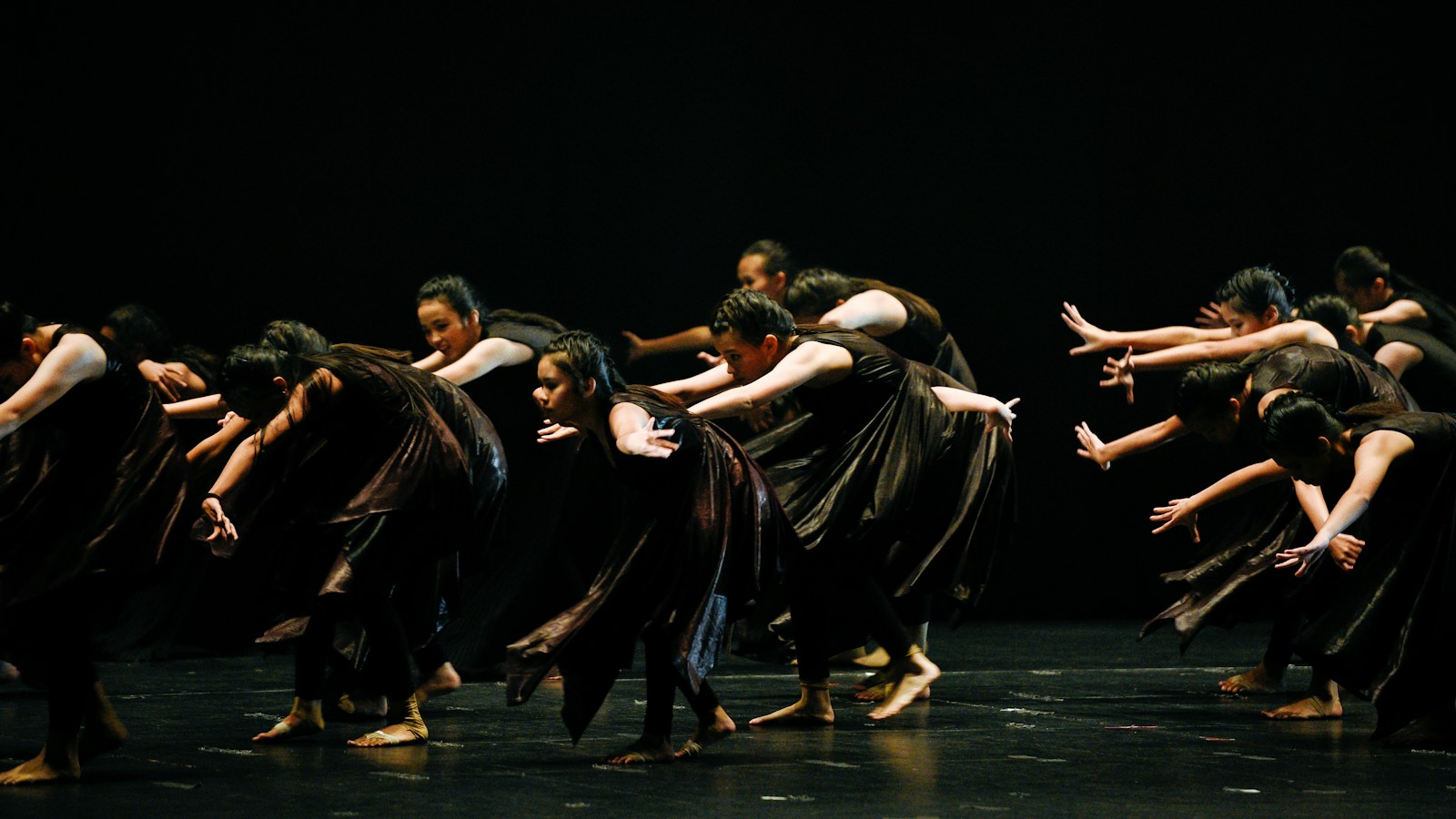
Illustrative photograph by Lucas Law / Unsplash; not an image of the study or its participants.
Another angle on this subject
Continue through related ideas, decisions and consequences.
 Human Behaviour
What Helping and Taking Responsibility Have in Common
A study of 516 students at one Chinese university found the two tendencies travelled together. It also showed why the route between them is harder to pin down.
 Human Behaviour
When a Classroom Turns an Answer Into a Membership Test
In three experiments, preschoolers had more reason to keep a disproven answer when agreeing was the price of joining a group.
 World & Power
The Gambia’s Peace Accord Faces Its Test When a Campaign Complaint Arrives
A renewed campaign pledge puts peaceful participation in writing ahead of the December presidential election. Its practical value depends on who handles disputes as they arise.