
When Multitasking Looks Fast, Count the Missed Answers
A new experiment separates response speed from success across competing visual and auditory tasks. That distinction changes how a busy workflow should be evaluated.
Inside this article
01A busy screen can give the wrong impression ↓02Choose the unit that deserves to be called complete ↓03Make the competing demand visible ↓Event / source date: 10 November 2026 — early publication of the accepted research article · Published 15 NOVEMBER 2026
A busy screen can give the wrong impression
Imagine a support desk where an employee reads incoming requests while answering spoken questions from a colleague. Messages disappear from the queue quickly. The supervisor concludes that the arrangement is efficient. But the queue records only a completed action. It does not reveal whether the employee noticed an exception in the request, retained the spoken instruction, or sent a correct answer that will survive the next customer reply. This is a hypothetical workplace, but its measurement problem is concrete: activity and successful handling need separate records.
A study published on 10 November in Cognitive Research: Principles and Implications offers a precise laboratory prompt. Elizabeth Fox and colleagues analysed 40 participants after exclusions, pairing a visual search task with an auditory memory task. Performance and modelling indicated different trade-offs across the tasks; some quicker responding accompanied worse accuracy. The authors flag fixed pacing and a single-task-before-dual-task sequence as limitations. The accepted paper remains subject to editing. It does not establish how a particular support desk will perform.
Choose the unit that deserves to be called complete
For a business, the useful unit might be a request resolved without a preventable follow-up. For an editor, it might be a claim checked against the correct document. For a student, it might be an explanation they can reconstruct without the notes. Each definition includes something beyond the visible gesture of finishing. A measurement system should make that additional requirement explicit before comparing two ways of working.
Consider the support desk again. A manager could measure the time from opening a request to sending the first response. A second record could capture whether the response addressed the customer's actual question. A third could show whether a correction was required. These are separate outcomes. Combining them immediately into a single score would hide which part of the work changed when spoken interruptions were added.
The next distinction is between an incorrect answer and a missing one. Suppose an employee acknowledges every caller but fails to update a delivery instruction. No obviously wrong sentence has been spoken. Nevertheless, required work remains undone. A review that examines only messages actually sent cannot discover all such omissions. It needs a list of the actions the task required, including those that never produced an output.
Make the competing demand visible
An interruption log should describe what the person had to do with the interruption. Hearing a brief sound, remembering a reference number, judging a colleague's proposal and negotiating a customer complaint are different assignments. Calling them all background noise would make a comparison difficult to interpret. The relevant question is what additional decision or memory requirement arrived while the original task remained open.
This suggests a modest testing approach. Use a safe simulation with representative requests and a known answer key. Compare a period in which requests are handled alone with one in which a second activity is required. Vary the order across participants or sessions, allow practice, and keep the instructions equivalent. Record the extra task's outcomes as carefully as the original task's outcomes. Otherwise, apparent success could simply mean that one assignment was quietly abandoned.
Such a test would evaluate that particular arrangement. It would not diagnose an employee's overall attention, prove a permanent personal limitation, or justify ranking people by an improvised psychological score. Its purpose is to identify a workload design worth changing. CYPAPER's discussion of useful feedback makes a related distinction: a result becomes useful when it points to a decision the recipient can actually make.
Do not let the faster channel set the whole pace
In the hypothetical desk, spoken questions may require an immediate reply while written requests allow more time. The practical response need not be a blanket rule against conversation. One option is to create an explicit pause: the employee marks the written request as in progress, answers the colleague, then resumes from a visible checkpoint. Another is to move non-urgent spoken requests into a queue with an agreed response window. Both options alter the timing of demand rather than asking the employee to conceal its cost.
A checkpoint should identify the next unresolved question. A generic reminder to finish the ticket offers little help if the person cannot tell whether they have verified the address or merely read it. A more useful note might say that the product code has been checked and the delivery restriction still needs confirmation. This is an operating proposal, not an intervention tested by the laboratory study.
The trade-off should be priced honestly. A deliberate pause may lengthen the first response. If it also reduces corrections, the service owner needs both measures before deciding whether the change is worthwhile. Different services can legitimately choose different tolerances. A routine acknowledgment and an irreversible instruction do not deserve an identical speed target.
Evaluate the arrangement, then revise it
A fair evaluation would look at ordinary work, difficult cases and peak demand separately. It would also ask employees what they stopped doing to keep the visible queue moving. Their account is a lead for inspection, not conclusive evidence by itself. The manager can then check whether those omitted steps were unnecessary, poorly designed or essential safeguards that the performance target made expensive to maintain.
The deeper management question is who gets to decide which task can wait. If every incoming channel claims immediate priority, the employee is being asked to make that decision implicitly on every encounter. Giving the work an explicit order makes the choice reviewable. Speed then becomes one property of a defined service, rather than the only evidence that a person appears to be coping.
Gabriel Nicolaev — CyGuru
Sources & further reading
Fox and colleagues — Influence of cross-modal load on cognitive processing and decision-making ↗
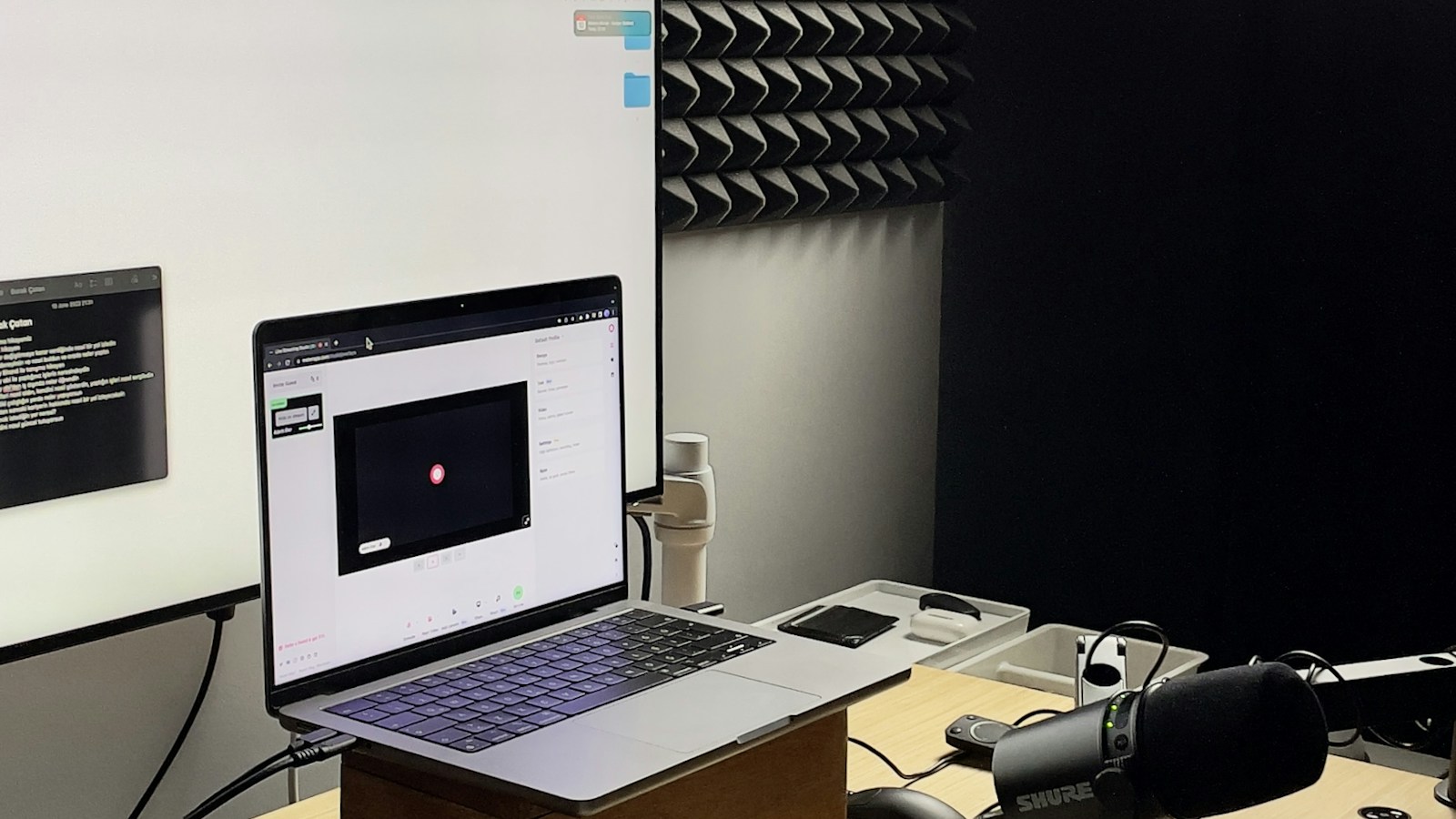
Illustrative photograph by Adem ilter / Unsplash; not an image of the study or its participants.
Another angle on this subject
Continue through related ideas, decisions and consequences.
 Human Behaviour
What You Expect to See Is Not Always What You Need to Judge
A visual-perception experiment separates prediction from task relevance. That distinction suggests a sharper question for training: what exactly should the learner inspect?
 Human Behaviour
A Habit Needs a Cue the Day Can Keep
A study tracked how undergraduates practiced self-chosen habits across a semester. Its daily records give a way to examine what changes when a routine slips.
 Human Behaviour
Motor Learning Looks Different After Thousands of Reaches
An extended reaching experiment separates end-of-session performance from retention and transfer. It offers a better way to frame what practice has achieved.