
Europe’s Ukraine Negotiating Team Needs More Than a Shared Seat
The Dublin meeting identified a European negotiating team. Its effectiveness will depend on matching diplomatic positions to the institutions that can deliver them.
Inside this article
01What Dublin established ↓02Representation and authority are different resources ↓03Ukraine cannot become an item inside European coordination ↓Event / source date: 2026-11-13 — publication of the official statement discussed below. · Published 14 NOVEMBER 2026
What Dublin established
At the informal European Council meeting in Dublin on 13 November, EU leaders discussed diplomacy concerning Russia's war against Ukraine. The Council's account describes a proposed European team comprising EU institutions and France, Germany, Italy, Poland and the United Kingdom from the Coalition of the Willing. President António Costa emphasized coordination with all EU members, Ukraine's security and continued financial and military support.
The announcement identifies a structure for European participation. It does not establish that a peace agreement has been reached, that Russia has accepted a proposal or that security guarantees are already operational. The analytical question is what the team can authorize, communicate and ultimately deliver when negotiations move from broad principles to specific commitments.
Representation and authority are different resources
A small group can make discussion easier. Fewer representatives may be able to compare positions quickly and present a consistent message. But the ability to communicate a position is not the same as the authority to bind every institution whose resources would be needed to implement it.
Consider a hypothetical proposal combining reconstruction finance, a security arrangement and progress toward European integration. Those elements would involve different decision procedures and potentially different participants. A negotiator could endorse the package politically while still needing decisions elsewhere before any component becomes executable.
The practical task is to make those boundaries legible before a commitment is described as settled. Which elements are negotiating objectives? Which have formal authorization? Which require additional approval? Clear answers can protect negotiations from a damaging sequence in which an apparently unified offer later fragments because its components were never equally authorized.
Ukraine cannot become an item inside European coordination
Costa's remarks distinguish Ukraine's legitimacy over its territory and sovereignty from Europe's roles in its own security and Ukraine's European future. That distinction matters because internal European coordination can become so elaborate that the state whose future is being discussed appears mainly as the subject of a process.
A workable negotiating method would keep separate the task of coordinating Europe's contribution and the task of deciding for Ukraine. The first is necessary; the second cannot be inferred from a European team announcement. Readers should therefore pay attention to who is making each proposal and which party is being asked to accept it.
This is also a question of public language. Saying that partners support a framework does not mean every party has agreed to its contents. Reporting should distinguish support for continued talks, agreement on a negotiating position and acceptance of enforceable terms. Those are different stages with different consequences.
A promise of security has an implementation calendar
Security guarantees are meaningful only when their practical content can be understood. A general commitment leaves unanswered what would trigger a response, which participant would respond and what preparations must already exist. These questions do not require publishing sensitive operational details to recognize that implementation has costs and timing.
In a hypothetical arrangement, one participant might supply training, another equipment and another a financial commitment. The package could look substantial on paper while depending on deliveries at different dates. A promise that begins immediately and a capability that arrives much later should not be treated as the same contribution.
Negotiators therefore need a connection between diplomatic wording and institutional readiness. That connection can also reveal where a proposal is fragile: if a critical component depends on a decision outside the team's control, the uncertainty should be acknowledged rather than hidden behind collective language.
Financing remains a separate near-term test
The Council says leaders will return on 26 and 27 November to Ukraine's financing needs for 2027 and beyond, using forthcoming Commission proposals. This is a scheduled discussion, not evidence that a specific financing package has already been adopted. The distinction matters for anyone trying to assess the immediate resources available.
Financial support and diplomacy operate on overlapping calendars. Public services and planned commitments continue to need funding while negotiations proceed. A potential future settlement does not itself pay an invoice or resolve a budget gap. At the same time, the terms of longer commitments can affect what parties believe is sustainable.
The useful questions for the next meeting are concrete: what period would support cover, which conditions would apply, and what decisions remain before funds become available? Those questions help readers avoid treating the size of a political ambition as the size of a funded programme.
How to read the next announcement
The next diplomatic statement should be assessed for changes in authority and commitment, not only changes in tone. A named team can improve coordination, but its practical value emerges when it resolves disagreements, secures mandates or makes an implementable proposal clearer.
Watch for distinctions between consultation and consent. Governments outside the smaller group still need a credible route to shape positions that concern them. Coordination that merely reports a finished decision back to other participants is different from coordination that gives them a meaningful opportunity to resolve objections beforehand.
For now, Dublin provides an institutional starting point. Its significance lies in whether a common voice can remain connected to Ukraine's decisions, Europe's procedures and the resources required for any resulting commitments. Unity is most persuasive when the people speaking can explain which parts of what they promise are ready to be delivered.
Related CYPAPER analysis: Armenia’s Dublin Support Puts a Price on Building New Export Routes and A Ceasefire Incident Report Needs a Shared Clock.
Gabriel Nicolaev — CyGuru
Sources & further reading
European Council: main results of the Dublin meeting, 13 November 2026 ↗
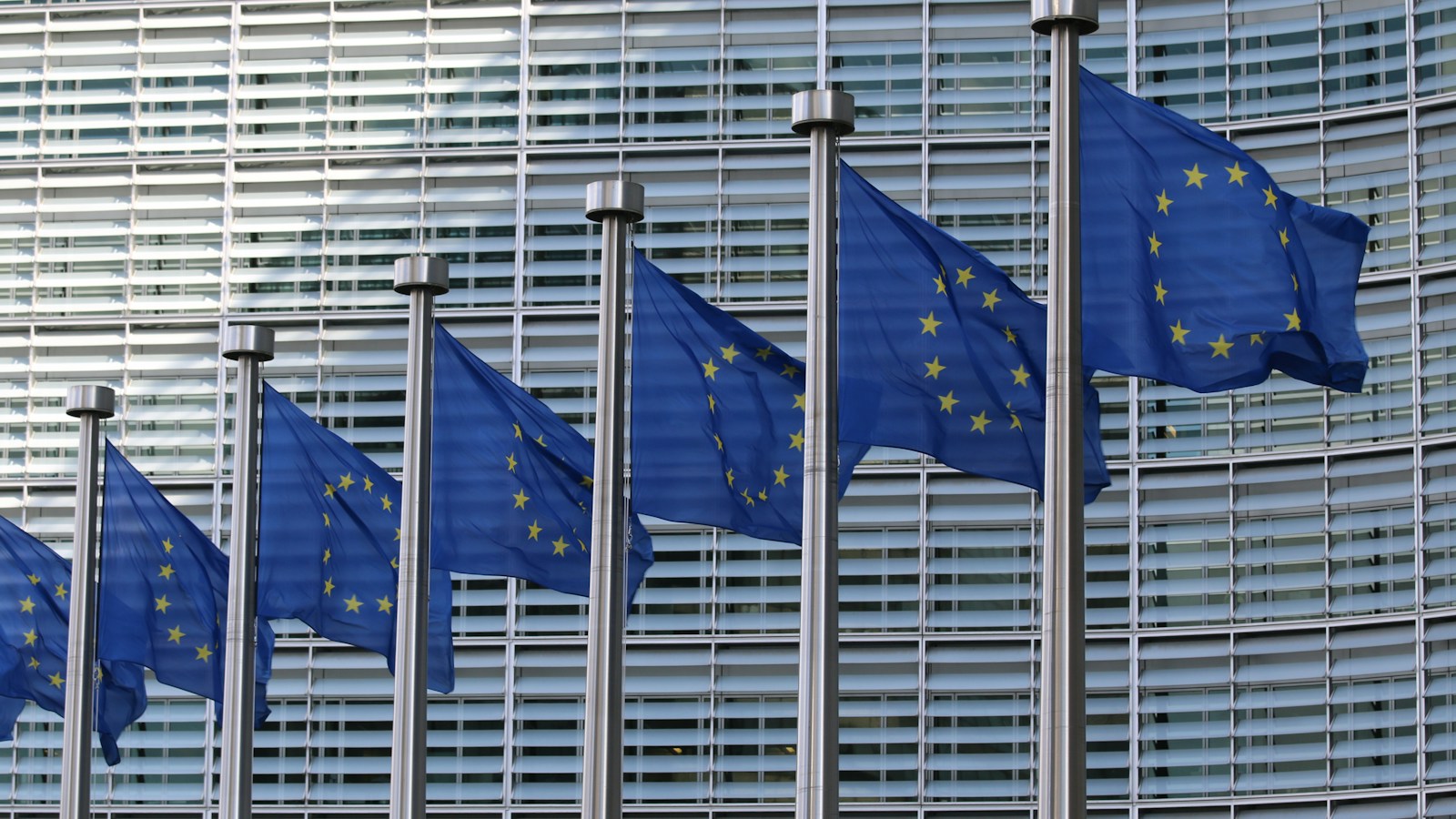
EU flags in Brussels, photographed by Guillaume Périgois in 2020; illustrative, not the November meeting.
Another angle on this subject
Continue through related ideas, decisions and consequences.
 The CyGuru Column
A Shared Purchase Needs Its Own House Rules
Agree how a shared asset will be used, repaired and passed on while everyone can still imagine the purchase from the other person’s side.
 World & Power
Haiti’s Recovery Compact Needs Evidence the Public Can Inspect
Haiti and its partners have a one-year reform framework. How progress is documented will shape public scrutiny and decisions about future financing.
 World & Power
The Western Sahara Veto Debate Puts the Costs of a Blocked Mandate on the Record
The General Assembly examined Russia’s veto on 10 November. Its debate allows more governments to explain their positions and gives the public a clearer record of the deadlock.