
Armenia’s Dublin Support Puts a Price on Building New Export Routes
Dublin’s Core Group statement backed Armenia’s trade and energy diversification. For exporters, usable alternatives depend on what happens to the first orders.
Inside this article
01What the Dublin statement adds ↓02The work hidden between a tariff and an order ↓03An emergency outlet and a durable market have different clocks ↓Event / source date: 12 November 2026 — Core Group meeting and statement in Dublin. The Council of the EU adopted separate temporary trade measures on 24 September. · Published 13 NOVEMBER 2026
What the Dublin statement adds
On 12 November, the Core Group of Support to Armenia met Prime Minister Nikol Pashinyan on the margins of the European Political Community summit in Dublin. Participants reaffirmed support for Armenia’s sovereignty and committed to continue helping it diversify trade and energy partnerships. The statement describes Russian restrictions on Armenian exports and warns that Russia is threatening to use energy supplies as pressure. Those are the signatories’ accounts of the pressure. The meeting record identifies diversification as the response without setting out a new timetable for opening trade routes or replacing energy supplies.
The group referred to a step already taken in September. The Council of the European Union formally adopted a two-year suspension of import duties across a range of Armenian products, including certain agricultural goods. The Council described the covered exports as around 80% of Armenia’s existing exports to the EU. That denominator matters. It tells readers about coverage within a specific destination market. It says nothing by itself about the share of all Armenian exports that can move quickly to European buyers, the number of companies ready to ship or the orders they might win.
The work hidden between a tariff and an order
A duty suspension can improve the economics of a shipment that already satisfies the conditions of entry. It cannot identify a distributor, arrange inspection or finance the months between first contact and payment. Imagine a hypothetical producer that has sold one line of packaged goods through a distributor serving a familiar foreign market. The equipment and workers are already in Armenia. A potential European customer might ask the producer to supply a different package, disclose more about how it traces its ingredients or accept smaller deliveries to several warehouses. Each requirement can be manageable on its own. Together they can determine whether a first order fits the producer’s cash position.
The natural unit to observe is a shipment with a buyer, a deadline and a plan for dealing with delay. Which transport route can deliver within the time promised? Who pays if a load needs extra storage? Can the buyer order again at the same specification? Answers distinguish a project with a route from an expression of interest. CYPAPER’s analysis of executable cross-border orders considers a related question from the buyer’s side. For Armenia, the first repeat order could be more revealing than a long list of businesses that attended a promotion event.
An emergency outlet and a durable market have different clocks
The Council describes the tariff measure as temporary and says it comes with conditions and safeguards. A firm deciding whether to spend on packaging equipment or obtain certification needs to know how quickly it can recover that cost. A buyer choosing a supplier also thinks about what happens to its delivered price once the preference ends. Those decisions meet in the contract. An order priced for a preference that expires before renewal can be useful today and still leave the producer exposed next year.
That gives officials and business groups a concrete role. They can track the obstacles that consume time across several firms, such as uncertainty about documents or access to suitable freight services. One firm may overcome a difficult requirement through a personal introduction. The test is whether another eligible business can follow the route using public information and ordinary commercial services. Reporting the reasons for unsuccessful shipments would help buyers and exporters distinguish a route that needs repair from a product that found little demand. It would also reveal where concentrating support on a few products may create more reliable alternatives than advertising a wide range at once.
How to read the energy commitment
The same word, diversification, describes a different set of constraints in energy. A goods exporter may be able to change distributors when its contract ends. An energy importer needs a source, a physical route that can carry the supply, and operating arrangements for the days when demand is high or a connection fails. Commercial terms matter, but useful alternatives have to arrive when needed. The Dublin statement promises continued help with energy diversification. It does not say which replacement volumes would be available, which infrastructure would carry them or on what date those arrangements could become operational.
A later announcement could make the difference visible by naming a specific dependency and the time needed to operate through an interruption. An importer that can buy some additional supply next season has gained something different from one that can replace most of a lost delivery this winter. Keeping those horizons visible also makes it easier to compare emergency measures with long-lived investments. Both can contribute to resilience under different conditions.
The next evidence should have a delivery date
Dublin matters because it put trade, energy and regional connectivity in the same political statement. The participants also endorsed the Armenia–Azerbaijan peace process and normalisation with Türkiye. These processes may matter for future routes. A reader should check separately which crossing or connection is available to a specific user and what terms govern it.
Follow-up reporting can start with a few traces that are hard to mistake for diplomatic activity. One is a repeat shipment that a buyer continues to order after inspecting the first. Another is a transport option that stays usable during a disruption elsewhere. A third is an energy arrangement that specifies the volume it can deliver on a particular date. Armenia’s negotiating room grows when these alternatives become credible enough for firms and public institutions to make plans around them.
Gabriel Nicolaev — CyGuru
Sources & further reading
European Council · Dublin Core Group statement ↗
Council of the EU · September tariff measures ↗
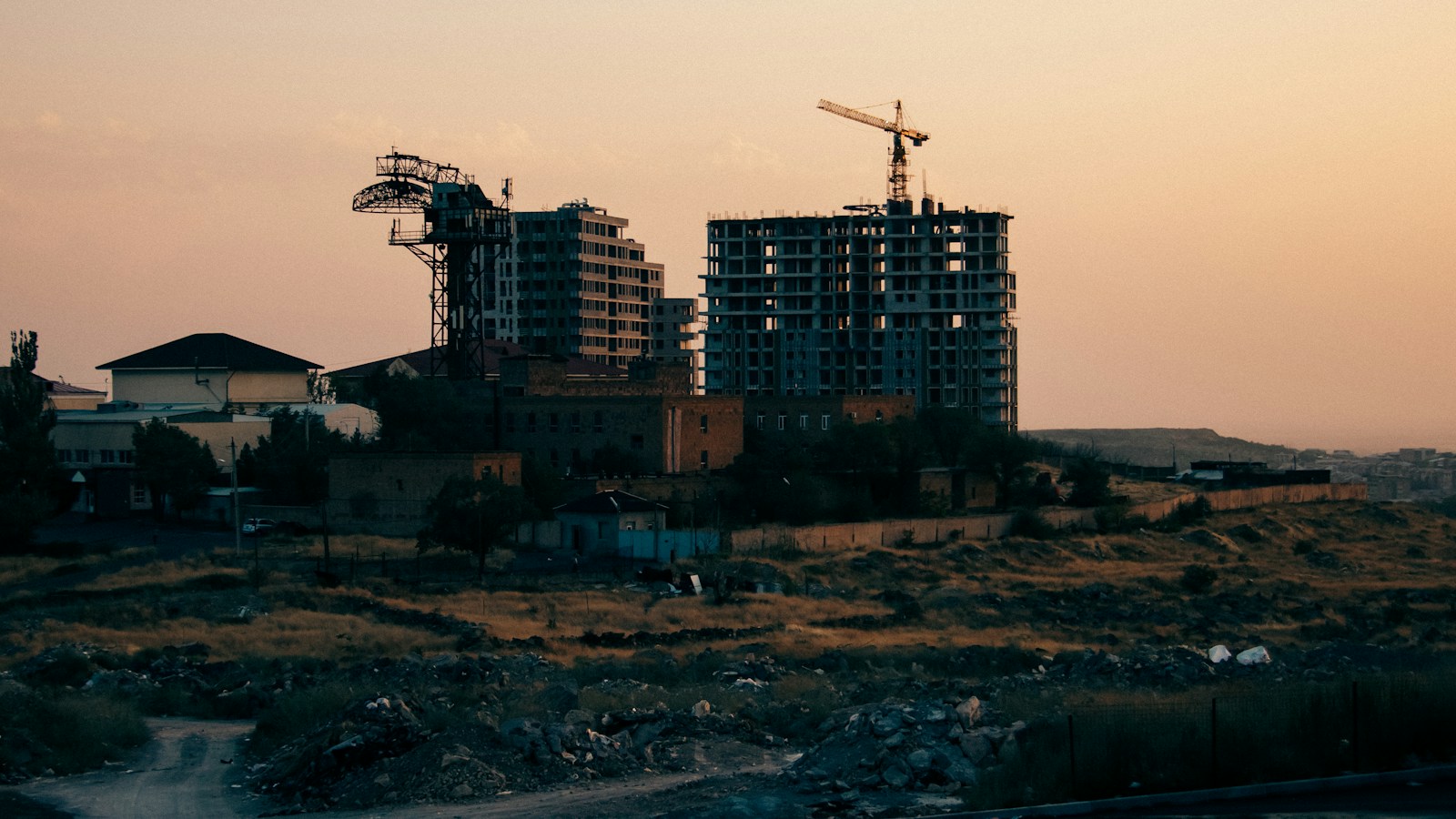
Illustrative photograph of Yerevan by Danila Rassokhin on Unsplash.
Another angle on this subject
Continue through related ideas, decisions and consequences.
 World & Power
Trade Training Should Survive the Delegate’s Return
Germany’s new WTO contribution supports technical assistance. Its institutional value depends on whether the learning becomes usable beyond one participant.
 World & Power
The Real Cost of a World That Trades in Blocs
Geopolitical alignment changes more than trade routes. It changes who pays for resilience, who carries the adjustment and who can afford alternatives.
 Money & Business
What Cathay’s 14 New Airbus Orders Can Add to Its Network
Cathay and Airbus confirmed new widebody and narrowbody orders. The benefits for travellers and shippers depend on when those aircraft enter the schedule.