
What It Costs a Retailer to Buy Across the EU
The European Commission is gathering evidence on territorial supply constraints. A retailer can show where an alternative offer stops being executable by tracing a real order.
Inside this article
01Where the alternative order stops ↓02Build a record of an actual request ↓03Make the two offers comparable ↓Event / source date: 10 November 2026, European Commission Futurium update on the ongoing consultation. · Published 11 NOVEMBER 2026
Where the alternative order stops
On 10 November, the European Commission’s Futurium platform published an update on its consultation about territorial supply constraints in the Single Market. It describes practices that can prevent retailers and wholesalers from purchasing goods in one EU country for resale in another. The update identifies restrictions on supply and differences in packaging or labels among the issues under consideration. The Commission is seeking feedback through 4 December. Its update gives buyers an opportunity to make a commercial problem observable at the level of an order.
A comparison between two shelf prices may identify a promising place to investigate. The buyer still needs to establish which wholesale offer was available, which conditions applied, and whether an order could be delivered and sold. An account that follows this sequence can help separate physical and commercial differences from a restriction linked to the destination market.
Build a record of an actual request
In a hypothetical example, a retailer operating in one EU country asks a wholesaler across the border to supply a packaged product. The initial response gives a unit price and lead time. When the retailer provides its destination and customer details, the wholesaler says the product is only available through a local channel. One version of the record contains the opening price and a statement that the deal was refused. A stronger version captures the exact item and quantity, the scope and validity of a supplier quotation, the terms that changed, and the supplier’s stated reason.
The supplier may explain that the quoted stock has already been reserved, that its wholesale offer assumes collection, or that delivery to the proposed location is unavailable. Those answers would make the commercial constraint more specific. Where evidence of a territory condition exists, preserving the actual communication matters more than assigning a motive. A record can also note what alternative terms the buyer offered, such as collecting the goods or accepting a realistic minimum order.
Make the two offers comparable
Suppose an illustrative domestic offer is 10 currency units per pack delivered. An alternative is 8.60 units at the wholesaler’s depot. Freight adds 0.45, handling adds 0.20 and commercially feasible relabelling adds 0.35. The alternative totals 9.60 units per pack before any difference in financing or shrinkage. In this example, the original gap of 1.40 units becomes 0.40 units when known fulfilment costs are included. If no one can supply the goods on the stated terms, 9.60 remains a scenario value.
Pack size can matter more than price arithmetic. A cheaper case of twelve with a shorter usable life may force the buyer to order more inventory than the stores can sell. A buyer can compare the cost per usable unit over a realistic replenishment cycle, including the consequences of waiting for a replacement shipment. That comparison shares the archive’s concern with qualification and purchasing costs, while the specific evidence here concerns whether a viable cross-border order can be placed.
Give packaging differences their own column
An image of a familiar package proves little about whether a specific shipment suits its destination. Product identity, batch traceability, language information and storage instructions deserve examination by the people who would accept and sell the goods. Retailers can record the work needed to make an offer suitable, the party able to perform it, and whether that party will do so at the quoted price.
A hypothetical buyer may receive two refusals that sound similar. One wholesaler cannot supply the required pack format within the delivery window. Another has the relevant pack in stock but restricts shipment to particular addresses. A record of both requests gives a consultation reviewer something concrete to examine. It also gives procurement a clearer decision about whether to look for a different product configuration or a different source.
Test whether the buyer can take the offer
A purchase option can appear viable in procurement’s cost sheet and fail a store’s replenishment test. For a trial order, a retailer could select a limited range of products and record the terms that remain available at each step from request to fulfilment. It could then compare accepted orders, documented refusals and orders abandoned by the buyer. That last category matters because a retailer that walks away over handling costs has encountered a different constraint from a retailer refused for its destination.
Retain the transaction record after the consultation
Even a careful landed cost estimate tells a buyer little about the staying power of an alternative source. It is worth recording available volume, replenishment lead time and which elements of the service the wholesaler will commit to in writing. A cheaper one-off lot might help a store through a promotion. It would have a different value from a supply route that can fulfil regular orders and handle damaged goods or recalls.
The Commission says the feedback will inform its assessment of possible measures. A retailer’s decision to keep evidence of requests, conditions and realised costs has immediate value, regardless of the consultation outcome. It lets a purchasing manager reconstruct where the price advantage came from and which operational choices were genuinely available. If a route eventually opens, the same record gives the business a way to see whether the cost savings survived the first delivery.
Gabriel Nicolaev — CyGuru
Sources & further reading
European Commission Futurium, territorial supply constraints consultation update ↗
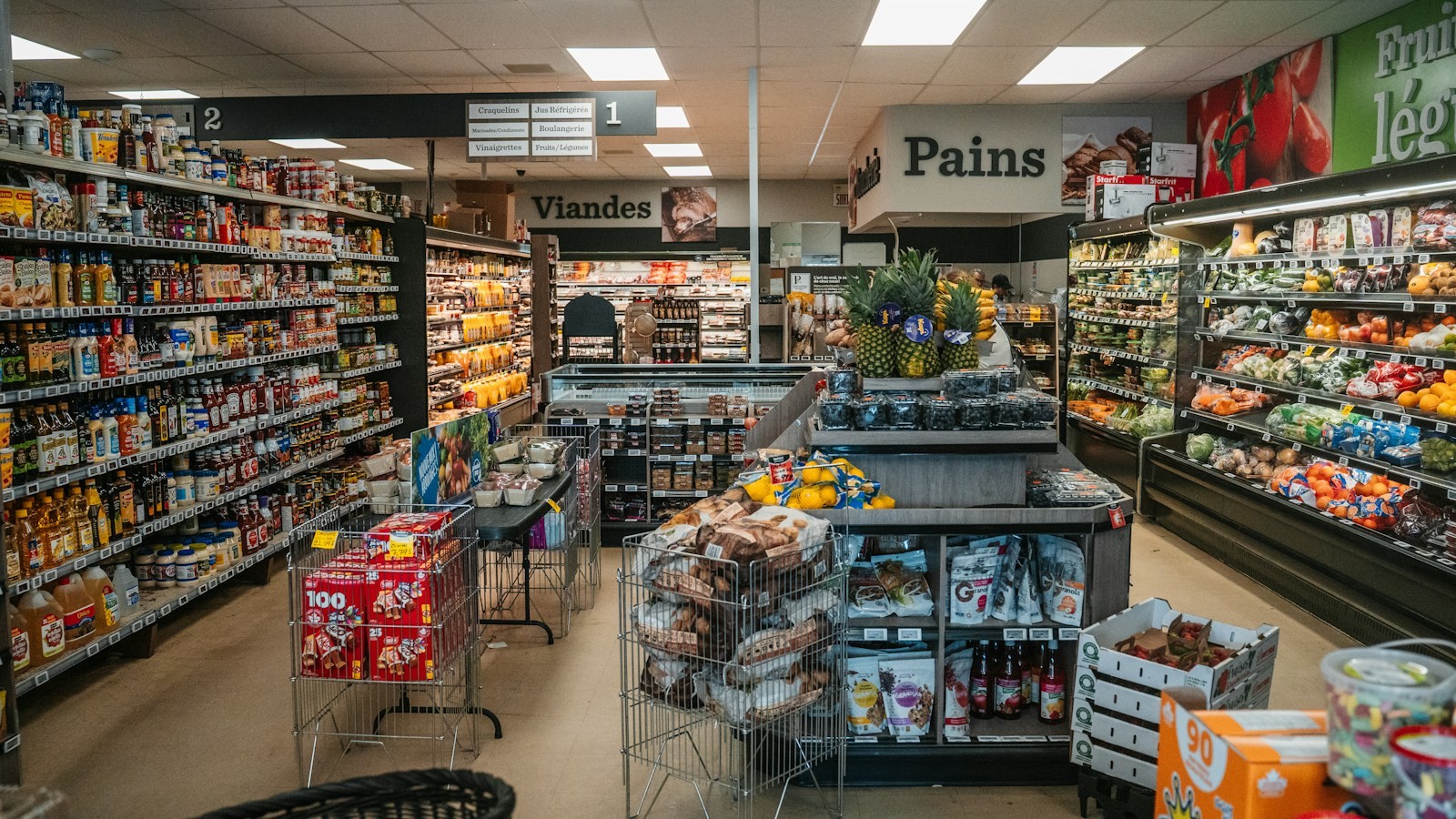
Produce displays and stocked supermarket shelves in Tadoussac, Quebec. Illustrative photograph. Photo by clement proust on Unsplash.
Another angle on this subject
Continue through related ideas, decisions and consequences.
 Money & Business
A Franchise Fee Should Face the Local Shop’s Economics
A recognisable brand can be part of an offer. The proposed outlet still needs an account of what remains after local costs and recurring fees.
 Money & Business
Unused Capacity Is a Product Only When the Reservation Is Real
An original business opinion on reserved time: define the capacity being held, the buyer’s right to use it and the seller’s obligation to keep it available.
 Money & Business
October Factory Surveys Reveal the Gap Between Growth and Profit
Manufacturing can expand while higher input costs and disrupted supply leave businesses with less financial room.