
An Electricity Connection Count Leaves the Working Hours Unanswered
A new World Bank discussion revisits older electricity data and asks whether a connection supplies power people can depend on when they need it.
Inside this article
01The announcement is new; the observation year is not ↓02The relevant hour belongs to the user ↓03Averages can hide the difficult customer ↓Event / source date: 13 November 2026 — World Bank blog publication; its global access figures refer to 2023. · Published 15 NOVEMBER 2026
The announcement is new; the observation year is not
A World Bank blog published on 13 November argues that electricity access needs to be assessed alongside reliability and affordability. It cites 2023 figures showing 666 million people worldwide without electricity, including 581 million in Sub-Saharan Africa. The authors explicitly state that their discussion draws on the Atlas released in May 2026 and that newer World Development Indicators estimates may differ.
The distinction matters. This is a timely discussion of how access is measured, not a newly observed count of people without power in November 2026. Treating publication date as measurement date would make the article appear more current while making its evidence less accurate.
The more durable question is what a connection count allows a policymaker to conclude. It can identify an important boundary between households included in and excluded from electricity infrastructure. It cannot, by itself, show whether the service supports the activities that made the connection valuable in the first place.
The relevant hour belongs to the user
Consider two hypothetical households connected to a supply for the same number of hours each day. One receives electricity when its residents are home and need lighting. The other receives it mainly when the home is empty. A daily availability total would treat them alike, although the practical value differs.
The same issue becomes sharper for an enterprise. A refrigerated shop needs continuity around the clock; a workshop may need a dependable block of working hours. These examples do not establish the needs of a particular surveyed community. They show why the service question should begin with the activity that electricity is intended to support.
A useful measure could distinguish total hours, timing, unpredictability and interruptions during essential tasks. There will be trade-offs in the cost of collecting that information. Even a limited survey, however, can ask a more precise question than whether a wire reaches the building. Better measurement starts with naming what the basic count leaves unresolved.
Averages can hide the difficult customer
A system-wide average may improve while the least reliably served households experience little change. This can happen mathematically whenever improvements are concentrated among users who were already better served. It is a reason to inspect distributions, not a claim that any specific utility has produced such a result.
Imagine a hypothetical network divided between a central district and several remote settlements. If the central district has many more customers, a modest improvement there could dominate the average. A progress report should therefore allow readers to see whether gains reached different locations and service groups, while protecting individual household information.
The analytical task is to decide which differences matter for the public objective. Geography may be relevant; so may the type of connection or the service customers can afford. Reporting every possible distinction would overwhelm the decision. Reporting none would permit a favourable aggregate to carry a much broader claim than the underlying observations support.
The cost of backup belongs in the assessment
A household might technically have access while paying for another source whenever the main supply fails. In that hypothetical case, the connection bill alone would understate the cost of obtaining usable electricity. A comparison of affordability should ask what the household must spend to achieve the service actually required.
This does not mean every backup purchase should be attributed to utility failure. A user may choose additional resilience for reasons beyond the ordinary service promise. The assessment needs a clear boundary: what level of continuity is the public programme claiming to provide, and what extra spending is necessary because that level is not delivered?
That boundary also helps avoid misleading comparisons between technologies. An inexpensive installation with a narrow service capability should not be compared with a more capable system as though they were identical products. The public question is the cost of a specified useful service, including operation and upkeep, rather than the visual similarity of the equipment installed.
Keep expansion and improvement on the same page
There is a real allocation problem between reaching people with no connection and improving service for existing users. A reporting system that recognises only new connections can make reliability work less visible. One that reports only service quality among current customers can leave the unconnected population outside its frame.
The answer is not to collapse both objectives into a single impressive score. Separate measures can show the trade-off more honestly. A programme might report newly reached households, service hours among those households and changes for previously connected communities. Each measure answers a different question about what public investment achieved.
CYPAPER’s discussion of a working city around the home explored interdependent infrastructure. The present issue concerns the meaning of an access statistic. A connection is an observable milestone, but the policy promise often extends beyond that milestone. Reporting should make the additional promise explicit before institutions claim to have fulfilled it.
Measure a service people can plan around
Reliability has a planning dimension as well as a duration dimension. A predictable interruption may allow someone to rearrange a task; an unexpected interruption can make the same total hours harder to use. That is an analytical distinction, not an estimate of how much any particular customer would benefit. It suggests asking users what they can confidently schedule.
The World Bank’s intervention is useful because it places service quality beside infrastructure reach. The next step for anyone applying that distinction is to define the actual observation window, customer population and service threshold. Without those definitions, a richer vocabulary can still leave the public with incomparable numbers.
The desired result is a modest but important improvement in accountability: an access claim that tells readers what became possible, for whom and during which period. A connected building is a beginning. A service that people can incorporate into ordinary decisions is the outcome the measurement should help make visible.
Gabriel Nicolaev — CyGuru
Sources & further reading
World Bank: Beyond connection ↗
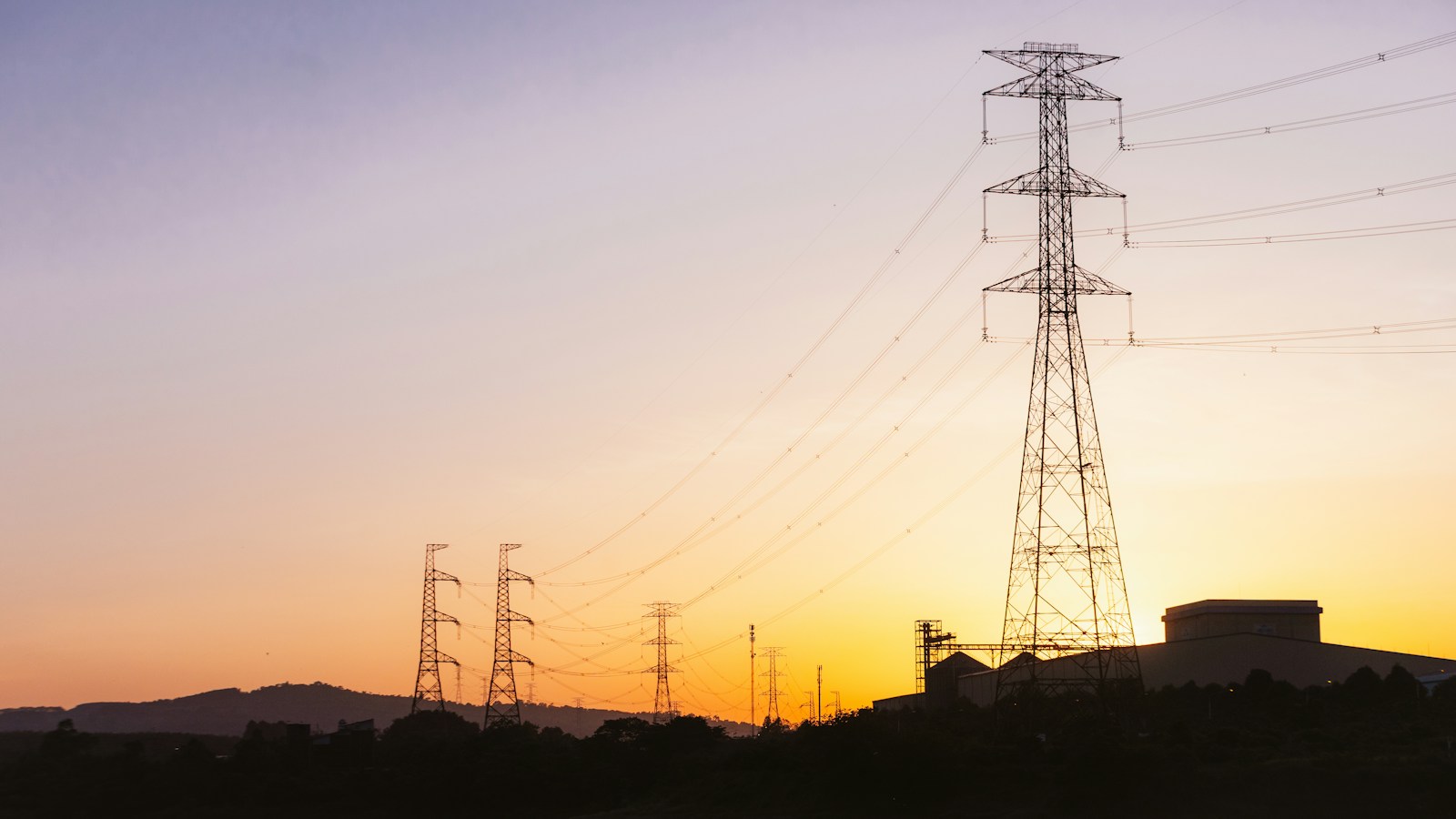
Illustrative electricity infrastructure photograph by DM David / Unsplash; not a location-specific image of the communities discussed.
Another angle on this subject
Continue through related ideas, decisions and consequences.
 Money & Business
Congo’s Oil Windfall Meets the Supplier Payment Queue
A World Bank update sees a window to reduce arrears in the Republic of Congo. Suppliers need to know which claims will be settled and whether new work will be paid on time.
 World & Power
Sierra Leone’s School Meals Grant Puts Delivery Data on the Menu
A new EU-funded monitoring initiative aims to strengthen school feeding oversight. Its value depends on whether information changes the next delivery decision.
 World & Power
Emergency Delegations Need an Expiry and a Review Owner
An urgent delegation can make action possible. A responsible institution should also identify when the delegated power ends and who reviews its continued use.