
A Ceasefire Incident Report Needs a Shared Clock
When an allegation is made, the sequence of observation, reporting and verification should remain visible. A timestamp alone cannot establish responsibility.
Inside this article
01A report has a history of its own ↓02Distinguish the event from its discovery ↓03Keep an allegation recognisable as an allegation ↓A report has a history of its own
An incident record should tell the reader when the reported event occurred, when someone became aware of it and when the allegation entered the record. These can be different moments. Collapsing them into one timestamp makes a disputed sequence look more settled than the available information permits.
This essay proposes a discipline for recording contested incidents. It does not describe a particular ceasefire, allege a violation by a real party or establish a legal monitoring requirement. The underlying judgment is straightforward: a record used to support a consequential accusation should preserve the path from an initial account to the conclusion later drawn from it. A polished summary should not erase the uncertainty that still matters.
Distinguish the event from its discovery
Imagine a wholly hypothetical monitoring team receiving a call at midday about damage said to have occurred earlier that morning. The call establishes when the team received the allegation. Without more information, it does not establish the precise time of the event, its cause or the identity of whoever caused it.
The record should preserve those distinctions in ordinary language. It might state that the alleged occurrence falls within a reported interval while the time of receipt is known more precisely. That is an honest account of the evidence. Replacing the interval with the call time merely because a database prefers one exact value would create certainty the witness did not supply.
Keep an allegation recognisable as an allegation
An initial account may be urgent enough to require attention before it is verified. The record should support that attention while keeping the claim’s status visible. Reported, observed, independently corroborated and unresolved should not become interchangeable labels simply because several people have repeated the same account.
In the hypothetical case, a second message might trace back to the first caller rather than constitute a separate observation. The team should record that relationship if known. Two messages can be two transmissions of one source. Recognising this does not prove the allegation false; it prevents the number of communications from quietly becoming the number of independent witnesses. The next step should respond to the evidence actually available.
A later observation may narrow only part of the question
Suppose the hypothetical team later sees damaged property. That observation could support a statement about the condition encountered at that later time. It might leave the timing, mechanism and responsibility unresolved. A useful update would specify which proposition the observation strengthens rather than mark the entire original account confirmed.
This is particularly important when several questions have been bundled into one sentence. That something happened, that it happened during a specified interval and that a named actor did it are separate propositions. Evidence bearing on one should not automatically decide the others. A record can become more informative while retaining important unanswered questions. It should be allowed to show that uneven progress.
Do not make sequence carry more meaning than it can bear
An action occurring after another action is not, by sequence alone, evidence that it was a response to it. A report should preserve chronological relationships where supported and separately identify the basis for any claimed connection. Otherwise, an orderly timeline can smuggle an untested explanation into an apparently factual format.
A hypothetical investigator might use the sequence to decide which question to ask next. That is a legitimate analytical use. It differs from presenting the proposed connection as established. The distinction protects the integrity of both the record and the inquiry: a working theory can guide further examination without being promoted prematurely into the account on which outside readers are expected to rely.
Let corrections change the record without erasing its path
If a witness revises an estimated time, the monitoring record should show the new account and the reason given, where available. It should preserve enough history to explain why an earlier summary differed. This need not expose a protected source publicly or circulate sensitive detail beyond those who need it.
The public version can state that a reported interval was revised and identify which conclusion is affected. The internal record may require a more detailed history subject to appropriate safeguards. CYPAPER’s discussion of corrections travelling with claims concerns the broader editorial obligation. Here the narrower issue is ensuring that a contested incident’s evolving chronology remains intelligible to the people deciding what its evidence supports.
The clock serves the evidence
A shared record should help participants disagree precisely. They may dispute the event time, source reliability, connection between accounts or attribution. Keeping those questions separate makes it possible to identify what additional observation could reduce a particular uncertainty. Calling the whole matter either confirmed or unconfirmed can obscure that useful structure.
No recording convention can manufacture impartial access or turn incomplete evidence into a complete account. But the record should at least avoid adding avoidable confusion of its own. A ceasefire incident report needs a shared clock because sequence matters. It also needs explicit claim states, because even an exact time cannot establish everything that a reader may be tempted to infer from it. A report should therefore state explicitly which unresolved question its next review is intended to address.
Gabriel Nicolaev — CyGuru
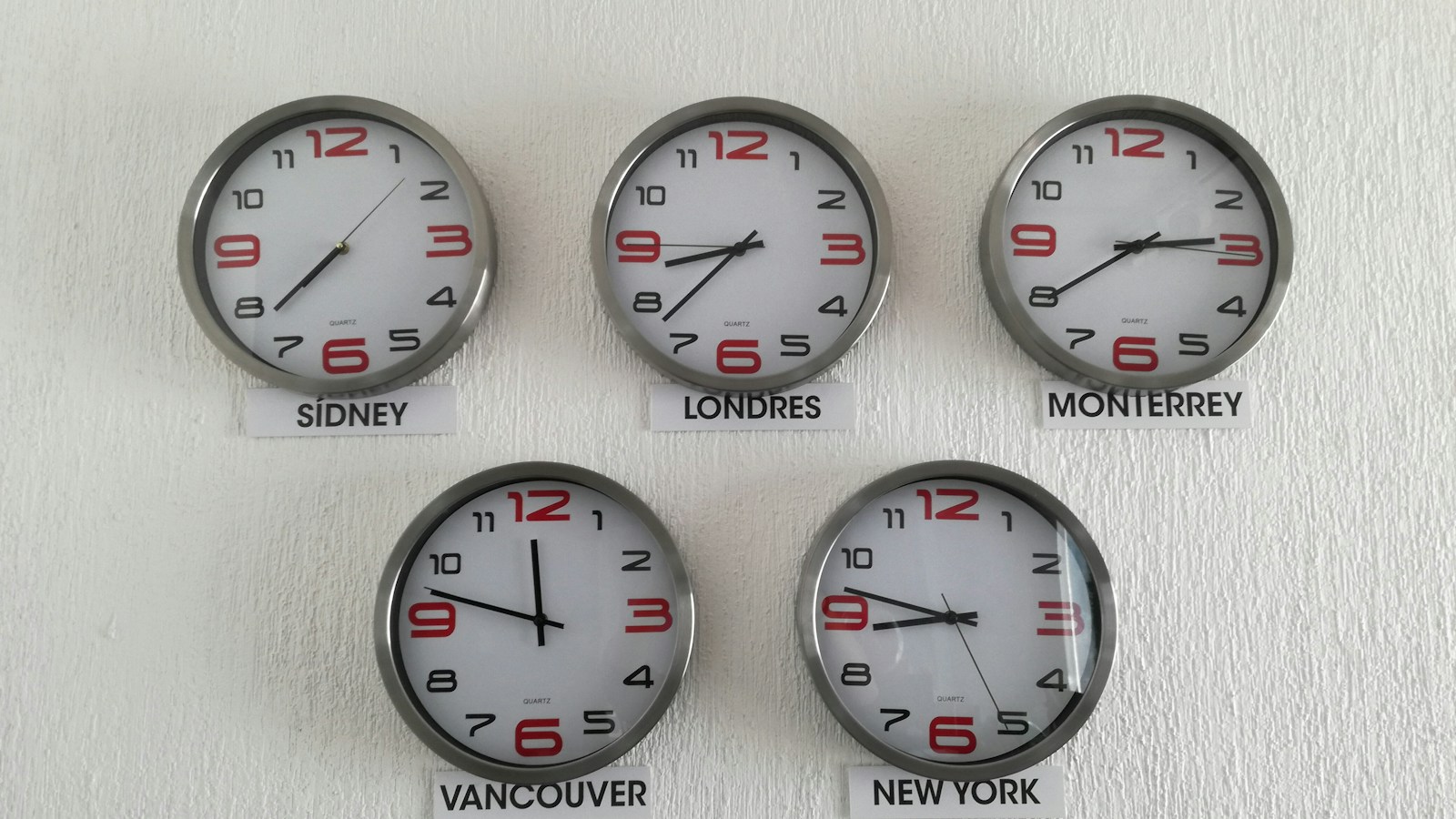
Five analogue wall clocks labelled for different cities, including London, Vancouver and New York; illustrative photograph.
Another angle on this subject
Continue through related ideas, decisions and consequences.
 World & Power
A Public Pilot Needs a Way to End Its Exemptions
An experimental public service can test a new approach while leaving temporary exceptions behind. Its design should explain what happens when the test ends.
 World & Power
A Conflict Disclosure Needs a Decision Attached to It
Disclosure makes an interest visible. This original opinion asks what must happen next when that interest intersects with a public decision.
 Culture & Ideas
What Two Works From 1709 Can Say Together in Cleveland
Apollo’s Fire has scheduled Handel and a Caribbean funeral oration in the same programme. The order creates a question about history that the shared date alone cannot answer.