
What a Home Can Do With Its Electricity Feedback
A Stockholm field experiment compared feedback about other households with advice about appliances. The results leave a practical question for energy programs about what recipients can actually change.
Inside this article
01Two messages, one measurable outcome ↓02Interpret the comparison through the season ↓03Ask what the message enables ↓Event / source date: 3 September 2026 · Scientific Reports article. 10 November 2026 · University of Mannheim research release. · Published 11 NOVEMBER 2026
Two messages, one measurable outcome
An electricity bill can tell a household how much it used. A program that wants residents to change that figure has to decide what else to tell them. One approach compares their use with other households. Another identifies things they can do with the equipment they use. The University of Mannheim revisited that choice on 10 November in a release about a field experiment published on 3 September.
Yavor Paunov and colleagues studied 140 student households in Stockholm over 24 weeks. One group received weekly comparisons with peers, another had access to appliance-specific advice, and a control group served as the reference. The authors report that both interventions restrained the seasonal rise in measured electricity use relative to the control group. They estimate roughly seven megawatt-hours of avoided use across the intervention groups combined.
Interpret the comparison through the season
Avoided consumption depends on the reference. In this study the reference came from the behavior of households in the control condition. If electricity use increased over a colder period, a household could finish above its own earlier meter reading and still use less than expected relative to the control pattern. That is a different result from a blanket decline in demand across the residences.
An energy program should preserve that distinction in its report to residents. A month with an apparent rise may still contain a change worth investigating. A decline after a short interval may have other explanations, such as occupants being away. The relevant question is whether an intervention changed use against a suitable comparison over a stated interval. CYPAPER's analysis of interpreting observation windows addresses the same reasoning issue with a different kind of measurement.
Ask what the message enables
A peer comparison supplies a point of reference. An appliance suggestion supplies a possible action. Imagine two hypothetical flats with identical meter totals. In one, a resident can decide how often to use a tumble dryer and has a practical alternative. In the other, a necessary device accounts for much of the reading and the resident cannot substitute it. The same percentile ranking provides no information about that difference. Even a very specific appliance suggestion can be useless to a person who has no control over the equipment it concerns.
A message can therefore give residents a way to identify a feasible next step before setting an expectation. In the fictional example, the first resident could test a change that fits their routine. The second could learn whether the meter includes a shared load or whether building management controls the equipment. If a program gives both residents the same demand, it cannot tell inability to act from lack of interest.
Separate a program effect from its explanation
The study's abstract reports that the interventions performed similarly over time. It also describes exploratory findings concentrating the effects among higher baseline users. An exploratory split is a reason to test targeting in another study. It should carry that status when a utility considers which residents receive a message.
The abstract also says that evidence of improved competence from appliance advice was limited. The competence score improved modestly relative to control and the result became marginal after adjusting for multiple tests. The measured consumption result and the account of how the intervention worked are different claims. An energy program interested in whether residents gain an enduring skill would need an appropriate measure of that skill and a later observation after the messages stop. A meter records consumption. It cannot by itself tell an investigator what a person learned.
Decide which households belong in the comparison
Consider a hypothetical utility designing a pilot for a mixed development with student studios, family apartments and several units with different heating arrangements. It could establish who pays for a load, who can control it and what the meter covers before choosing peers. A comparison group formed simply from neighboring addresses may place unlike households beside each other. A program can explain how the group is constructed and allow residents to flag circumstances that make it unsuitable.
The field experiment concerned student housing and its results come from that setting. The university release also raises the possibility that participants in nearby residence halls discussed the interventions. A wider pilot should specify whether people can exchange messages and consider grouping assignments accordingly. That choice affects how confidently an evaluation can separate one design from another.
Offer a way to find out what worked
CYPAPER's earlier essay on making feedback actionable argued that the recipient needs an available decision. In electricity conservation, that means linking the meter observation to a change a resident can realistically attempt. It also means making it possible to judge the attempt without treating the person as responsible for every load that passes through the meter.
A practical pilot could give residents access to a measurement window and one or two choices suited to the equipment they control. The evaluator could track participation, consumption relative to a comparison group and whether the options were available to people in each housing arrangement. If the result applies only to one setting, that is useful information about where a design belongs. The next improvement starts with the decision the household can make and a measure that can show what followed.
Gabriel Nicolaev — CyGuru
Sources & further reading
University of Mannheim research release ↗
Study abstract and publication date at the University of Helsinki ↗
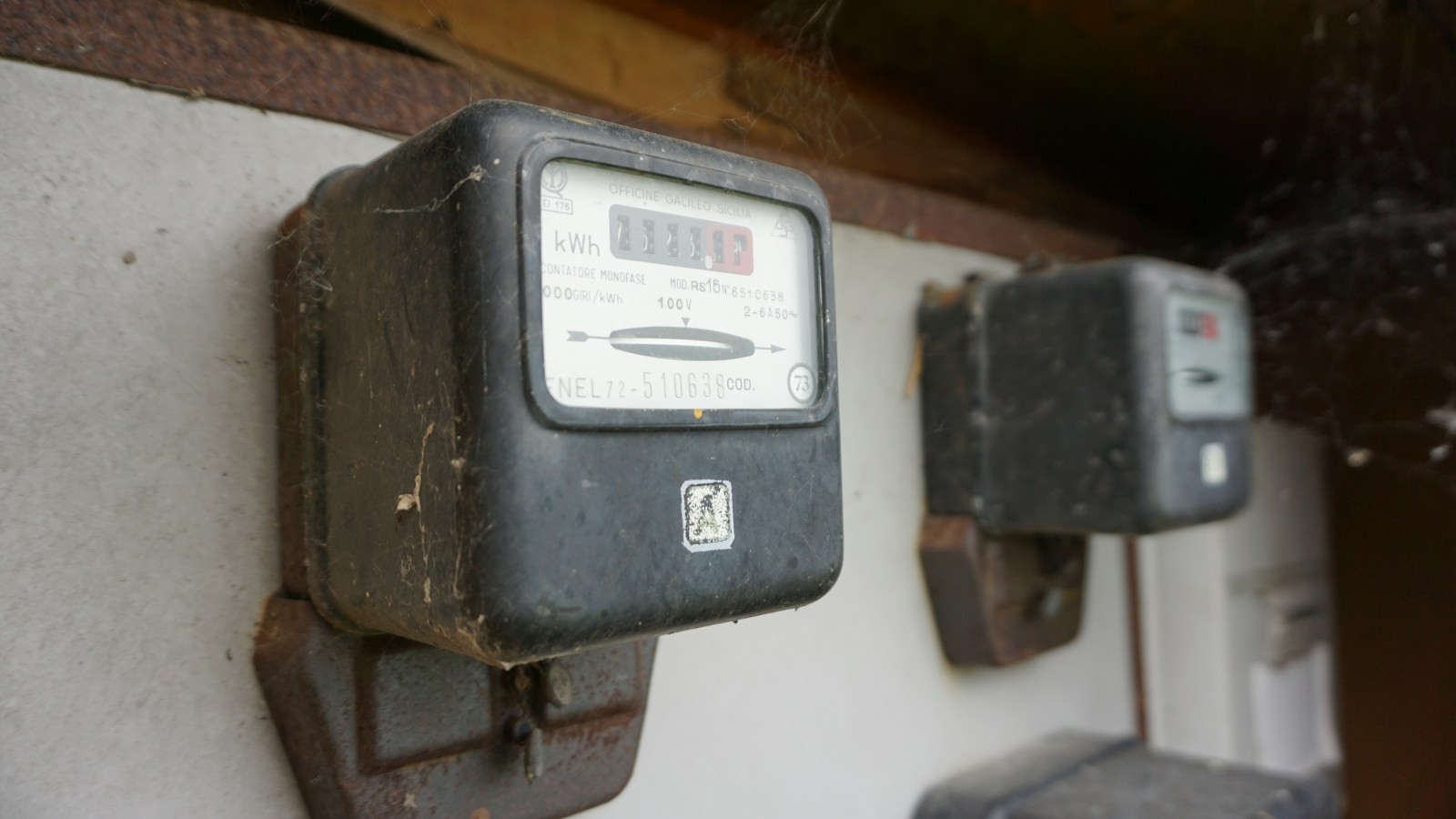
Two older electricity meters mounted on a wall beneath a wooden beam. Illustrative photograph. Photo by Rafael Arkenau on Unsplash.
Another angle on this subject
Continue through related ideas, decisions and consequences.
 Money & Business
Milestone’s Cost Reset Separates Sales Coverage From the Cost of Providing It
The company plans to bring its field team in-house while extending its funding horizon. The relevant question is what operating capacity survives the change.
 World & Power
Germany’s AI Sovereignty Debate Is Really About Dependence
Friedrich Merz’s call for European AI capability raises a practical question: which forms of technological control can governments actually exercise?
 Human Behaviour
A Summary Preserves a Choice About Importance
Research comparing human summaries and memory recall raises a practical question: which details survive when we shorten an account?