
M. John Harrison’s Booker Win Tests What Readers Expect From a Genre
M. John Harrison’s winning novel sets a story of ordinary survival on a disquieting future coast. Its reception gives booksellers and readers a reason to examine what a genre label promises.
Inside this article
01A prize changes who encounters a book ↓02The promise inside a category ↓03A bookshop shelf is a decision about encounters ↓Event / source date: 9 November 2026 — winner announced in London. · Published 13 NOVEMBER 2026
A prize changes who encounters a book
M. John Harrison won the Booker Prize on 9 November for The End of Everything, published by Serpent’s Tail. The Booker Prize Foundation says the novel was chosen unanimously from six shortlisted titles. Its account introduces Phillip Tennent and his aunt Marnie, who live on an English coast some decades into the future, after a catastrophe whose nature remains obscure. The Guardian’s report confirms the Monday evening result and identifies the setting as a near-future Kent coast. A reader who picks up the book this week is likely to encounter several descriptions of the same premise before turning a page.
The award gives the novel a new point of entry. Someone who already knows Harrison’s science fiction can encounter it through his earlier books. Someone who follows the Booker shortlist can find it through the award’s discussions and reading resources. A third reader may hear about it through a description of an English coastal town where ordinary routines continue after an extraordinary break. Each route offers a different reason to be curious. A book’s public identity emerges from those routes as well as from the words printed inside it.
The promise inside a category
A genre description is a compressed answer to an early question about what kind of attention a book asks for. Call a novel a mystery, and the reader may look for a clue that will reorganise the events at the end. Describe the same events as social satire, and the reader may look for patterns in what characters treat as ordinary. Both modes are available to someone holding one book. A label helps a reader get started. It can also set up a frustration that the author had no intention of resolving.
Consider the premise the Booker Foundation presents. A disaster has taken place and its causes remain difficult to explain. A summary can turn that unknown into an implied promise that the cause will eventually be revealed. An introduction centred on how people continue living amid an unexplained change makes room for a different inquiry. What happens when yesterday’s categories still govern behaviour even after the conditions that justified them have gone? The characters’ everyday lives become evidence for that question. This is a way to read the announced premise and the judges’ account. A prize announcement alone cannot tell any reader what the entire novel will do for them.
A bookshop shelf is a decision about encounters
Imagine a bookseller planning a window display the morning after the announcement. A card that says only “Booker winner” gives customers a clear reason to stop but offers little help choosing between this novel and another prize title. A card that says only “post-apocalyptic fiction” helps a particular reader find it, while leaving another to wonder whether they already know how the story will work. A third card can identify a recognisable concern, such as the effort to keep a life going amid radical uncertainty, alongside the award and the speculative setting. It gives customers an additional reason to open the book.
The same choice appears in a library catalogue, a festival programme and a reading group’s invitation. The aim is to give several routes to the same work without treating those routes as rival descriptions. Librarians can retain a genre heading and add a list organised around place or theme. A reading group can pair the winner with a short discussion about the kinds of questions speculative fiction leaves open. A festival introduction can explain the writer’s existing readership and then ask an audience to notice a choice about narrative time or perspective. Those choices use the prize to broaden access while recognising the traditions in which the work already circulates.
Recognition has a boundary
The Foundation’s chief executive, Gaby Wood, placed the win in the context of Harrison’s long involvement in science fiction. The Guardian reported her observation that earlier winners had used elements of the genre and that Harrison emerged from the science fiction world itself. Her claim concerns a writer’s career and place in the field. A claim about every prior winning novel would require a different definition of genre and a close reading of the prize’s history.
There is also a difference between making a work easier to encounter and establishing a new market for all works with a similar label. The prize result confirms a panel’s decision about one novel. Book orders, library holds, new editions or the treatment of other writers would each require their own evidence. A hypothetical rise in interest in one week might follow changes in publicity and availability. A lasting change in how readers discover comparable books would be a separate question.
An invitation that survives the prize cycle
A reading group can test its own expectations before discussing the first chapter. Ask each member to write down what they expect from the book after reading a short introduction. After reading, return to those expectations and identify which came from the text and which came from the way it was presented. The exercise brings the initial influence of the description into view. It extends a practice from reading slowly in an economy of instant opinions by giving the reader a way to inspect the invitation as well as the argument.
The Booker Prize has made Harrison’s novel easier for many people to find. The descriptions circulating around it will help determine which of those people decide to take it home. The enduring opportunity for booksellers, libraries and critics is to describe what makes the novel worth opening while leaving readers enough room to discover what it asks of them.
Gabriel Nicolaev — CyGuru
Sources & further reading
The Booker Prizes — The End of Everything and the 2026 prize ↗
The Booker Prizes — 9 November account of the judges’ choice ↗
The Guardian — Harrison wins the Booker Prize ↗
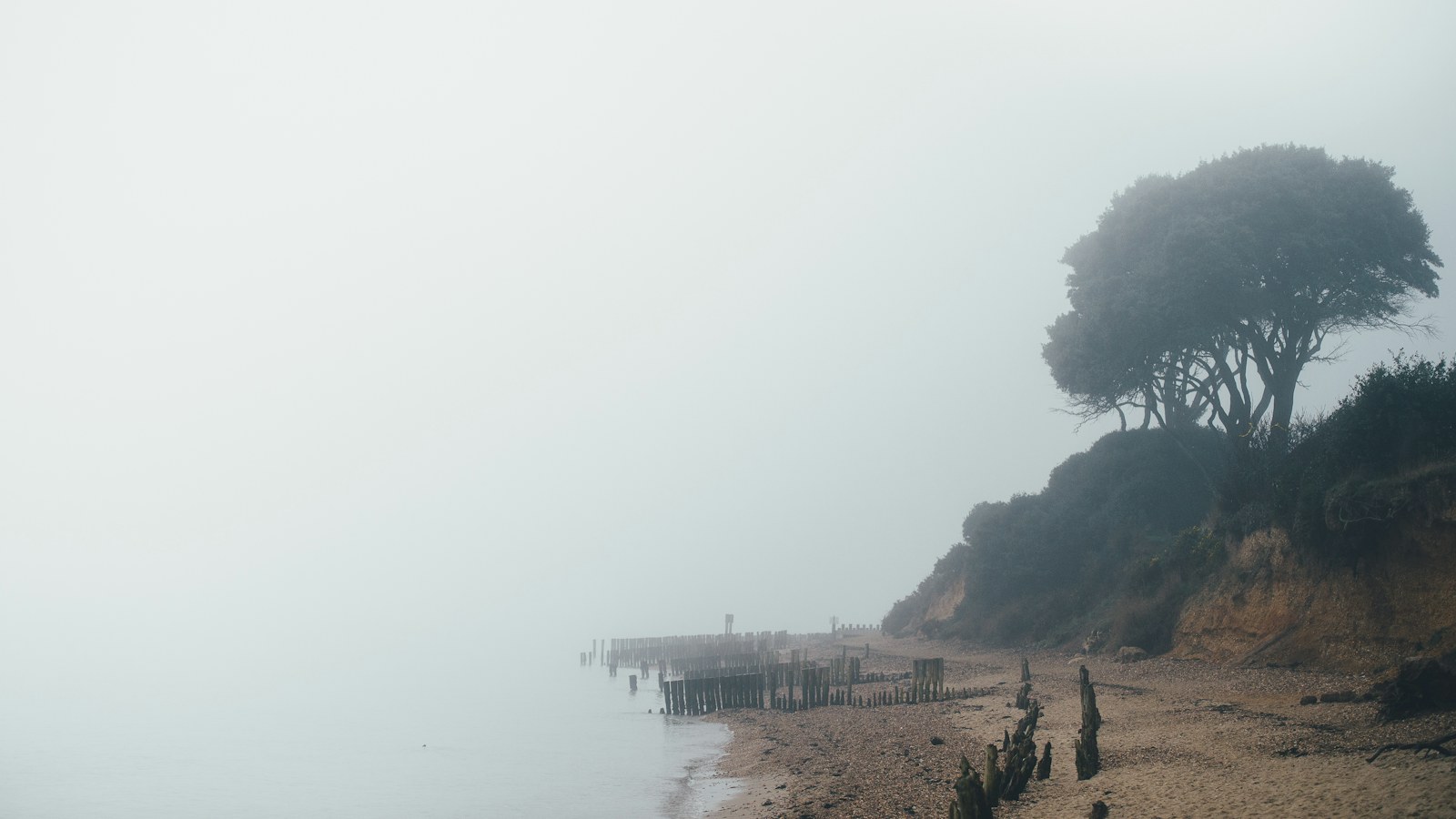
Lepe Beach in southern England, photographed by Annie Spratt via Unsplash. Illustrative coastal scene.
Another angle on this subject
Continue through related ideas, decisions and consequences.
 Culture & Ideas
A Digitised Archive Can Still Lose the Story Behind Its Images
After UNESCO’s audiovisual heritage observance, the preservation question extends beyond files to context, attribution and future access.
 Culture & Ideas
At Prague’s Jewish Museum Anniversary, an Object’s Custody Is Part of Its Story
The Prague anniversary exhibition is scheduled to open on 13 November. A manuscript, synagogue furnishings and museum records illuminate distinct histories of use, displacement and care.
 Culture & Ideas
A Photograph’s Credit Should Travel as Far as the Image
An upcoming Lucia Moholy exhibition offers a reason to examine whether authorship remains visible when an image moves between publications and displays.