
An Equation on Screen Needs More Than a Clear Picture
W3C’s new MathML draft prompts a publishing question: can a reader understand and reuse an expression, rather than merely see a polished picture of it?
Inside this article
01A publication about structure, still in draft ↓02Name the relationship before choosing its appearance ↓03Keep the expression connected to its explanation ↓Event / source date: W3C Working Draft published 5 November 2026; this remains work in progress. · Published 9 NOVEMBER 2026
A publication about structure, still in draft
W3C published a Working Draft of Mathematical Markup Language Version 4.0 on 5 November. MathML describes mathematical notation and captures structure and content, with the goal of supporting mathematics on the web. The draft is a reference for implementers and related software, not a general teaching guide. Its provisional status matters: publication does not imply W3C endorsement, and the document can change.
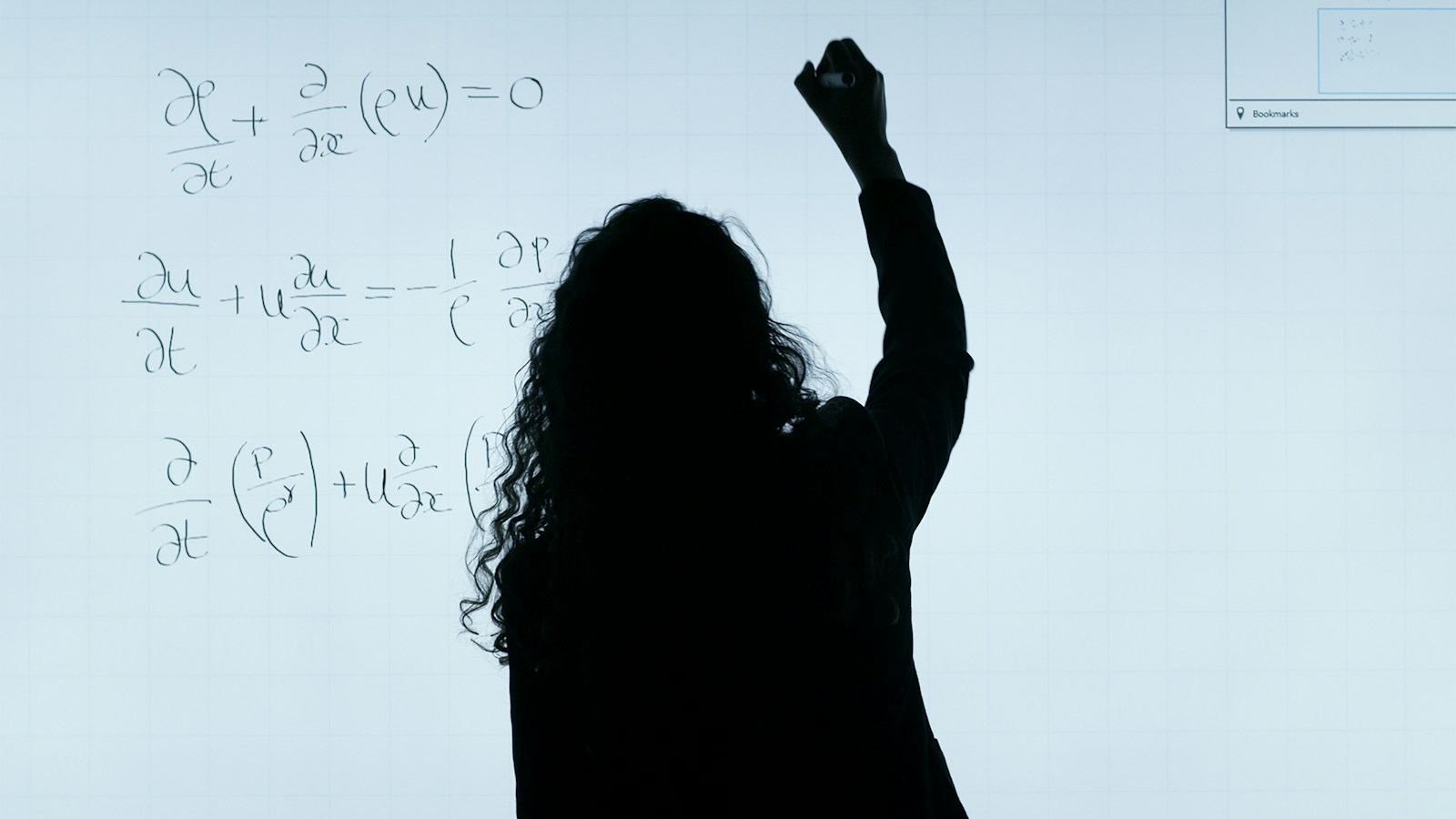
The practical analysis here concerns what a publisher promises when an equation appears inside a digital explanation. A crisp image can communicate an arrangement visually. The editorial task is wider: preserve the expression’s intended relationships and give the reader enough context to understand what it says. The draft does not prove that any particular website has already achieved that result.
Name the relationship before choosing its appearance
Consider a hypothetical article explaining a ratio. Its author needs to identify the numerator, the denominator and the conditions under which the ratio is meaningful. A beautifully positioned fraction cannot supply those definitions. If the surrounding paragraph changes the meaning of one quantity, the displayed expression should be reviewed with it.
The first question for an editor is therefore ordinary rather than technical: what relationship is the expression meant to communicate? Once that is clear, the author and implementer can examine how the chosen representation carries it. A design should serve the intended meaning rather than let an attractive arrangement become the only surviving account of the mathematics.
Keep the expression connected to its explanation
An equation should not become an isolated object whose labels exist only in the author’s memory. The accompanying text should identify its quantities and state the relevant limits. If a symbol is introduced in one section and reused later, its meaning should remain consistent or the change should be explicit.
Imagine a fictional educational page using the same letter for a monthly quantity in one example and an annual quantity in another. The visual notation might remain identical while its application changes substantially. Reviewing the equation in context would reveal the need for clarification. The purpose is not to surround every simple expression with a lengthy warning. It is to preserve the information necessary for the actual calculation being taught.
A revision needs a mathematical review too
A copy edit can alter the explanation without appearing to alter the equation. A layout change can move a definition away from the place where it is needed. A conversion into another publishing format can create a new representation that deserves examination on its own terms. These are proposed review situations, not reports of defects in a named system.
A useful release record could retain the intended expression, its definitions and a representative use. The reviewer would compare the published version against that account. Approval of an earlier version should not become automatic approval of every later transformation. The intellectual object being preserved is the relationship, not merely the appearance of a familiar arrangement.
A worked example can also identify which part of the expression should be considered together. Ask the reviewer to describe that grouping without relying on a pointing gesture. If the explanation depends on being in the same room as the author, the publication still needs to carry more of the argument itself.
Test a reader’s next action
A publisher should consider what a reader is expected to do with the expression. Read it aloud? Follow a derivation? Substitute values? Discuss it with another person? Those tasks can expose different questions. A screenshot review answers only part of the publishing brief.
For a hypothetical worked example, a reviewer could ask another person to explain what each quantity represents and reproduce the intended operation from the published account. This would not establish universal usability or conformance. It would provide evidence about a defined task and reveal where the explanation relies on an assumption the reader has not been given. A modest test with stated limits is more informative than a broad assertion that the equation looks correct.
Representation is not a substitute for reasoning
A structured expression can still express a mistaken relationship. A technically valid document can still teach the wrong method. The editorial process should therefore keep representation checks separate from the mathematical review of the argument itself. Neither result should silently stand in for the other.
The distinction also helps assign responsibility. An implementer may need a precise account of the expression to encode. A subject reviewer may need to assess whether that expression follows from the stated assumptions. A publication owner should connect those tasks rather than leave each person assuming the other has checked everything. The aim is an intelligible chain from the intended reasoning to the version the reader actually encounters.
Let quality include what the picture cannot establish
The November draft is a timely reason to revisit a familiar publishing shortcut: approving an equation because it resembles the author’s original. Resemblance matters, but it should sit beside meaning, context and the tasks through which the reader will use the work.
The conclusion is an editorial standard, not a claim that a draft specification has solved every problem. State the relationship, maintain its definitions and examine the published result through a real task. Keep the technical and subject reviews distinct enough to understand. Mathematics on a screen deserves the same care given to the argument around it: a reader should encounter something they can question and use, rather than a picture that merely asks to be recognised.
Gabriel Nicolaev — CyGuru
Sources & further reading
W3C: Mathematical Markup Language Version 4.0, Working Draft ↗
Editorial photograph for illustration.
Another angle on this subject
Continue through related ideas, decisions and consequences.
 Culture & Ideas
A Children’s Library Should Let the Story Arrive Before the Lesson
A new Mexico City reading space prompts a question about children’s literature: how can a public purpose guide a collection without deciding every reader’s response?
 Technology & AI
A Beautiful Interface Still Needs an Intelligible Name
W3C’s November accessible-name draft puts a practical design question in focus: can a person identify an action without relying on its appearance?
 Technology & AI
An Automated Service Should Hand Over the Uncertainty
A design essay on escalation: a human needs the unresolved question, relevant context and authority to act, rather than a forwarded conversation alone.