
Spain’s Housing Strike Put Workplace Leverage Behind a Public Demand
Spain’s 11 November general strike joined tenant and labour demands. Turning that coalition’s pressure into results means identifying which institutions can act on each request.

Inside this article
01The coalition joined two sets of decisions ↓02Think about what a pay agreement can buy ↓03The employer has an interest of its own ↓Event / source date: Spain’s housing and labour general strike took place on 11 November 2026. UGT had announced registration of the strike call on 19 October. · Published 12 NOVEMBER 2026
The coalition joined two sets of decisions
Workers in Spain stopped work on 11 November in a general strike that brought housing to the centre of a labour protest. Reuters reported marches in Madrid, Barcelona and other cities and described uneven participation. The General Union of Workers, known as UGT, had announced in October that it registered the call with labour organisations and a federation representing tenants. Its demands included wage improvements, progress in collective bargaining, measures for renters and a longer-term commitment to affordable housing.
A strike draws leverage from a workplace even when the decision being sought lies elsewhere. An employer can negotiate pay. A housing authority can change a programme within its remit. A landlord can decide whether to renew a lease within the rules that apply to it. The coalition put the demands beside one another because a worker experiences the costs together. Its political challenge begins when those costs have to be addressed through separate decisions.
Think about what a pay agreement can buy
Imagine a worker whose take-home pay increases by 80 euros a month at the same time as the rent increases by 100. Those illustrative amounts show why a wage gain can feel modest once a household has paid for somewhere to live. They also help explain why the worker might have a reason to support negotiations on pay and ask public authorities to act on housing.
Each negotiation has limits. An employer may be able to alter the compensation package, a shift timetable or whether a position can be performed from another location. Decisions about subsidised housing, municipal land and assistance to households require other authorities. One practical task for campaigners is to name who can grant each request and what instrument that authority would use. A demand can stay ambitious while identifying the decision that would make a particular part of it real.
The employer has an interest of its own
Reuters reported that a representative of Spain’s main business federation argued that the strike was counterproductive and that housing shortages also made it harder for firms to recruit. The position is an argument from an interested party. It nonetheless points to a question about how firms and workers encounter the same constraint. A worker judges the combined cost of taking a job and living close enough to reach it. A business judges whether the available jobs can attract people on the terms it can offer.
That overlap can create room for specific negotiations. If workers in an industrial area face long journeys because homes near the site are beyond their budgets, a change to shifts or transport may improve access for some workers. Its usefulness would need to be assessed through travel time and whether people can take the relevant shifts. A separate decision may still be needed to provide more housing. Each measure should be judged by the constraint it can plausibly change.
Keep relief and construction on different calendars
UGT’s notice called for immediate rental and eviction-related measures as well as more permanently protected homes for affordable rent. Those aims have different time horizons. An announcement about construction has little bearing on whether a tenant can meet a payment due next month. A temporary measure that changes that payment may give the tenant time while leaving the housing shortage unresolved.
An implementation record could therefore show which households can apply for immediate support and how long it takes to receive an answer. A separate record could track where new affordable homes are planned, when construction is funded and what conditions will govern access after completion. Keeping the dates visible gives people a way to judge delay and prevents a future project from being mistaken for an available home. It also allows disagreements about costs and eligibility to be addressed at the stage where they arise.
Turn the mobilisation into negotiations people can follow
A turnout estimate may influence the political assessment of a strike, but a figure cannot show which demands have reached a decision-maker. A union can publish the agenda it wants employers to discuss. Tenant organisations can name the decisions they are asking public authorities to make. Each can explain where its proposal remains under review, what was accepted and what has changed in the conditions facing workers and tenants.
In our discussion of why a safe home depends on the city around it, the practical concern was access to services and work. The strike made that concern visible through collective action. CYPAPER’s discussion of examining what a job actually offers takes the problem from the labour side. Here, the link between job and home explains the reach of the coalition. It also shows why a single agreement cannot resolve every cost that brought people together.
Watch for the next specific commitments
The strike placed the cost of housing inside a debate over what work pays. Its durable effects will be easier to judge through the commitments that follow. Look for a bargaining date and the parties expected to attend, a public budget decision with a named authority, or a housing measure with a clear starting date and a way for households to use it.
The coalition’s advantage is that people can put pressure on several institutions at once. Its test will be whether members can stay coordinated as those institutions move on different timetables. A worker should be able to see how much changed in the next pay agreement, what happened to the next rent bill and which proposals are still waiting for someone with power to act.
Gabriel Nicolaev — CyGuru
Sources & further reading
Reuters: Spain’s 11 November general strike ↗
UGT: registration of the strike call and its demands ↗
Residential balconies in Madrid. Illustrative photograph by Klaudia Borowiec / Unsplash.
Another angle on this subject
Continue through related ideas, decisions and consequences.
 World & Power
At Doha, ITU Members Are Deciding Which Digital Problems the Agency Can Take On
The ITU plenipotentiary opened on 9 November. Its leadership choices and four-year plans will shape the capacity behind international telecom work.
 World & Power
The Western Sahara Veto Debate Puts the Costs of a Blocked Mandate on the Record
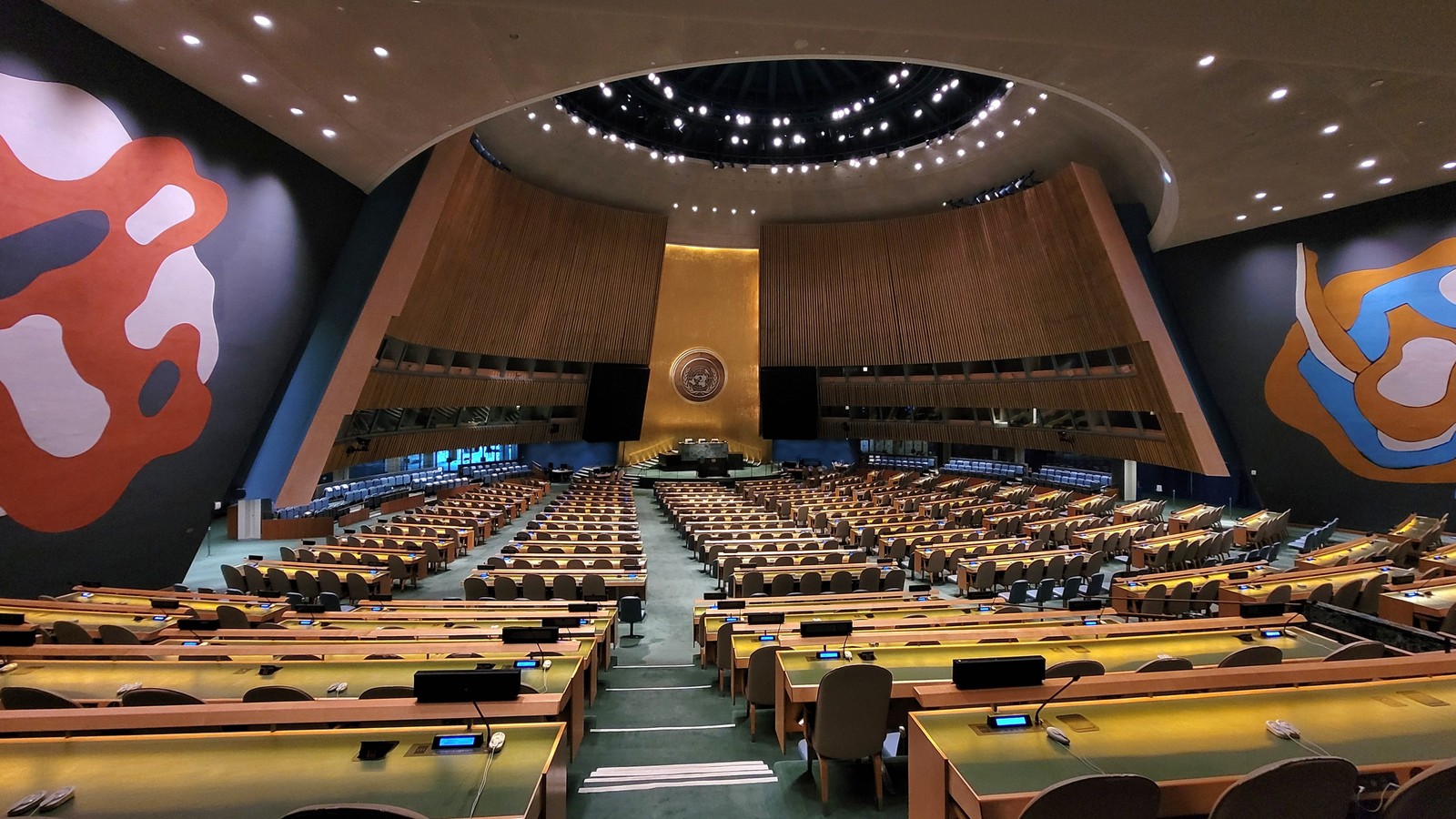
The General Assembly examined Russia’s veto on 10 November. Its debate allows more governments to explain their positions and gives the public a clearer record of the deadlock.
 World & Power
A Stronger Trade Forecast Can Still Leave an Exporter Behind
The WTO’s October outlook illustrates why a global growth number cannot substitute for a country’s route into demand, production and market access.