
A Stronger Trade Forecast Can Still Leave an Exporter Behind
The WTO’s October outlook illustrates why a global growth number cannot substitute for a country’s route into demand, production and market access.
Inside this article
01The aggregate is not an opportunity map ↓02Identify the market the producer can actually serve ↓03Market access includes the cost of compliance ↓The aggregate is not an opportunity map
The WTO's 8 October 2026 outlook raised its forecast for merchandise trade growth while lowering the outlook for services. It described resilience that differed across regions and sectors. This November analysis examines that divergence; it does not present the October report as a new release or its forecasts as completed outcomes.
An improving global number can coexist with a difficult situation for a particular exporter. The relevant buyers may want goods that the exporter cannot produce, may require certification it has not obtained or may be served through routes it cannot use competitively. Growth elsewhere does not automatically create a commercially accessible opportunity. The task of economic strategy is to understand that connection rather than celebrate the aggregate in isolation.
Identify the market the producer can actually serve
A national export ambition becomes useful when it identifies a product, a buyer and a credible delivery proposition. Describing a country as well positioned for a growing sector leaves important questions unanswered. Can local firms meet the required standard? Can they supply reliably at the scale demanded? Can they finance the interval between production and payment?
A hypothetical manufacturer may see rising demand for electronic equipment while possessing capabilities suited to packaging rather than advanced components. Its opportunity might lie in a supporting service or a less visible intermediate input. That possibility deserves analysis on its own terms. Forcing every supplier into the most fashionable part of the value chain can obscure smaller opportunities that are better matched to existing capability.
Market access includes the cost of compliance
A tariff is visible and comparatively easy to discuss. Technical requirements, documentation and the consistency demanded by a buyer can be equally important to an actual sale. A producer that understands the price but not the acceptance process may underestimate the investment required to enter a market.
An export strategy should therefore map the steps from an interested customer to an accepted shipment. Include testing, traceability, insurance and after-sales obligations where relevant. These requirements are not necessarily protectionism; some support safety and dependable transactions. The analytical question is how they affect the supplier's feasible offer and which institution can help address a genuine coordination problem without making promises on behalf of the buyer.
Infrastructure should follow an examined bottleneck
Transport investment can be important without being sufficient. A faster route will not fix an unreliable product, just as a better product cannot always overcome an inaccessible port. Before committing resources, identify where delay or cost actually prevents a transaction that would otherwise make sense.
Consider a hypothetical exporter whose main problem is waiting for specialised testing rather than the journey to the border. Improving a road may have many benefits, but it should not be presented as the complete solution to that firm's export constraint. The value of diagnosis is that it makes different investments comparable against a concrete objective. A national plan becomes more credible when it can explain the sequence in which its interventions remove obstacles.
Resilience can conceal an expensive adjustment
A supply chain may keep functioning by finding a longer route, paying more for an input or carrying additional inventory. The continued flow of goods is evidence of adaptation. It does not establish that the adjustment was inexpensive or equally manageable for every participant.
Public interpretation should therefore separate continuity from the distribution of its cost. A large firm may have the capacity to carry a longer production cycle while a smaller supplier cannot. A buyer may accept a higher price for one critical component but reduce spending elsewhere. These are mechanisms to investigate, not findings about every market. They explain why operational resilience and financial strain can appear together without contradiction.
Give diversification a credible customer
Policies often describe diversification as producing more kinds of goods. A more demanding definition includes the ability to sustain new commercial relationships. A factory built for an announcement cannot establish that its output will remain competitive after initial support ends.
A practical programme would test demand, identify the required capabilities and specify the evidence needed before expanding support. It should distinguish a temporary learning cost from a permanent gap that someone else must finance. International trade can open opportunities, but a strategy needs a clear account of who buys, why the offer is valuable and how the producer improves. Those questions protect public resources from being allocated purely to the visibility of a project.
Read growth through the available choices
The useful response to the WTO outlook is neither complacency nor dismissal. A global forecast helps describe the environment. It does not make the decisions that connect a particular workforce, enterprise or region with demand. Those decisions require more detailed evidence and a realistic understanding of constraints.
My conclusion is that trade policy should be judged partly by the options it makes usable. A stronger headline number is encouraging only to the extent that producers can reach relevant markets without taking on commitments they cannot sustain. The difference between observing growth and participating in it lies in capability, access and an offer that a real customer is prepared to accept.
Gabriel Nicolaev — CyGuru
Sources & further reading
WTO — Global trade outlook, 8 October 2026 ↗
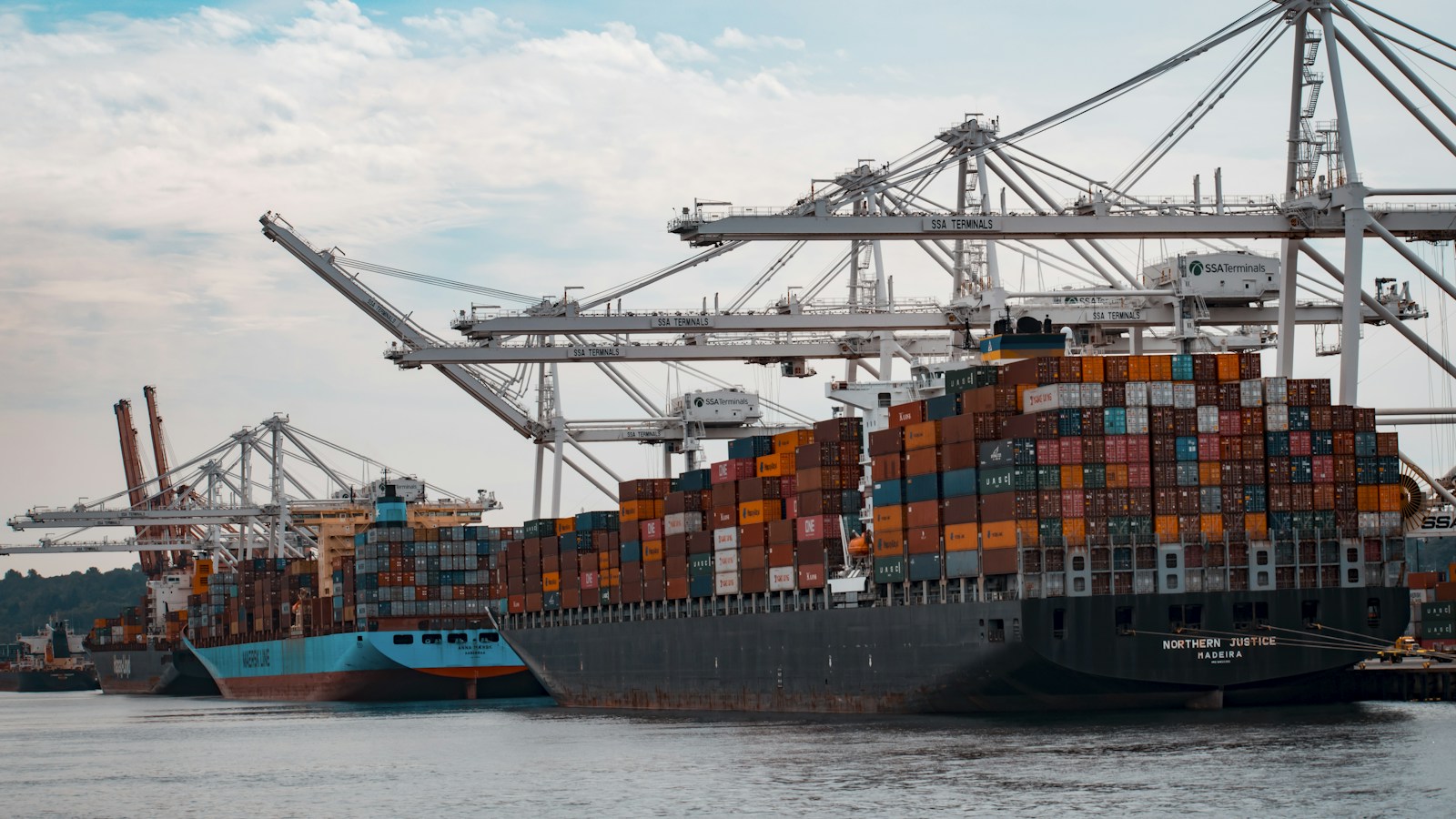
Editorial photograph for illustration.
Another angle on this subject
Continue through related ideas, decisions and consequences.
 Money & Business
Services Exporters Need a Margin Map, Not Just a Demand Forecast
The WTO’s split outlook for goods and services raises a practical question: which contracts still create value after travel, delivery and operating costs?
 World & Power
IMF’s October Outlook: Global Growth Is Resilient, but the Gains Are Uneven
The latest IMF assessment points to a divide between economies benefiting from investment and those carrying higher energy and food costs.
 Money & Business
Inventory Becomes a Liability When Nobody Owns the Exit
A stock purchase needs a route back into cash, including who acts when demand changes and the original selling plan no longer holds.