
Seed Aid Is an Access Problem Before It Is a Logistics Problem
New IFPRI research asks how emergency seed support can protect farmers without weakening the local markets needed for recovery.

Inside this article
01The question behind a bag of seed ↓02Diagnose the missing link ↓03Timing changes the value of assistance ↓Event / source date: 2026-11-02 · Published 3 NOVEMBER 2026
The question behind a bag of seed
A delivery can be counted long before its usefulness is known. Seed may reach a district yet remain unsuitable for its soil, arrive after planting or be inaccessible to the households that need it most. This makes emergency agricultural aid a problem of access, timing and local institutions as well as transport. Counting quantities alone can hide the mechanism that determines whether the next harvest becomes possible.
An IFPRI post dated 2 November 2026 describes new research in conflict-affected northern Ethiopia and northern Nigeria. It asks how emergency seed assistance can meet immediate needs while supporting local seed systems. The post distinguishes difficulty obtaining affordable seed from an outright absence of supply. The work being launched should not be described as a completed evaluation proving one preferred intervention.
Diagnose the missing link
Imagine two hypothetical villages after a damaging season. In one, traders have appropriate seed but farmers have lost the money required to buy it. In the other, transport disruption has prevented traders from restocking. These situations may produce the same complaint: households cannot obtain seed. They do not necessarily require the same response.
Purchasing support could help the first village while leaving the second without goods to purchase. Direct distribution might address the second shortage but displace a functioning commercial channel in the first. The choice requires information about supply, prices, household resources and the planting window. A single standard package can be administratively convenient while overlooking the reason access failed.
Timing changes the value of assistance
Agricultural support has an unusual relationship with delay. An input delivered after its useful window may still appear in a completion report, although the opportunity it was meant to protect has already passed. The operational schedule therefore needs to start with the farmer's decisions and work backwards through procurement, transport and distribution.
A realistic plan identifies the latest useful delivery date, the uncertainty around local conditions and the person authorised to change the route when disruption occurs. It also distinguishes a late delivery from a partial one. A smaller amount supplied at the right moment can have a different value from a complete shipment that misses the relevant season. That comparison must be assessed locally rather than assumed in advance.
Protect the institutions needed after the emergency
A seed trader is more than a point of sale. A functioning local network can hold knowledge about varieties, coordinate orders and maintain relationships that become useful in the following season. Assistance that ignores those relationships may solve an immediate procurement problem while making the recovery more dependent on outside deliveries.
The reverse risk also matters. Preserving a commercial channel should not become a reason to exclude households that cannot pay or to accept unsuitable goods. The practical issue is whether a programme can support access and maintain useful supply relationships together. This may require working through several channels and checking which households each one misses, rather than declaring either distribution or markets universally superior.
Measure what farmers can actually do
A useful evaluation would examine whether recipients could plant an appropriate crop within the relevant window, not simply whether they received something called seed. It would ask which households remained excluded, whether local availability changed and whether farmers could obtain inputs again without emergency support.
These are proposed evaluation questions, not findings from the new IFPRI project. Keeping that distinction visible prevents a research announcement from becoming an endorsement for an untested design. Programmes should be able to document their assumptions at the beginning and explain later whether the evidence supported them. Without that record, a disappointing harvest can be attributed to weather while weaknesses in the intervention remain invisible.
Give communities a route to correct the plan
Local consultation becomes meaningful when it can alter a decision. A meeting that takes place after varieties, suppliers and delivery arrangements have been fixed provides little opportunity to prevent a mismatch. The programme needs a practical channel for reporting unsuitable inputs, missed households and changes in the season.
That channel must also reach people outside the most visible local networks. Where access depends on an influential intermediary, a programme can reproduce exclusion without noticing it. Transparent selection criteria and an accessible complaint process help reveal the gap between an official recipient list and the households actually able to use assistance. Their effectiveness should be checked in practice, rather than inferred from the existence of a policy document.
Recovery is the standard that matters
The strategic question is whether emergency support helps restore a farmer's ability to make the next productive decision. Deliveries, vouchers and training are means toward that outcome. None can establish success by its presence alone. A credible assessment follows the chain from access to appropriate use and then to the conditions needed for the next season.
My reading of the new research agenda is that humanitarian efficiency requires a clearer diagnosis before a larger shipment. The argument is not against urgent assistance. It is for assistance whose design reflects the constraint that households actually face. When access, timing and local supply are examined together, an emergency programme has a stronger chance of supporting recovery rather than merely completing a distribution schedule.
Gabriel Nicolaev — CyGuru
Sources & further reading
IFPRI — Emergency seed aid research, 2 November 2026 ↗
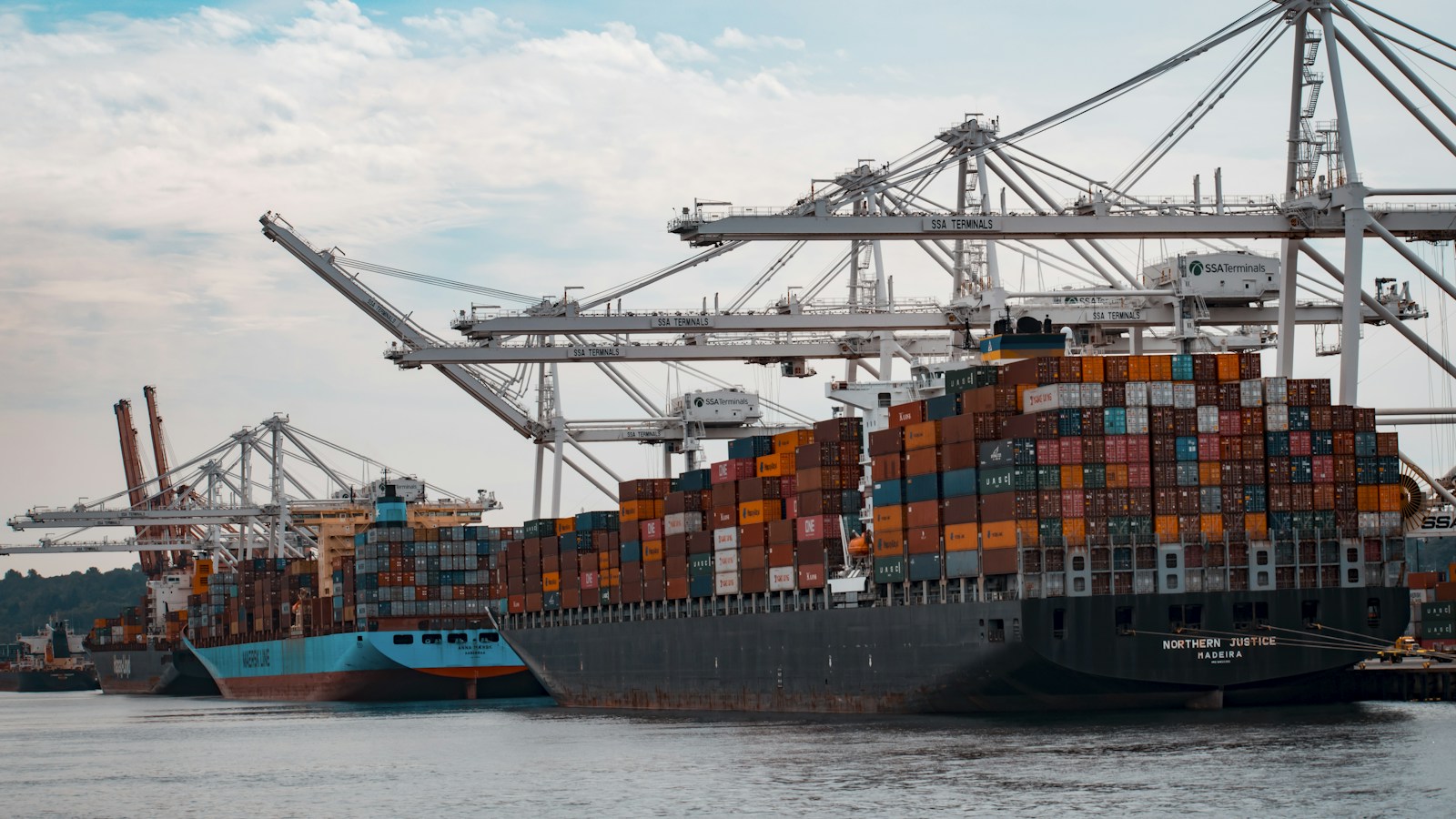
Editorial photograph for illustration.
Another angle on this subject
Continue through related ideas, decisions and consequences.
 World & Power
South Sudan Shows Why Early Warning Needs Spending Authority
A new WFP and FAO funding announcement highlights the decisions required to turn a forecast into practical protection before a flood.
 Technology & AI
An AI Supplier Update Is an Operating Change, Not Just a New Feature
Procurement needs a plan for changed model behaviour, revised integrations and rollback before an AI service becomes embedded in essential work.
 World & Power
A Stronger Trade Forecast Can Still Leave an Exporter Behind
The WTO’s October outlook illustrates why a global growth number cannot substitute for a country’s route into demand, production and market access.