
Fiscal Space Determines Who Can Absorb a Global Shock
The same external disruption can produce different public choices when existing obligations leave governments with different room to respond.

Inside this article
01One shock, different room to respond ↓02Start with obligations that cannot easily move ↓03Broad protection and targeted protection have different risks ↓One shock, different room to respond
A fuel-price shock does not arrive in an empty economy. It meets existing debt payments, public services, household incomes and the government's ability to raise or redirect money. Two countries can face a similar external price movement while having very different capacity to absorb its consequences. That difference helps explain why apparently similar policy announcements can require very different sacrifices.
This is an editorial framework for comparing policy choices under constraint. It does not report a newly released government measure or claim that a single formula can rank every response. Its purpose is to examine why energy, food and public finance interact, and why a response that one country can sustain may create a different burden somewhere else.
Start with obligations that cannot easily move
A public budget includes commitments with different degrees of flexibility. Some expenditure can be delayed at a cost; other obligations are difficult to defer without immediate harm. Understanding policy space requires more than comparing the total size of two budgets. It requires examining when payments fall due and what happens when a government changes them.
For illustration, a government may announce a temporary energy support measure while already facing a difficult debt-service period. Funding the measure through delayed maintenance can move the burden into future service failures. Funding it through additional borrowing can create another obligation. This hypothetical example does not establish that support is wrong. It shows why the financing route belongs inside the assessment of the policy rather than appearing as a technical detail afterwards.
Broad protection and targeted protection have different risks
A broad price subsidy can be simple to explain while supporting users with very different needs. A targeted payment can direct resources toward vulnerability but depends on identifying and reaching the intended recipients. Neither label guarantees that the intervention works well.
The practical comparison includes delivery speed, administrative capacity, exclusion and the consequences of allowing some prices to adjust. A sophisticated eligibility system can fail if people lack the documents it requires. A broad scheme can consume resources needed for essential services. The choice should acknowledge these trade-offs openly. Promising complete protection without explaining its limits may postpone the political argument while making the eventual adjustment harder to manage.
External support needs a usable sequence
An offer of assistance becomes meaningful when it can arrive in a form and at a time that address the constraint. A future investment commitment is not interchangeable with funding for an urgent import bill. Technical advice can improve choices while leaving an immediate financing gap untouched.
Partners should distinguish liquidity needs, longer-term development requirements and institutional reforms. These can interact, but combining them into one promise risks making every step depend on progress elsewhere. A workable sequence identifies what must happen first, which conditions are essential and which can be developed during implementation. This provides a more accountable framework than a large headline commitment whose practical availability remains unclear.
Public trust depends on describing the burden
When governments cannot absorb every cost, distribution becomes central. Citizens need to understand who receives support, who pays for it and which services may be affected. A measure presented as costless can undermine trust when its financing becomes visible later.
An honest account does not require a claim of perfect prediction. It can present a range, explain the assumptions and specify when the measure will be reviewed. What matters is whether the stated purpose provides a standard for evaluating continuation. Without that standard, an emergency intervention can become an indefinite arrangement maintained because withdrawing it would force a difficult explanation that should have accompanied its introduction.
Do not confuse adjustment with failure
A country with limited fiscal space may have to make choices that a wealthier government can postpone. Judging both solely by whether they hold a visible price unchanged can mistake financial capacity for policy competence. The appropriate comparison includes the constraints, the alternatives and the treatment of vulnerable groups.
Conversely, limited resources should not excuse avoidable opacity or poor prioritisation. A government still needs to show how its response addresses the actual problem and what evidence would justify changing course. Accountability becomes more important under constraint because each commitment displaces something else. The analysis should examine those displaced costs, rather than treating the absence of abundant funding as a complete explanation for every outcome.
Resilience requires margin before the next crisis
Longer-term resilience includes the capacity to maintain essential functions when the external environment changes. It may involve more reliable revenue, better information about obligations and institutions able to adapt spending without losing track of responsibility. These are less visible achievements than an emergency announcement, but they can influence the choices available during the next disruption.
My conclusion is that fiscal space should be understood as practical freedom under pressure. It determines how long a government can respond, whom it can protect and which promises it can credibly sustain. A global shock is therefore also a test of accumulated commitments. Understanding that structure produces a more useful account of power than comparing the confidence with which different governments announce their responses.
Gabriel Nicolaev — CyGuru
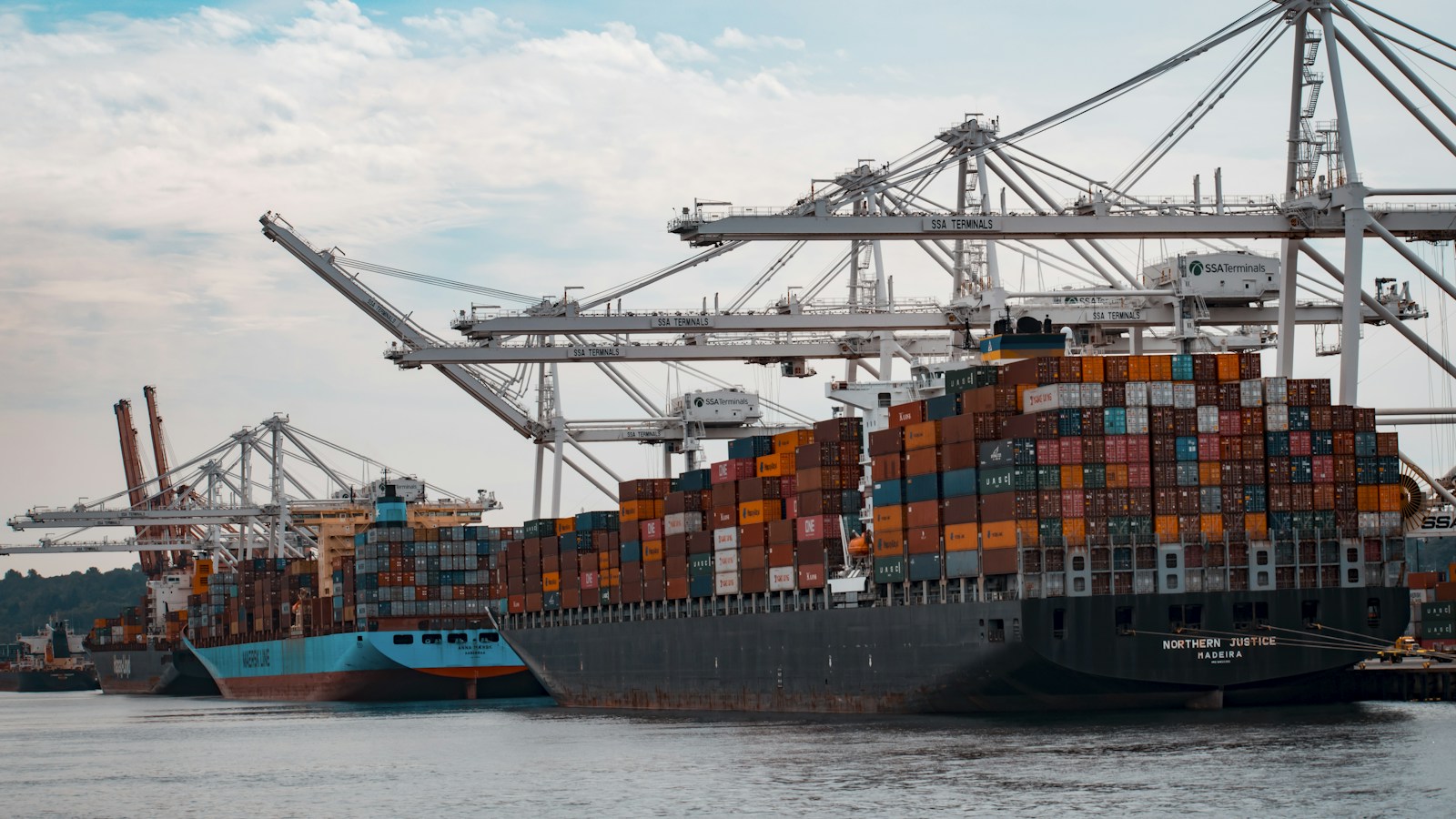
Editorial photograph for illustration.
Another angle on this subject
Continue through related ideas, decisions and consequences.
 World & Power
A Stronger Trade Forecast Can Still Leave an Exporter Behind
The WTO’s October outlook illustrates why a global growth number cannot substitute for a country’s route into demand, production and market access.
 World & Power
The world is being rebuilt around leverage
Power is easier to understand when you follow dependencies: who needs whom, what can be withheld, and how expensive the alternatives are.
 Money & Business
Inventory Becomes a Liability When Nobody Owns the Exit
A stock purchase needs a route back into cash, including who acts when demand changes and the original selling plan no longer holds.