
Roman’s Instrument Alignment Makes the Star Map Part of the Machine
NASA’s Roman update shows why a telescope must reconcile its internal map with the sky before precision observations can become dependable science.
Inside this article
01The milestone is a relationship between instruments ↓02Why an internal map changes pointing ↓03One instrument has two jobs ↓Event / source date: 13 November 2026: NASA instrument-alignment update. · Published 14 NOVEMBER 2026
The milestone is a relationship between instruments
NASA reported on 13 November that the Nancy Grace Roman Space Telescope had brought its instruments into precise alignment, a step toward science operations. The agency describes a sequence of test observations that compares where stars appear with where the observatory expects to find them. Those differences inform corrections to its internal map.
This is an engineering milestone with a specific meaning. It concerns the relationship between measured positions, detector locations and pointing commands. It is not an announcement of a new exoplanet or a completed cosmological survey. Its value lies in making later measurements interpretable. A telescope can collect light while still needing a more accurate description of where each part of the optical system places that light.
Roman therefore offers a useful lesson about complex instruments: the machine includes its model of itself. Hardware alignment and the reference information used to operate that hardware must agree closely enough for the scientific task.
Why an internal map changes pointing
NASA explains that ground alignment can be disturbed by launch vibration, thermal changes and the transition away from gravity. Even when each change is small, the resulting discrepancy matters for a system built to make precise observations. The team uses stars as references to determine how the observatory's geometry should be described after those changes.
The Wide Field Instrument has 18 detectors. According to NASA's account, these detectors must work together when the system locks onto guide stars. If the observatory expects one guide star at an incorrect location, the discrepancy can affect its ability to aim and correct drift. Calibration is consequently a connection between the observed scene and the coordinate system used to control the instrument.
Imagine a hypothetical camera assembly in which two sensors are each sharp but their relative positions are recorded incorrectly. A single image could look convincing. Combining observations or using them to direct a movement would expose the error. Better image processing would not automatically repair the geometry. The system would need to identify which relationship was wrong and update its reference model.
One instrument has two jobs
The agency says the Wide Field Instrument is both Roman's main science instrument and its guider. While the Coronagraph Instrument studies nearby stars, the wide-field instrument watches stars in a neighbouring region to help maintain steady pointing. The arrangement links the stability required by one observation to measurements taken elsewhere in the field.
This makes coordination an operating requirement. The two instruments cannot simply be evaluated as isolated cameras whose outputs are joined at the end. A pointing adjustment serving one function affects the conditions under which another function collects data. Engineering teams need a shared interpretation of what the reference measurements mean.
NASA also describes the prospect of additional deep-field observations alongside coronagraph work. Such data could be scientifically valuable, but the publication presents the opportunity rather than a catalogue of completed discoveries. The distinction is important: an observing arrangement can create a new kind of dataset before scientists know which questions that dataset will ultimately answer.
Alignment does not complete the optical problem
The coronagraph suppresses bright starlight so that fainter nearby signals can be examined. NASA describes masks and other components that must be positioned accurately. It also makes clear that alignment is a preliminary step toward more complex optical work. The wave behaviour of light means simply placing components correctly does not eliminate all unwanted starlight.
That distinction prevents a common misunderstanding of commissioning. Completing a necessary condition does not complete every condition. Teams can report success at one stage while retaining substantial work at another. A clear milestone report tells the reader both what has changed and what remains outside the claim.
For a scientific instrument, those boundaries protect the meaning of later results. If a faint feature appears, investigators must distinguish the sky from the response of the instrument. The better characterised the instrument is, the more carefully that comparison can be made. Precision is therefore not merely a desirable specification on a product sheet. It supports the chain of reasoning from recorded light to a claim about something outside the telescope.
What to watch after this update
The next useful evidence will concern the performance of the complete observing system: how consistently it points, how observations are calibrated and how the resulting data are described for scientific use. The November update establishes progress in internal alignment. It does not provide every measurement needed to independently assess the full mission's future performance.
CYPAPER's earlier examination of NASA's PROMISE rover considered how hardware is adapted to a different operating environment. Roman highlights the corresponding problem inside an observatory: even familiar hardware needs its relationships remeasured after the environment changes. Our discussion of robot benchmarks makes another relevant distinction between a component result and the behaviour of a complete system.
For readers following space technology, the most revealing announcements are sometimes the least theatrical. A corrected internal map may produce no dramatic photograph. Yet it changes how much confidence can be placed in the photographs and measurements that follow. Roman's alignment work is significant because it strengthens that connection between the instrument's commands, its observations and the evidence scientists will eventually interpret.
Gabriel Nicolaev — CyGuru
Sources & further reading
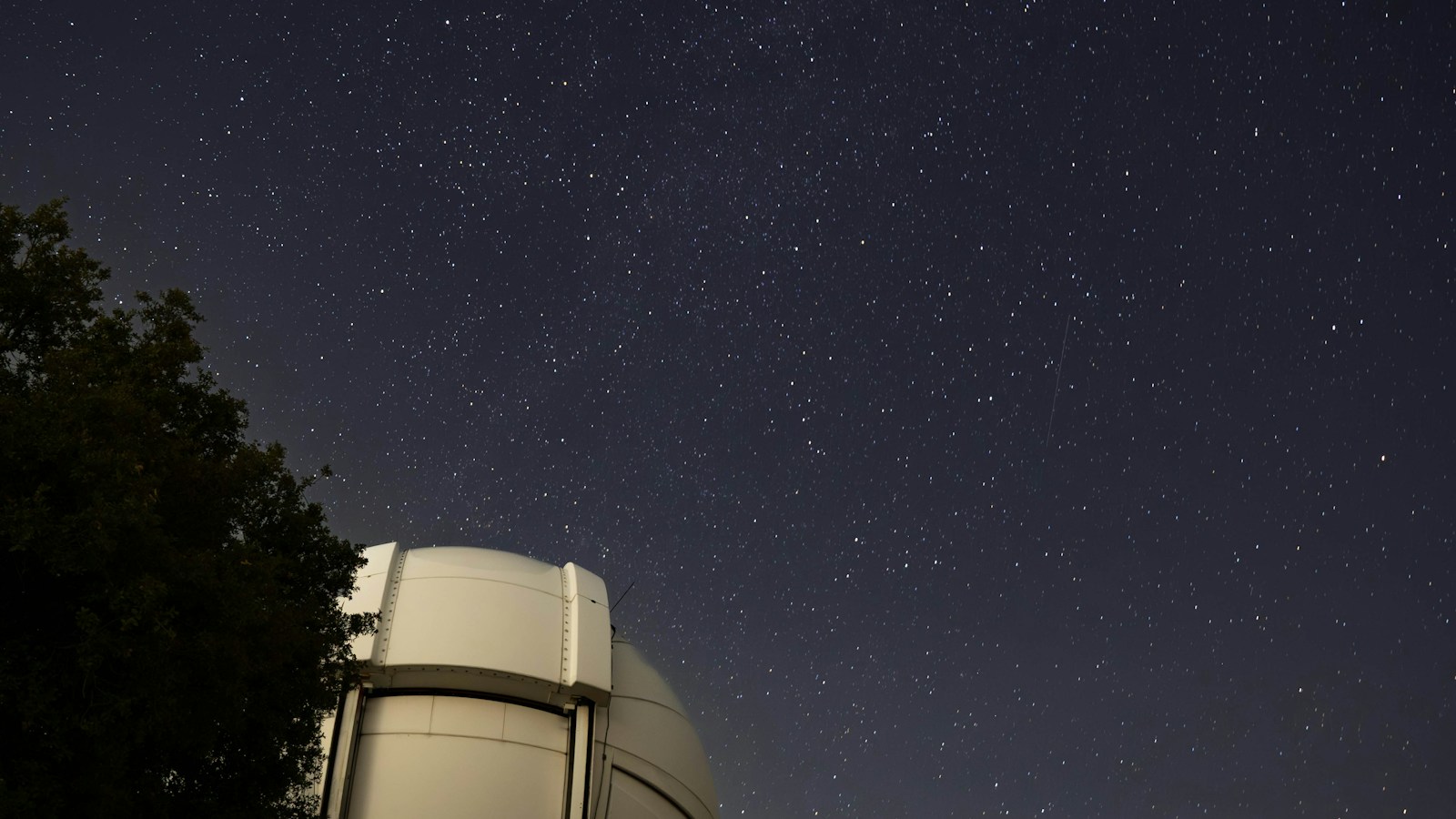
Illustrative photograph by Kelly Zhang on Unsplash; not a photograph of Roman.
Another angle on this subject
Continue through related ideas, decisions and consequences.
 Technology & AI
A Search Box Should Explain What It Does Not Search
Search results become easier to interpret when a service makes its scope, filters and excluded material visible beside the query.
 Culture & Ideas
Heritage Readiness Needs a Rehearsal Before the Weather Turns
UNESCO’s culture preparedness work raises an operational question: can an institution act on its readiness assessment when access, communication and time become constrained?
 World & Power
Adaptation Finance Must Be Usable Before It Can Be Counted as Protection
UNEP’s 4 November update puts adaptation funding back on the agenda. The real test is when money becomes usable, by whom and for which risks.