
NASA’s PROMISE Rover Gives Mars Hardware a Lunar Assignment
NASA plans to turn hardware from its Mars rover programme into a lunar scout. What matters is how the assembled vehicle performs under polar conditions.
Inside this article
01A new destination for familiar hardware ↓02What hardware heritage gives a programme ↓03Power turns a location into an operating problem ↓Event / source date: 7 November 2026 — NASA announced it would move ahead with PROMISE rover development and awarded the Blue Origin delivery contract. · Published 13 NOVEMBER 2026
A new destination for familiar hardware
NASA announced on 7 November that it is moving ahead with the Polar Rover for Observation, Mapping, and In-Situ Exploration, known as PROMISE. The six-wheeled vehicle is intended to scout near the lunar south pole, characterize surface and subsurface material and provide information for future infrastructure planning. NASA is targeting a late-2028 launch and planning a primary mission of 18 months. Those are mission objectives. The agency announcement describes development and delivery plans.
The unusual decision is how the Jet Propulsion Laboratory intends to build it. NASA says engineers are adapting the electronics, body structure and mobility system from the Curiosity vehicle system test bed. Flight-spare and test-bed parts developed for Curiosity and Perseverance will also be incorporated. The resulting vehicle will carry new lunar instruments and technology demonstrations.
The previous work gives engineers real components and years of experience to draw on. The important evidence to follow is what happens when those elements are combined for a new mission, loaded onto a lander and asked to operate together in a very different place.
What hardware heritage gives a programme
A mature hardware family comes with knowledge that can be difficult to capture in a drawing. Engineers have records of assembly, test procedures, telemetry and previous anomalies. Operators have experience deciding how much evidence they need before sending a vehicle toward uncertain terrain. Engineers can ask which aspects of those records are relevant to the specific PROMISE components being used.
It helps to distinguish the actual objects. A spare built for flight and a component used in an engineering test bed may carry different histories. A successful Mars mission provides evidence about equipment of that design, its interfaces and how it behaved under the conditions it encountered. A laboratory twin offers a place to repeat checks and examine changes without disturbing a rover on another planet. For each item being reused, the important comparison is between what the record establishes and what the new duty requires.
NASA says it has assessed the compatibility of the hardware with the lunar environment and judged it able to tolerate the harsh conditions near the south pole. The release does not offer a completed mission demonstration. A useful next milestone will be evidence that the integrated vehicle can sustain its intended tasks, including the interactions between reused hardware, new instruments and a new landing system.
Power turns a location into an operating problem
The mission page describes the use of a flight-spare multi-mission radioisotope thermoelectric generator. It will supply power during lunar nights and in permanently shadowed regions where the team hopes to explore. NASA says scientists believe some of those regions may preserve ice. The location, distribution and usefulness of that ice remain questions for exploration.
A power source and a useful operating plan go together. An illustrative traverse could require a vehicle to drive into shadow, stop on terrain that permits stable drilling, collect and measure a sample and then send a record that scientists can interpret. Each step uses power and takes time. The plan has to fit the demands of mobility, instruments and communications, including how the rover would respond to an unexpected halt.
A published mission timeline becomes more informative when readers can see that chain of tasks. Reaching a crater is evidence of access. Measuring material below the surface is evidence about a sample at a particular place and depth. A later decision about a landing site or a persistent infrastructure location would need to account for the limitations of that sampling.
The interfaces are part of the mission
NASA awarded Blue Origin a $94 million base contract, with an additional $140 million option period based on performance, for delivery of the rover. NASA says the company will use its Mark 1 lander. The base and option are distinct amounts. The release describes the arrangement and the planned delivery system, leaving the actual landing and deployment to future mission events.
A delivered rover must get onto the surface in a condition that lets it move and operate. One sequence of qualification evidence concerns the fit and condition of the rover during launch and landing. Another concerns release, the initial check of power and communications, and the first motion on the surface. The rover's ability to collect usable subsurface data will require still more evidence, after the mechanical and operating steps have succeeded.
CYPAPER’s recent analysis of moving a robot benchmark into a factory asked what downstream evidence remained after a learning test. The context here is different. A lunar vehicle is part of a chain that spans a carrier, a lander, a surface route and instruments. A milestone should say which link in that chain has actually been demonstrated.
Which result would change the next design?
The planned instruments include a drill for studying material down to roughly one metre, spectrometers, visible-light cameras and sensors for temperature and radiation. NASA also describes a radiation-tolerant computing demonstration and advances in autonomy sensors and software. Their outputs will be useful at different scales. A drill measurement can constrain a geological question at one site. A well-documented interruption can teach a later design team about how to make a survey more resilient.
The most valuable public milestones will specify the operating conditions, the task attempted and the useful data returned. That standard gives credit to the Mars hardware where its heritage truly helps and reveals the additional work that belongs to the Moon.
Gabriel Nicolaev — CyGuru
Sources & further reading
NASA’s 7 November Moon Base awards and technology announcement ↗
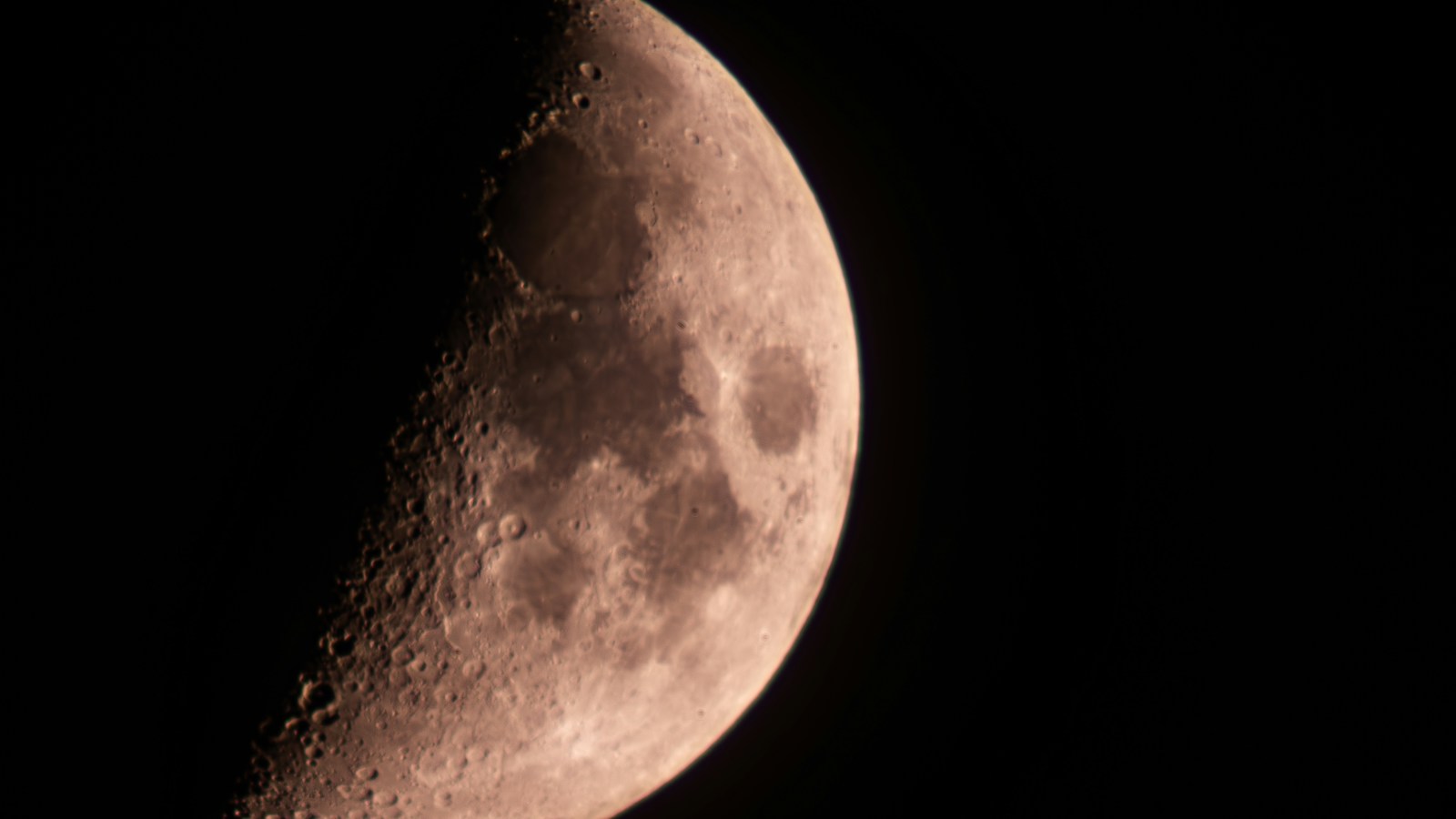
Illustrative photograph by Darnier Clean, Unsplash.
Another angle on this subject
Continue through related ideas, decisions and consequences.
 The CyGuru Column
You Do Not Have to Turn Every Interest Into an Income Stream
A CyGuru reflection on protecting the part of an interest that gives life texture before it becomes a product, a public identity or another obligation.
 Technology & AI
AssemblyAI’s Spot GPU Savings Put the Completed Job at the Centre
An AWS case study reports lower inference compute costs. Its deeper lesson concerns which interruptions a service can absorb without breaking its promise.
 Technology & AI
ESCAPADE’s Earth Flybys Separate the Launch Date From the Mars Departure
NASA’s twin spacecraft are heading toward Mars after powered Earth flybys. The route shows why launch flexibility and mission duration are different benefits.