
KT’s AI Network Diagnosis Buys Time for the Response
KT reports faster network diagnosis with AIO-Net. The operational question is what engineers can do with the time gained before customers lose service.
Inside this article
01A faster diagnosis has a destination ↓02The information problem comes before the model ↓03Experience enters through reviewable feedback ↓Event / source date: 11 November 2026: Microsoft publishes KT deployment account. · Published 14 NOVEMBER 2026
A faster diagnosis has a destination
Microsoft's 11 November account of KT's AIO-Net deployment describes an AI system intended to help network engineers investigate faults before they develop into larger service failures. It says the platform brings information from different systems into one view and uses agents to analyse network anomalies. KT reports that incident investigation and reporting now take about five minutes on average, roughly half the previous manual time.
Those figures come from the supplier and customer account. They are useful evidence of what the organisations say the deployment is achieving, rather than an independent audit of reliability. The more interesting operating question is what happens after diagnosis. Minutes saved in assembling evidence matter if engineers can use them to choose and carry out a better response.
That makes the relevant unit a fault moving through an operating process: detection, investigation, decision, intervention and confirmation that service is stable. Speed at one stage can help the whole process, but it cannot stand in for the whole result.
The information problem comes before the model
The case study describes engineers previously moving among separate systems to investigate an alarm. An alarm alone does not explain which customers are affected, whether another event shares its cause or whether a proposed intervention could worsen the situation. The reported advantage of AIO-Net is partly that it brings these pieces of evidence together.
Consider a hypothetical router warning. One system records a hardware symptom, another shows traffic changes, and a third contains the procedure for the equipment involved. An engineer has to reconcile those records before choosing an action. A quick answer based on only one record might be less useful than a slower answer that explains the relationship between all three.
This is why evaluation should preserve the case details. Teams need to know whether faster investigations include the difficult incidents, whether the source records were complete and whether engineers had to redo the analysis. Averages are informative, but they can hide the cases in which the proposed explanation is confident and wrong.
Experience enters through reviewable feedback
Microsoft describes AIO-Net as trained using operating procedures and the knowledge of KT's experienced network specialists, called Meisters. It says the agents' conclusions and processes are documented so that experts can assess them and influence future handling of incidents. Engineers from both organisations worked together on implementation and feedback processes.
The practical issue is how a correction becomes reusable without becoming an unexamined rule. A specialist might reject an explanation because the evidence is stale, because the equipment differs from the usual configuration or because the apparent pattern has an unusual cause. Each reason should lead to a different kind of change.
Capturing the rejection alone would lose that distinction. A stronger feedback record preserves the original evidence, the proposed interpretation, the expert's reason and the eventual outcome. This allows the team to learn from disagreement while retaining the possibility that the expert's initial judgement also needs revision. Institutional knowledge becomes more useful when its conditions of application remain visible.
The system can investigate without controlling the network
KT's account places a clear limit on the agents: they analyse, inspect and suggest, while people retain decisions and actions. The publication says permitted commands are read-only and explicitly allow-listed, with the restriction enforced inside the application rather than left to a prompt.
That boundary matters because an attempted fix can create a new incident. It also creates a more precise review task for operators. They are not merely endorsing an action already performed. They can inspect the proposed explanation before deciding whether any intervention is warranted.
CYPAPER's earlier analysis of AI-agent permissions examined the general problem of inherited authority. Here the concrete question is narrower: can an investigation tool retrieve enough operational evidence to be useful while remaining unable to alter equipment? The answer depends on implementation, not on the agent promising to behave carefully. A read-only boundary is a meaningful design choice, although this article has not tested KT's implementation independently.
Scaling changes the mix of incidents
The case study says KT intends to expand use from 70 units of critical equipment to 280 and eventually to access networks closer to subscribers. That is a planned expansion, not a completed deployment at the larger scale. It also changes the evaluation problem. New equipment and operating settings can introduce fault patterns that were uncommon in the initial group.
A responsible expansion would track more than how quickly the platform generates a report. Useful measures could include engineer correction rates, time to an approved response and whether incidents recur after intervention. These are proposed evaluation questions, not figures reported in the case study. They make explicit what the headline speed improvement would need to support.
Our examination of AI productivity as a workflow question provides the broader frame. In this case, productivity becomes valuable when it increases the operator's capacity to protect service. KT's reported experience suggests that shortening investigation can create room for judgement. Whether that room translates into more dependable networks must ultimately be established through the service outcomes, including the difficult cases that a favourable average can conceal.
Gabriel Nicolaev — CyGuru
Sources & further reading
Microsoft KT AIO-Net case study ↗
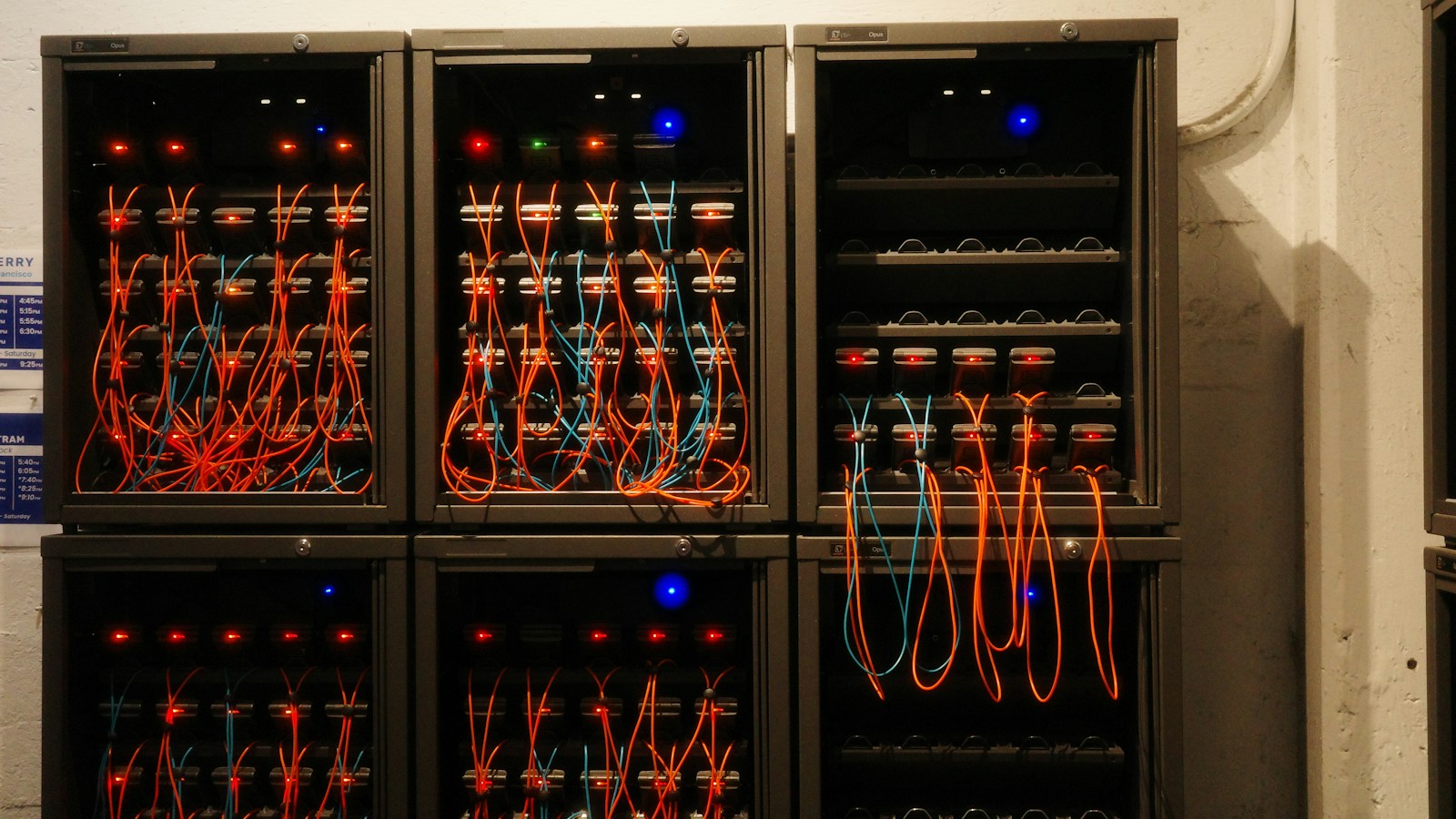
Illustrative photograph by Fabio Sasso on Unsplash; not a photograph of KT equipment.
Another angle on this subject
Continue through related ideas, decisions and consequences.
 Culture & Ideas
Heritage Readiness Needs a Rehearsal Before the Weather Turns
UNESCO’s culture preparedness work raises an operational question: can an institution act on its readiness assessment when access, communication and time become constrained?
 Culture & Ideas
A Children’s Library Should Let the Story Arrive Before the Lesson
A new Mexico City reading space prompts a question about children’s literature: how can a public purpose guide a collection without deciding every reader’s response?
 Technology & AI
AssemblyAI’s Spot GPU Savings Put the Completed Job at the Centre
An AWS case study reports lower inference compute costs. Its deeper lesson concerns which interruptions a service can absorb without breaking its promise.