
Thailand and Myanmar’s River Talks Need Samples Both Sides Can Compare
The two governments agreed to convene a water quality working group and plan a joint field visit. Comparable measurements could give the next meeting something concrete to resolve.
Inside this article
01What the two governments agreed ↓02A sample needs a place, a time and a method ↓03Separate a warning from a finding of responsibility ↓Event / source date: 12 November 2026 — Thai foreign minister’s official visit to Myanmar and discussions on transboundary river pollution. · Published 13 NOVEMBER 2026
What the two governments agreed
Thailand’s deputy prime minister and foreign minister, Sihasak Phuangketkeow, visited Myanmar on 12 November. The Thai foreign ministry said both countries agreed to convene their Joint Working Group on Water Quality Management for Boundary and Transboundary Rivers as soon as possible and that senior representatives would make a joint field visit to follow progress. River pollution was one part of a wider meeting that also covered border security, trade and energy. The ministry’s public account does not announce a meeting date, identify a shared set of sampling stations or publish findings about responsibility for specific contamination.
The working group could change the quality of the dispute if it helps the two sides produce observations they can compare. An argument over pollution can become an argument over which measurement is credible. A technical process that specifies where and how evidence is collected can put the disagreement into terms that officials, laboratories and affected communities can examine. The value of a joint visit will be visible in what people can do with the record it leaves behind.
A sample needs a place, a time and a method
Consider a hypothetical river crossing an international boundary. A team measures water at a downstream point after heavy rain. Another team samples upstream several dry days later and finds a lower reading. Both results may be accurate descriptions of what those teams collected. Comparing them directly cannot distinguish a source between the two points from a change in flow, an intermittent discharge or different handling in the laboratory. An official who sees only the final values cannot reconstruct what happened.
A practical first step would be to agree on a small set of paired stations and recurring sampling windows. Each record should identify the location, the water conditions, the method and the laboratory. The teams can discuss how to handle samples that arrive damaged, results below a method’s detection limit and measurements that differ unexpectedly. If the suspected substance behaves differently in water and sediment, those measurements need separate labels. A repeatable plan also makes it easier to identify where a local observation warrants an extra visit, rather than treating an unplanned sample as directly equivalent to the regular series.
A shared record does not require both countries to use identical equipment. It does require enough information to explain the implications of a difference. A simple exercise would be to divide a sample between laboratories and record their results alongside the handling details. If a disagreement survives that check, the next action can address it directly. If it disappears, the group has learned where interpretation was getting ahead of the measurement.
Separate a warning from a finding of responsibility
People who use a river may need timely advice even while the source of a problem is unresolved. Attribution asks a different question from protection. The first seeks evidence linking a particular activity to the measured condition. The second asks which current uses could expose people and what an authority can do while the investigation proceeds. Conflating those questions can put an unreasonable burden on the first measurement or delay an alert until a dispute over origin has been settled.
The working group could document separate routes for acting on them. An environmental officer who sees a significant reading needs to know whom to notify and how quickly the reading will be checked. A cross-border finding may take longer and require observations at more sites. The public should be told which decision has been made, who made it and what would cause it to change. A temporary measure accompanied by a clear review point gives affected households more usable information than a broad reassurance. It also gives authorities a way to revise advice when the data improve.
CYPAPER’s analysis of escalation rules for cross-border hotlines focused on who can act when contact is made. In the river case, that question comes after a technical one. The people on the call need to know whether they are comparing evidence collected under comparable conditions and which part of the signal still requires confirmation.
What would count as progress after the visit
One public test is whether the next announcement identifies an agreed set of sites and methods, even if it withholds precise operational details for a stated reason. Another is whether it describes how the two sides will handle contradictory results. A third is whether the public can find a dated summary of readings and changes in advice. These are suggestions for the working group’s design. The 12 November statement does not say they have already been adopted.
Officials may have legitimate reasons to protect personal details or to verify a result before release. Those constraints can be communicated without leaving people to guess whether a measurement exists. A summary can say what was tested, which uses were considered, and when another result is expected. If the study later supports an attribution, readers should be able to see the chain of evidence that led to it. The joint visit becomes useful when it leaves both governments with a practical way to measure the same problem again and enough common ground to act on the result.
Gabriel Nicolaev — CyGuru
Sources & further reading
Thailand Ministry of Foreign Affairs · Official visit to Myanmar ↗
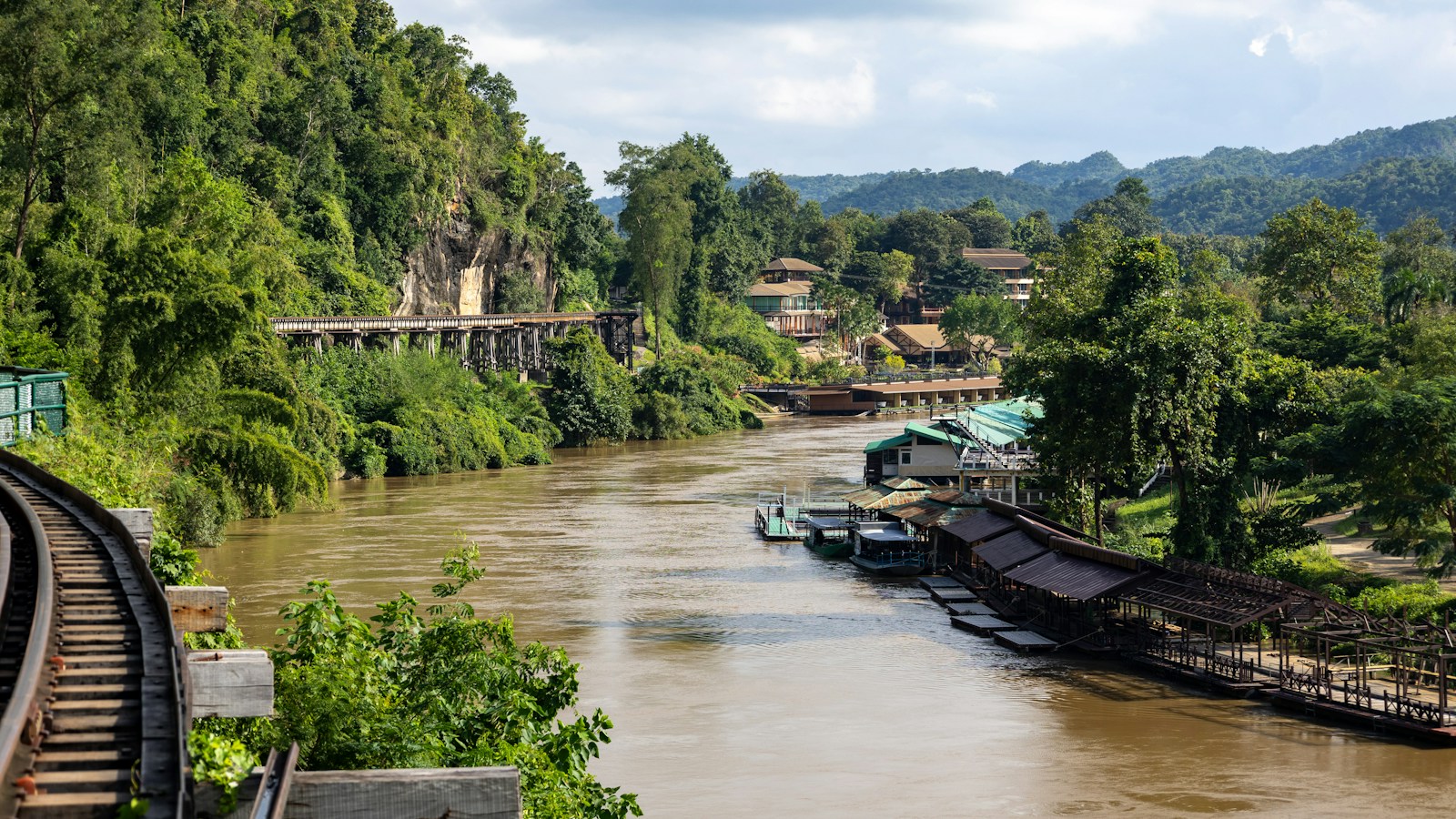
Illustrative river photograph from Kanchanaburi, Thailand, via Unsplash. The location is separate from the cross-border sites discussed in the article.
Another angle on this subject
Continue through related ideas, decisions and consequences.
 Money & Business
Komatsu’s Roadtec Deal Faces a Test at the Parts Counter
Komatsu has agreed to acquire two paving equipment brands from Astec. For an operator with a working fleet, the value of the handover will show up in parts, repairs and the people who know the machines.
 World & Power
An Electricity Connection Count Leaves the Working Hours Unanswered
A new World Bank discussion revisits older electricity data and asks whether a connection supplies power people can depend on when they need it.
 World & Power
Sudan’s Shelter Warning Is Also a Stock Replenishment Warning
The UN’s 6 November briefing describes dwindling shelter supplies in Sudan. The operational test is whether funding can become usable stock before the next need.