
An Owner’s Unpaid Work Can Hide a Business That Does Not Pay
An original management opinion: distinguish the return on ownership from compensation for work before judging whether a business model can support its founder.

Inside this article
01Profit can depend on an unpriced contribution ↓02Name the roles before pricing them ↓03Use a replacement assumption you can explain ↓Profit can depend on an unpriced contribution
An owner may work for months without taking a salary and then describe the business as profitable. That description can be consistent with the accounts while leaving a different managerial question unanswered: could the operation support the work it requires if the owner needed to be paid for doing it? The answer matters to the founder’s livelihood, the business model and any plan to delegate.
This essay offers an internal decision framework, not accounting, tax or investment advice. Formal treatment depends on the entity and applicable rules. The proposed distinction is between compensation for labour and the return associated with ownership. Combining the two can make it difficult to see what the business actually supports.
Name the roles before pricing them
A founder can perform sales, delivery, administration and supervision in the same day. Treating that contribution as a single undefined category called owner effort prevents a useful assessment. The first step is to identify which functions the operation needs and which are currently supplied by the founder.
This does not mean assigning an elaborate market price to every minute. A practical estimate can begin with the work that would still be necessary if somebody else ran the service. Some founder activities may be discretionary development rather than recurring delivery. Keeping those categories separate makes it easier to judge whether the existing offer pays for its own operation or depends on a continuing personal subsidy.
Use a replacement assumption you can explain
A hypothetical studio owner may create the product, negotiate every sale and manage all customer changes. Replacing that contribution might require several part-time capabilities rather than one employee with the founder’s exact combination of skills. The estimate should reflect the actual functions, not an imaginary person able to do everything at a convenient price.
The assumption is a tool for judgment, not a prediction of the precise cost of delegation. It can be tested with ranges and revised as information improves. The purpose is to ask whether the price and operating method leave room for the labour they consume. A number chosen merely to preserve the appearance of profitability defeats that purpose.
Separate deliberate investment from permanent dependence
A founder can reasonably choose to contribute unpaid work while developing an offer. That choice should have a purpose, a review point and an account of the exposure being accepted. An investment phase differs from a model that never intends to compensate an essential function.
The review should ask what has changed as a result of the contribution. Is delivery becoming more efficient? Has the offer become easier to sell? Is there a credible path towards paying for the recurring role? If the answer remains unclear, more effort may extend the subsidy without improving the model. The owner needs to see that possibility before personal endurance becomes the business’s main operating assumption.
An owner draw does not explain the source of value
Money taken out of a business can meet the owner’s needs without showing which activity earned it. The withdrawal may reflect current trading, earlier reserves or another contribution. For management purposes, the founder should understand the source rather than use a personal transfer as a complete test of commercial performance.
Equally, leaving money inside the business does not prove that no compensation could have been paid. The relevant question is what the operation can sustainably support after meeting its obligations and maintaining the capability required to serve customers. Formal cash and accounting assessments need the appropriate professional treatment. The internal reasoning should remain clear about the distinction between earning, retaining and withdrawing.
Pricing should face the recurring workload
A customer price can look attractive when the founder absorbs difficult work personally. The arrangement may produce sales while making delegation impossible. If every additional sale requires more unpaid owner time, growth can expand the personal obligation faster than the operation’s ability to support it.
The response is not automatically to raise the price. The offer may need a narrower scope, a different delivery method or a clearer boundary around support. Each change should be judged through the customer benefit and the work necessary to provide it. The goal is an offer that can carry its own recurring requirements, rather than a larger workload whose viability depends on the owner remaining permanently available.
Judge freedom through the work that can be funded
A founder may value autonomy, craft or a particular way of serving customers enough to accept a lower financial return. That can be a legitimate choice. It becomes more useful when made explicitly, with an understanding of the trade-offs, rather than through an optimistic label attached to unpaid labour.
The business model should allow the owner to distinguish preference from necessity. Which work is freely chosen, which is essential and which could be funded if someone else performed it? The answers provide a more concrete account of commercial independence than sales alone. A business begins to pay its way when its promises, including the work required to fulfil them, can be supported without hiding the founder inside an unpriced gap.
Gabriel Nicolaev — CyGuru
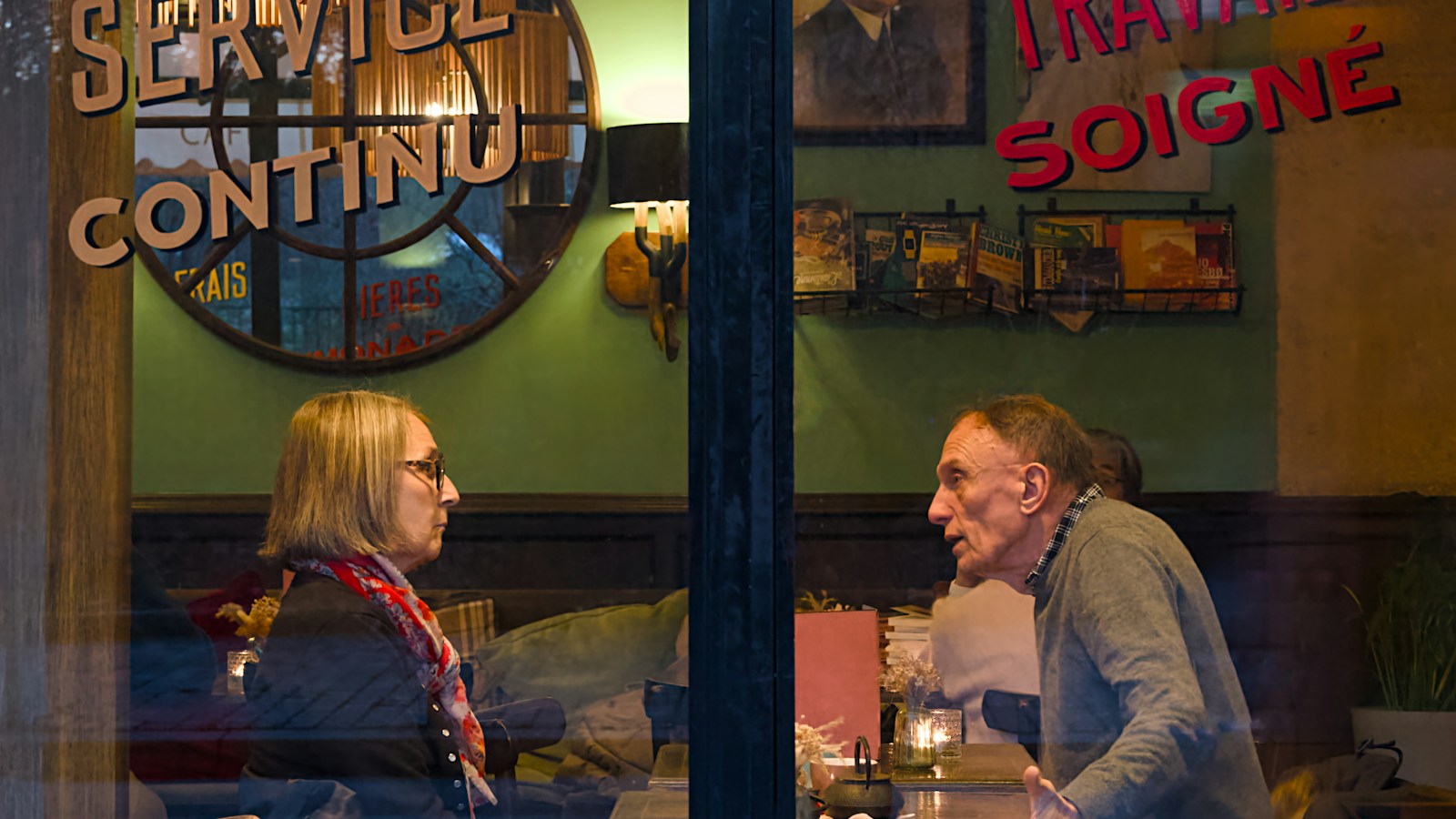
Editorial photograph for illustration.
Another angle on this subject
Continue through related ideas, decisions and consequences.
 Human Behaviour
Nostalgia Is Not an Instruction to Return
Missing a period of your life does not settle whether you should recreate it. Separate what you value in the memory from the arrangement that held it.
 Human Behaviour
Embarrassment Does Not Automatically Mean You Did Something Wrong
An awkward moment can require correction, kindness or simply permission to pass. First establish whether anyone was harmed before appointing yourself guilty.
 Technology & AI
An AI Supplier Update Is an Operating Change, Not Just a New Feature
Procurement needs a plan for changed model behaviour, revised integrations and rollback before an AI service becomes embedded in essential work.