
An Adaptation Should Be Honest About the Argument It Changes
An essay on moving a story from page to screen: fidelity needs an account of the choices preserved, transformed and left behind.
Inside this article
01Recognisable events do not guarantee the same story ↓02A change of medium requires decisions ↓03Ask who gains the right to explain ↓Recognisable events do not guarantee the same story
A film can preserve a novel’s principal events while changing the judgment those events invite. It can give a character less interior explanation, make an ambiguous decision look decisive or turn a troubling ending into an emotional release. Recognising the plot therefore does not settle whether the adaptation preserves the source’s argument.
This is a critical perspective about interpretation, rather than a report about a particular production. Its proposition is that an adaptation should be assessed through the choices it makes visible and the consequences those choices create. The relevant question is not simply whether a scene appears. It is what the scene asks the audience to understand, whose experience it privileges and which uncertainty it permits to remain.
A change of medium requires decisions
A novel can remain inside a person’s thought for pages. A screen production must decide how, or whether, to make that thought available. Voice, gesture, framing, silence and the order of scenes can each offer a different solution. None reproduces the experience of prose without interpretation. A demand for literal fidelity can therefore conceal the judgment already required to translate a story into another form.
The useful distinction is between acknowledging that judgment and pretending it did not occur. An adaptation has the freedom to pursue a new purpose. It also gives a viewer reason to ask what that purpose is. Treating every departure as betrayal makes criticism too simple; treating every departure as inevitable prevents criticism from examining the actual choice.
Ask who gains the right to explain
Imagine a hypothetical novel in which a supporting character’s private account complicates the hero’s explanation of an event. A film removes that account to shorten the running time. The resulting story may remain coherent, but the hero’s version now faces less resistance. What looks like an economical cut has also changed the distribution of credibility.
This does not establish that the cut is wrong. It identifies a consequence that deserves examination. Perhaps the production finds another way to preserve the challenge, or deliberately chooses a narrower perspective. A critic should be able to name that difference without claiming that an adaptation must contain every page. The point is to connect an editing decision to the argument it changes.
Distinguish atmosphere from moral structure
A production can reproduce clothes, locations and a recognisable period while changing the relationships that give the story its force. Visual care may be valuable in its own right, but it is not a substitute for asking how authority, responsibility and consequence operate within the adapted work.
A useful comparison might follow one decision across both versions. What does the character know? Which alternatives appear possible? Who bears the result? If those conditions change, the action may acquire a different meaning even when its outward form remains similar. This approach makes criticism more precise than declaring that the production captured the atmosphere or failed to feel like the book. It asks what the atmosphere is carrying.
An accessible version can preserve difficult questions
Making a story accessible need not mean resolving everything that makes it uncomfortable. A production can clarify the circumstances while leaving an ethical judgment open. It can also use clarity as an excuse to remove a contradiction that the original deliberately required a reader to confront.
The distinction lies in what becomes easier. Does the audience gain the information needed to understand the tension, or is the tension replaced with a more convenient answer? A hypothetical change that explains why a character faces a choice may deepen the work. A change that guarantees the audience will approve the choice can reduce its difficulty. Accessibility deserves examination as a design decision rather than praise or dismissal as a single undifferentiated quality.
Publicity should not decide the critical standard
Calling a production definitive, faithful or a reimagining can help communicate an intention. It should not prevent an audience from examining what the work actually does. A faithful adaptation can still fail on its own terms. A radical departure can be a serious interpretation rather than a refusal to understand the source.
It helps to keep two evaluations distinct: the relationship with the earlier work and the coherence of the new one. A film may be effective while making a different argument. A close reproduction may preserve events without creating a compelling experience. Neither outcome needs to be disguised. Describing the difference gives readers and viewers a more informative choice than asking them to decide which medium has won.
Leave room for an interpretation to answer back
The strongest critical conversation treats the adaptation as an accountable reading. It asks which features of the source support its choices and where it deliberately departs. The production need not adopt the critic’s preferred interpretation to deserve attention, but its decisions can still be challenged through evidence from both works.
That is the responsibility behind creative freedom: not a duty to obey every inherited detail, but a willingness to make a new argument that can be examined. An adaptation changes a story by giving it another form, another emphasis and another audience. Honest criticism should make those changes intelligible. The goal is not to protect a book from being interpreted. It is to stop interpretation from presenting its own decisions as though the source had already made them.
Gabriel Nicolaev — CyGuru
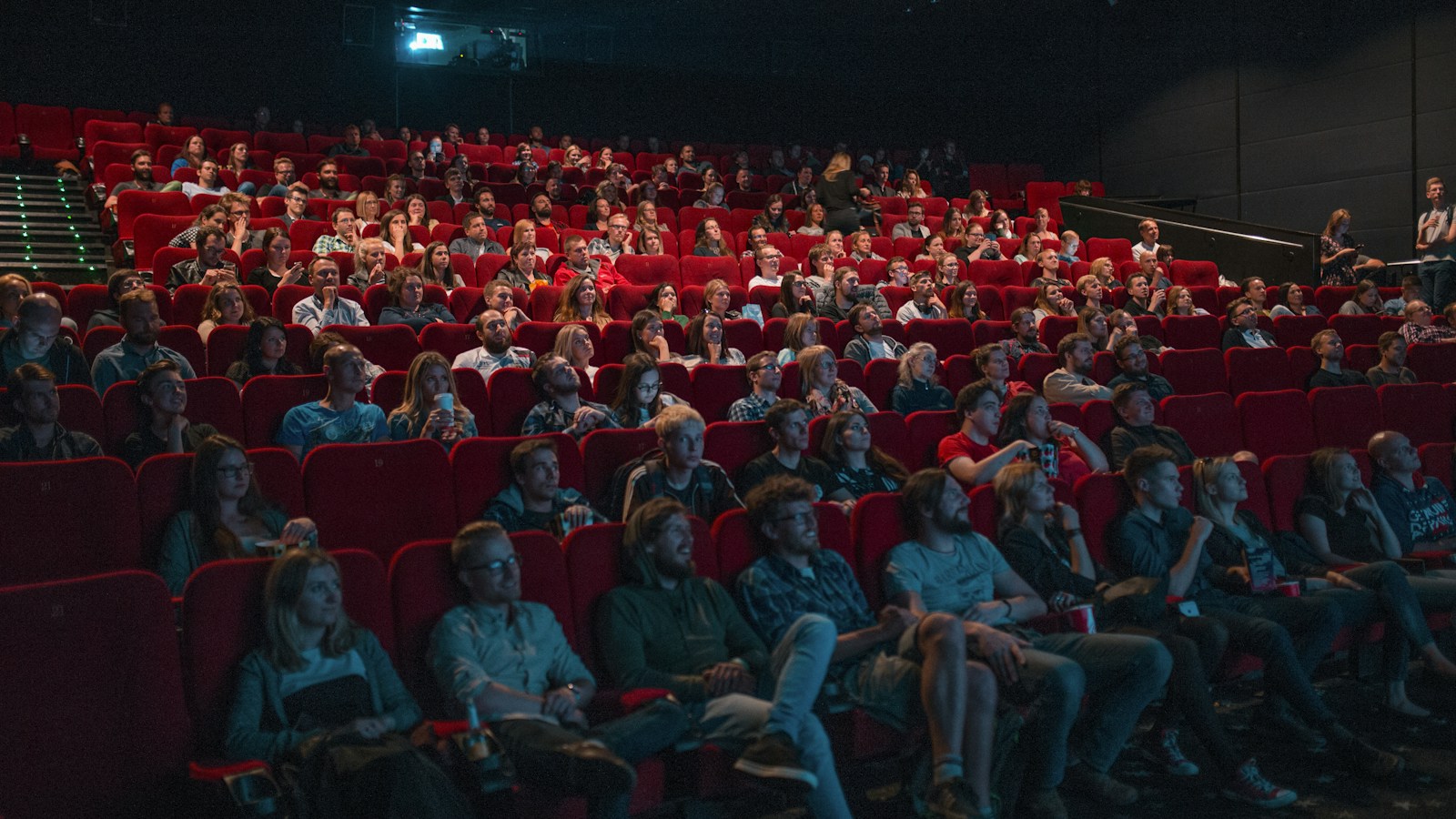
Editorial photograph for illustration.
Another angle on this subject
Continue through related ideas, decisions and consequences.
 Technology & AI
Passkeys Need an Exit Plan as Well as an Enrolment Screen
A passkey rollout should explain device loss, provider changes and account recovery with the same clarity as its first successful sign-in.
 Culture & Ideas
A Museum Return Should Change Who Can Tell the Object’s Story
An ethical essay on restitution, interpretive authority and the continuing responsibilities that follow the return of a cultural object.
 World & Power
Closing Public Infrastructure Is a Public Decision, Too
A policy essay on retiring public infrastructure: distinguish an asset that should close from a service obligation that still needs an accountable future.